For years, many adults assumed colorectal cancer screening could wait until age 50. Increasingly, physicians have found that assumption no longer matches the disease they are treating. Clinics have reported more patients in their 40s arriving with colorectal cancer, often after symptoms appeared rather than through routine screening, prompting health authorities and medical organizations to rethink when prevention should begin.
That shift has become more visible in 2026 as health systems and cancer organizations reinforce a lower starting age for routine screening and expand the range of available screening options. The changes reflect a growing effort to detect cancers earlier and remove precancerous growths before they become life-threatening, while making screening easier for people who have delayed or avoided testing.
The renewed attention comes against the backdrop of an unsettling trend. Although colorectal cancer rates and deaths have declined among older adults over several decades, researchers have documented rising incidence among younger adults. The reasons remain under investigation, but the pattern has reshaped public health guidance and clinical practice.
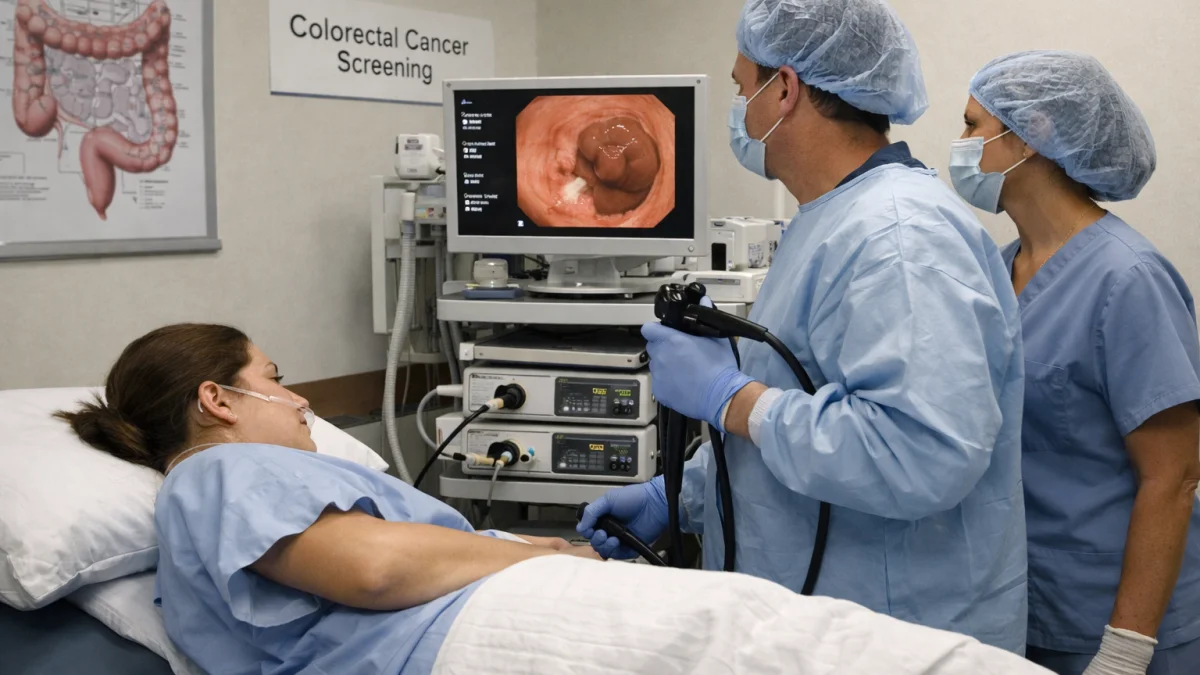
The American Cancer Society's updated 2026 colorectal cancer screening guideline reaffirmed that adults at average risk should begin regular screening at age 45 rather than 50. The update also broadened recommended screening choices by adding newer molecular stool tests and recognizing blood-based testing for people who decline preferred methods, while emphasizing that colonoscopy remains the most comprehensive examination and that any positive non-colonoscopy test should be followed promptly by a colonoscopy. The organization said offering multiple evidence-based options can improve participation because "the most effective screening test is the one that the patient completes."
The recommendation reflects more than convenience. Colonoscopy not only detects cancer but can prevent it by allowing physicians to remove precancerous polyps during the procedure. Stool-based tests and newer blood-based tests can also identify people who need further evaluation, providing alternatives for those reluctant or unable to undergo colonoscopy immediately.
Public policy has begun to follow the science.
In Canada, Ontario lowered the eligibility age for its publicly funded colorectal cancer screening program from 50 to 45 beginning July 1, becoming the country's second province to make the change after Prince Edward Island. Provincial officials estimated that more than one million additional residents would become eligible for screening, citing increasing diagnoses among younger adults.
For survivors, the policy represents more than an administrative adjustment.
Trish Riley, a colorectal cancer survivor whose experience has been cited by Canadian media, welcomed Ontario's decision and said she hoped other provinces would follow. Although she previously received a false-negative fecal immunochemical test before her diagnosis, she said regular screening still saves lives overall because no test is perfect and earlier detection often leads to better outcomes. Canadian Cancer Society representatives similarly noted that evidence shows routine stool testing, followed by appropriate investigation of abnormal results, reduces the risk of dying from colorectal cancer.
Medical specialists say lowering the screening age is only part of the challenge.
A substantial share of eligible adults still do not undergo recommended screening. The American Cancer Society estimates that roughly one-third of eligible Americans remain unscreened, leaving preventable cancers undetected. The 2026 guideline update therefore places considerable emphasis on expanding access through multiple testing options rather than relying exclusively on colonoscopy.
Clinicians also stress that screening recommendations apply to people without symptoms. Anyone experiencing rectal bleeding, persistent changes in bowel habits, unexplained anemia, or other concerning symptoms should seek medical evaluation regardless of age. Likewise, individuals with a family history of colorectal cancer, inherited cancer syndromes, inflammatory bowel disease, or other high-risk conditions may need screening earlier than age 45 under individualized medical advice.
Researchers continue to investigate why colorectal cancer has become more common in younger adults. While obesity, dietary patterns, diabetes, environmental exposures, and changes in the gut microbiome have all been studied, experts say no single explanation accounts for the trend. What has become clearer is that cancers diagnosed at younger ages often occur after symptoms develop, making timely screening for eligible adults increasingly important.
The expanded recommendations do not eliminate difficult decisions. Blood-based screening tests, for example, offer another pathway for people unwilling to complete stool testing or colonoscopy, but the American Cancer Society does not consider them preferred options because current evidence shows they are less sensitive for detecting some early cancers and precancerous lesions. Physicians continue to encourage patients to discuss the advantages and limitations of each screening method before choosing one.
Even so, many clinicians see reason for cautious optimism.
The lowering of the screening age, broader testing choices, and growing public awareness reflect years of research into a disease whose demographics have changed. For people turning 45, the conversation with a primary care physician now begins earlier than it once did, offering another opportunity to detect cancer before symptoms appear—or to prevent it altogether by removing precancerous growths before they become dangerous. As health systems work to translate updated guidance into higher screening participation, the measure of success will ultimately be seen not only in new recommendations, but in cancers that never have the chance to develop.