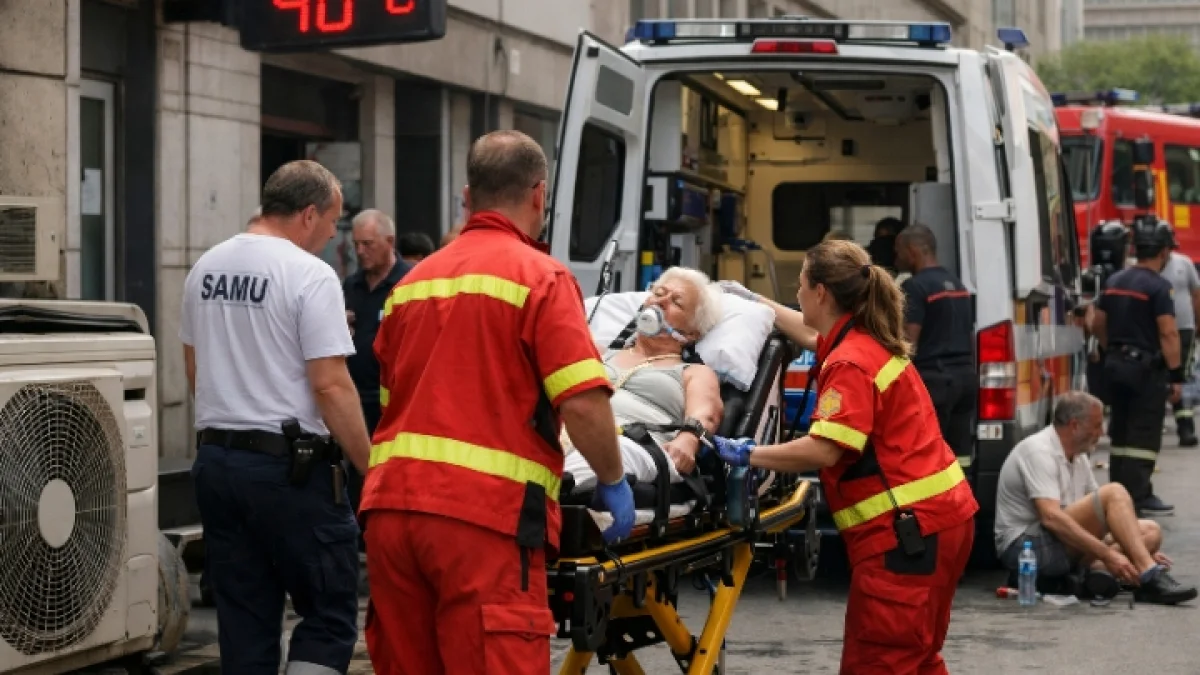
Europe’s record-breaking June heatwave is emerging as a major public-health event, with France alone recording an estimated 2,025 excess deaths during the week of June 22-28, while preliminary figures from other countries point to thousands more deaths across the region. The figures are not yet a final count of deaths caused by heat, but they provide a measure of the scale of the health shock from an episode that coincided with exceptionally high temperatures across western Europe.
The significance lies in the combination of intensity, geographic reach and the vulnerability of ageing populations. Santé publique France said deaths in France rose by nearly 30% in the week under review compared with the previous week, based on preliminary data covering 84% of national mortality. The agency cautioned that the figures were incomplete, particularly for deaths occurring at home, and that a formal estimate of excess mortality attributable to the heatwave would follow after data were consolidated.
The French data nevertheless offer an early indication of how extreme heat can translate into a broad mortality increase without appearing on death certificates as a single, easily identifiable cause. Heat can worsen cardiovascular, respiratory and kidney conditions and increase the risks of dehydration and other complications. The excess-death approach captures the overall rise in mortality during an episode compared with an expected baseline, rather than counting only cases explicitly certified as heat-related.
France's experience also shows why the effects of heat extend beyond hospitals. Santé publique France reported that the increase in deaths was particularly pronounced among people dying at home, while earlier preliminary data released during the heatwave showed more than 1,400 deaths recorded on June 25 and June 26, although those figures were not yet consolidated. The agency has stressed that mortality data collected during an active event are subject to revision.
The episode was exceptional by European climate standards. The Copernicus Climate Change Service said June 2026 was the warmest June on record for western Europe, with temperatures in the region averaging about 3.1°C above the 1991-2020 average. Europe as a whole experienced its second-warmest June in the ERA5 record, while France, Germany, Spain, Italy and the Benelux countries recorded monthly temperatures several degrees above average. Copernicus said the intense heatwave in the second half of the month contributed substantially to the regional record.
The wider mortality picture is harder to compare directly because countries use different methods and reporting schedules. Preliminary reporting has pointed to substantial excess mortality in Belgium and the Netherlands, while estimates for Germany have also indicated a large increase in deaths during the late-June peak. Such figures should not be simply added together as a definitive European death toll: national baselines, time periods, data completeness and statistical methods differ. The most reliable conclusion at this stage is that the heatwave produced a measurable mortality shock across several countries, with the full scale still being assessed.
The event also highlights a change in the public-health challenge facing Europe. France has strengthened heat-warning systems and emergency planning since the catastrophic 2003 heatwave, which caused roughly 15,000 excess deaths. The country's current surveillance system reflects lessons from that disaster, allowing authorities to monitor emergency visits, medical consultations and mortality during periods of extreme heat. Yet the 2026 episode indicates that preparedness measures do not eliminate risk when temperatures reach unprecedented levels, particularly among older people and those living alone or with underlying health conditions.
Climate science provides important context but does not by itself determine the mortality count from an individual event. Copernicus has documented a clear warming trend in European summers and noted that eight of Europe's nine warmest Junes in its record have occurred since 2019. Scientists studying extreme heat generally distinguish between the observed health impact of an event and the separate question of how much climate change increased its likelihood or severity. The latter requires attribution analysis and should not be inferred solely from mortality statistics.
For governments, the immediate issue is therefore both measurement and response. Excess-death estimates will become more reliable as delayed death registrations are incorporated, while health agencies continue monitoring emergency admissions and other heat-sensitive indicators. The French government and public-health authorities will also be watching whether subsequent heat episodes produce additional mortality, particularly among older and medically vulnerable populations.
The confirmed picture as of July 22 is that the June heatwave was an unusually severe European climate event with a substantial, though still incompletely quantified, health impact. France's preliminary estimate of 2,025 excess deaths during one week is the clearest official national measure available, but it should not be treated as a final heat-attributable death toll. Authorities are continuing to consolidate mortality data and assess the broader consequences of the summer's extreme temperatures, while European climate monitoring agencies track the persistence of unusually hot and dry conditions.