The U.S. food safety system is facing renewed scrutiny after federal regulators confirmed that a sample of shredded iceberg lettuce supplied by Taylor Farms tested positive for Cyclospora, the parasite at the center of one of the country's largest recent foodborne illness outbreaks. The finding followed a multistate recall of iceberg lettuce distributed to 27 states and intensified an investigation that has already linked illnesses to shredded lettuce served at Taco Bell restaurants in five Midwestern states.
The latest development is significant because it shifts the investigation from epidemiological evidence toward laboratory confirmation while exposing the complexity of tracing contamination through modern produce supply chains. Although officials continue to investigate the precise point at which contamination occurred, the recall demonstrates how a problem affecting a single supplier or production lot can rapidly spread through restaurant chains, food-service distributors and retail markets before illnesses are fully recognized.
The Food and Drug Administration and the Centers for Disease Control and Prevention have said the outbreak under investigation represents a subset of a broader nationwide increase in Cyclospora infections. Their traceback investigation identified convergence on a single supplier of iceberg lettuce imported from central Mexico that was used by Taco Bell locations where many affected consumers had eaten before becoming ill. Regulators have increased border screening, collected additional product samples and warned that other brands, retailers or distribution channels could be identified as the investigation continues.
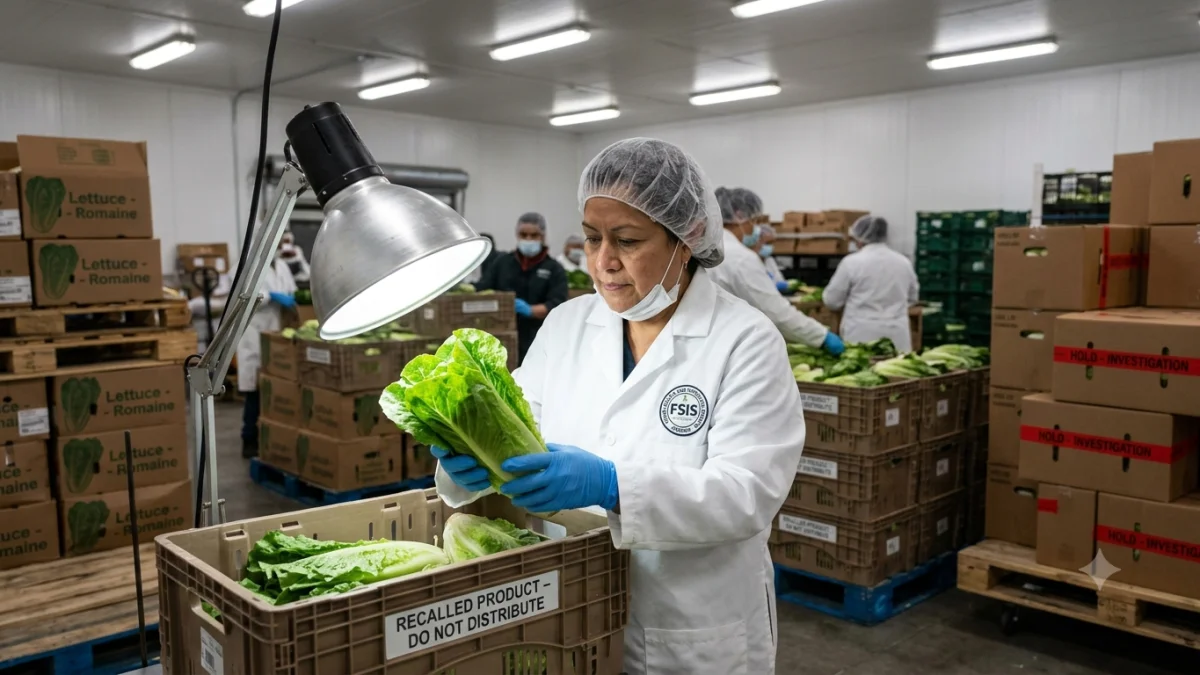
Taylor Farms responded by voluntarily recalling iceberg lettuce sourced from central Mexico, suspending distribution from the implicated area, notifying customers and cooperating with federal investigators. The company has stated that it stopped receiving product from the implicated lot while working with the FDA, CDC and state authorities. The recall covers numerous shredded lettuce and salad products distributed between late June and mid-July across 27 states.
Cyclospora outbreaks present particular challenges for public health authorities because symptoms often emerge days after exposure and can persist or recur if untreated. Unlike bacterial pathogens that may be eliminated by standard washing practices, Cyclospora contamination is frequently associated with produce exposed to contaminated irrigation or processing water. Investigators therefore must reconstruct complex agricultural, processing and distribution records across multiple jurisdictions before identifying the original source with confidence.
The outbreak also illustrates longstanding vulnerabilities associated with fresh produce. Leafy greens are consumed raw, giving consumers no cooking step that might reduce microbial risks. Because lettuce from numerous farms can be processed and distributed through centralized facilities before reaching restaurants, institutional kitchens and retailers, contamination affecting one supply source can have consequences across a wide geographic area. Such characteristics have repeatedly complicated previous investigations involving leafy greens, even though the pathogens involved have differed.
The commercial consequences extend beyond public health. Taco Bell removed the implicated lettuce from its supply chain nationwide after consultations with health authorities, while major food-service distributors instructed customers to discard affected products. The recall has also required retailers and restaurant operators to reassess inventories and supply arrangements, illustrating how foodborne illness investigations can disrupt operations throughout the agricultural and food-service sectors before definitive conclusions are reached regarding every affected product.
The investigation has likewise highlighted the importance of traceability systems. Federal officials combined interviews with affected consumers, ingredient-level analyses, supply-chain records and laboratory testing to narrow the investigation to a common supplier. That multilayered approach reflects lessons from previous foodborne outbreaks, where epidemiological evidence alone often proved insufficient to identify contamination sources rapidly enough to limit additional exposures.
At the same time, regulators have emphasized that important uncertainties remain. Although a contaminated lettuce sample has tested positive for Cyclospora, investigators continue determining whether additional products or distribution channels were affected and whether contaminated produce remains in commerce. The FDA has indicated that further recalls or public health actions may become necessary as laboratory testing and traceback investigations continue.
The confirmed situation, therefore, is that federal authorities have linked a major multistate Cyclospora outbreak to recalled iceberg lettuce supplied through a common distribution network, prompting one of the broadest produce recalls in recent years. Officials are continuing to monitor additional illnesses, laboratory findings, product traceability and distribution records while working with industry and state partners to determine the full scope of the contamination and whether further products or suppliers should be included in the investigation.