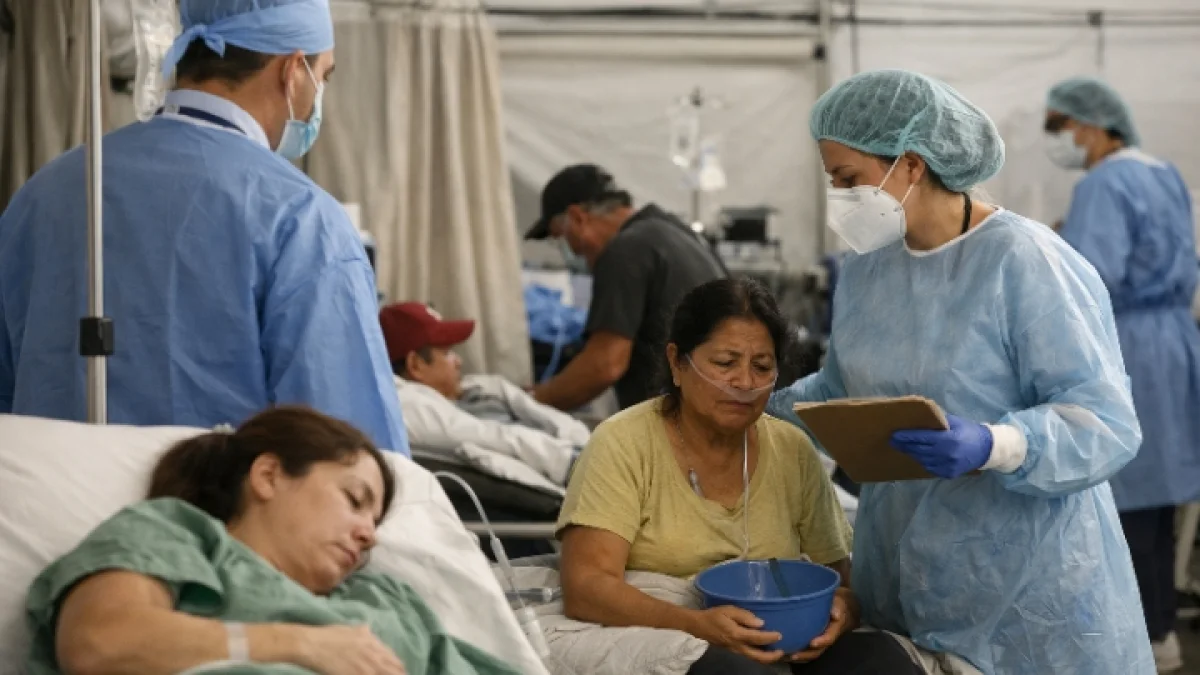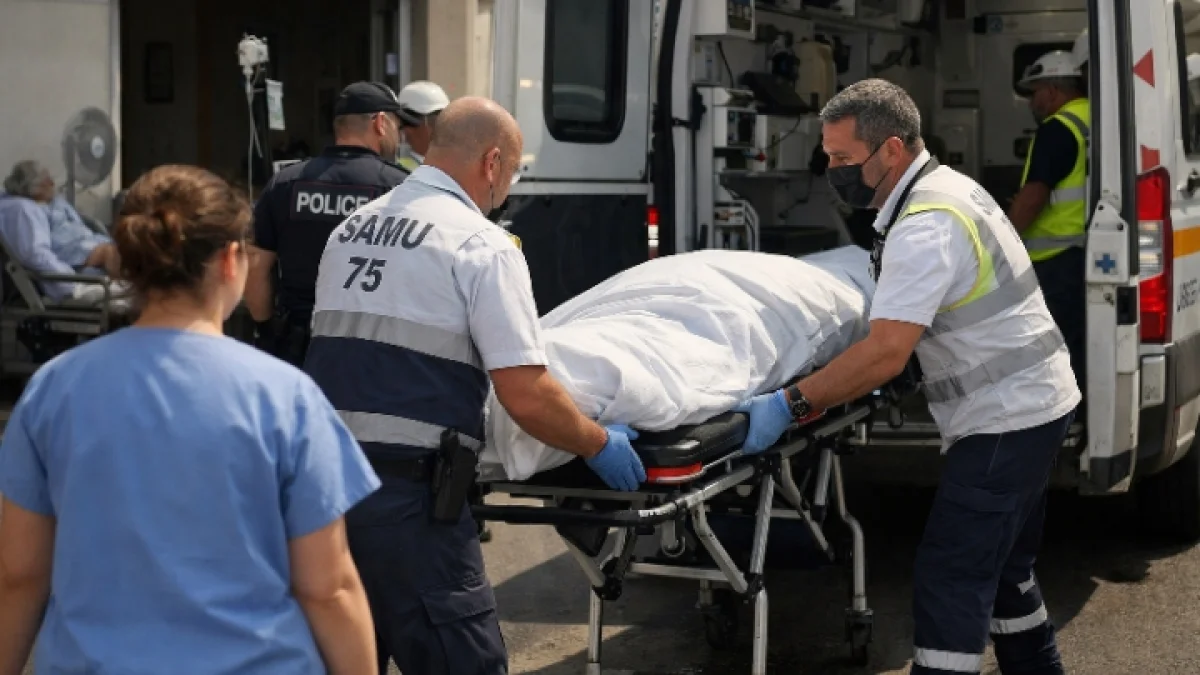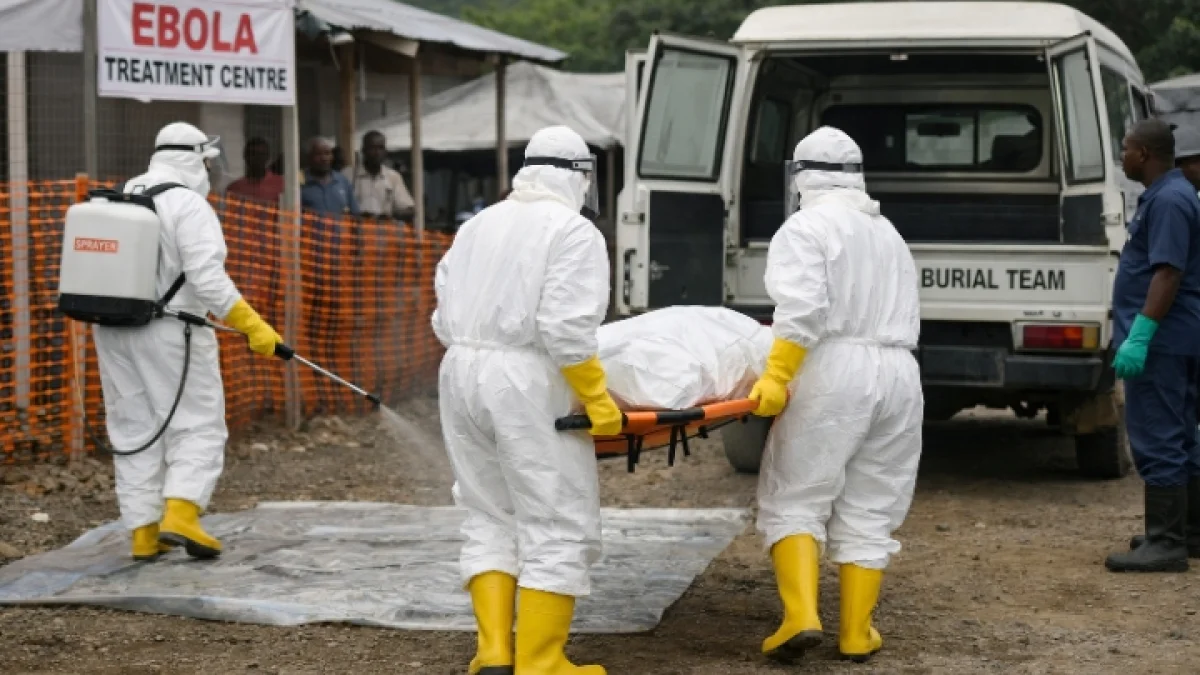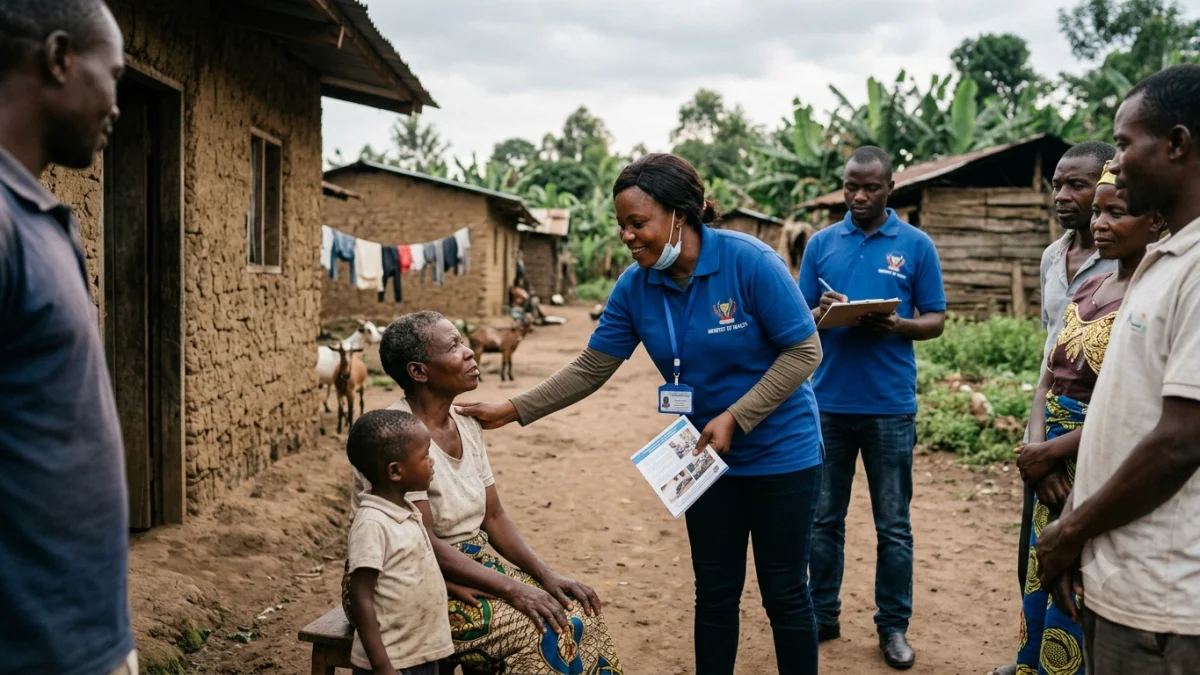
Outside clinics and treatment centres in eastern Democratic Republic of Congo, some of the most important conversations in the country's Ebola response are taking place far from hospital beds. Community health workers, local volunteers and trusted leaders are moving from village to village, explaining how the virus spreads, answering questions about treatment and safe burials, and trying to persuade families that seeking care early can save lives.
Their work has become as critical as any medical intervention.
The latest Ebola outbreak, caused by the Bundibugyo strain, has spread rapidly across parts of the Democratic Republic of Congo and into neighbouring Uganda. By mid-July, health authorities had recorded more than 2,000 cases and hundreds of deaths, while new infections continued to emerge daily. Yet officials and humanitarian agencies say containing the virus depends not only on treatment facilities and laboratory testing but also on rebuilding trust in communities where fear, misinformation and years of conflict have complicated the response.
For frontline workers, every household visit can involve more than public health advice. They often encounter families worried that loved ones taken to Ebola treatment centres will never return, or communities concerned that burial traditions will be disrupted. Those concerns have shaped outbreaks before and remain central to the current response.
The World Health Organization's Special Programme for Research and Training in Tropical Diseases (TDR) says Congolese public health specialists are working closely with affected communities to explain the purpose of clinical trials and response measures, recognising that local understanding and participation are essential. The organisation highlights the role of field coordinators and community health workers who combine medical expertise with knowledge of local languages, customs and health systems.
That emphasis on community engagement comes as scientists race to evaluate potential treatments. Earlier this month, researchers enrolled the first patients in what health authorities described as a record-speed clinical trial testing experimental therapies against the Bundibugyo strain, for which there are no approved vaccines or treatments. Officials hope the research will improve survival, but they acknowledge that enrolment depends on communities trusting both the science and the people delivering it.
Building that confidence has not been easy.
Health workers have faced hostility in some areas, and treatment facilities have previously been attacked during the outbreak. Community resistance has also complicated contact tracing and safe burial programmes, two of the most effective tools for interrupting Ebola transmission. According to the International Organization for Migration, roughly two-thirds of recorded Ebola deaths have occurred outside medical facilities, increasing the difficulty of ensuring safe and dignified burials while respecting family traditions.
Medical experts say those tensions cannot be resolved through enforcement alone.
Writing in The BMJ, public health adviser Zaeem ul Haq argued that Ebola control depends on "systemic empathy" as much as clinical capacity. He said communities are more likely to cooperate when response teams communicate openly, allow families to remain informed about patients in isolation and adapt safe burial practices to respect religious and cultural customs wherever possible. Excluding communities from decisions, he wrote, risks reinforcing stigma and deepening mistrust.
The challenges facing frontline workers extend beyond community relations.
Some doctors, nurses and community health workers have protested over unpaid salaries, delayed bonuses and shortages of protective equipment, warning that financial uncertainty threatens the response. Their concerns surfaced even as they continued treating patients in one of the region's most dangerous public health emergencies.
Aid reductions and logistical obstacles have further strained operations. Closed transport routes, insecurity and continuing armed conflict have slowed the movement of medical supplies and personnel. In some regions controlled by armed groups, parallel health structures have attempted to organise their own Ebola response, illustrating how fragmented governance complicates disease control while underscoring the need for coordination across political and military lines.
Despite those pressures, frontline workers continue to rely on familiar methods that rarely attract headlines: explaining symptoms, encouraging handwashing, identifying contacts of infected patients and reassuring families that isolation is intended to protect rather than punish.
CARE, whose local partners are supporting prevention efforts, has described health workers across Ituri and the Kivu provinces as racing to contain the outbreak while confronting exhaustion, rejection and growing workloads. Their efforts include maintaining community handwashing stations, conducting local awareness campaigns and encouraging residents to seek medical attention early when symptoms appear.
The approach reflects lessons drawn from previous Ebola outbreaks in the region. Research and field experience have consistently shown that outbreaks become harder to control when rumours spread faster than verified information or when communities perceive response teams as outsiders rather than partners. Trust influences whether people report symptoms promptly, cooperate with contact tracing and accept measures designed to reduce transmission.
As the outbreak continues, public health officials face a dual race: one to expand treatment and research, and another to strengthen relationships with communities living through the crisis.
Each conversation at a village meeting, each explanation offered outside a clinic and each family persuaded to seek care early represents work that cannot be measured solely by laboratory results or case counts. For the health workers moving through eastern Congo's affected communities, trust has become one of the most valuable tools they carry alongside protective equipment and medical supplies.