KEY BISCAYNE, Fla. — Florida researchers have moved endangered elkhorn coral from offshore nurseries into a land-based hatchery in an effort to protect one of the state's last remaining populations from an anticipated marine heat wave that scientists fear could trigger another mass bleaching event this summer.
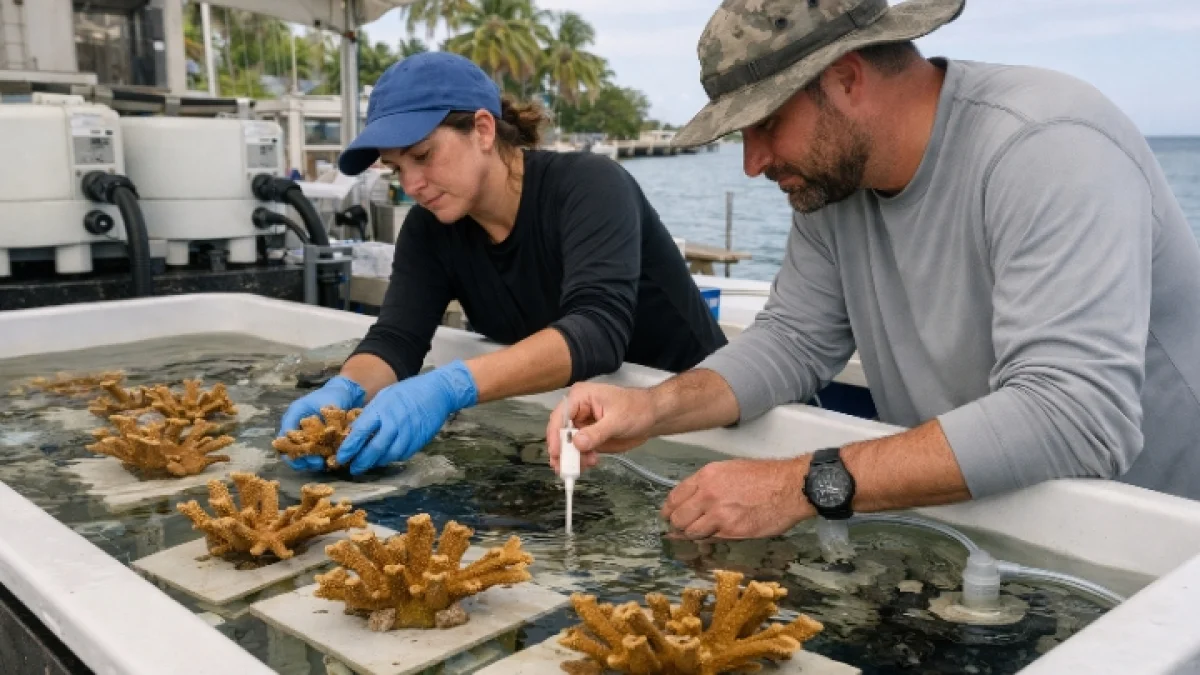
Scientists at the University of Miami's Rosenstiel School of Marine, Atmospheric, and Earth Science transported 30 genetically diverse pieces of elkhorn coral from ocean nurseries on July 22, placing them in controlled saltwater tanks designed to shield the corals from rising sea temperatures while preserving their genetic diversity.
The conservation effort follows severe bleaching events in 2023 and 2024 that devastated Florida's elkhorn coral populations. According to Diego Lirman, a marine biology professor at the University of Miami, those events left the species functionally extinct across much of the reef tract stretching from Broward County to the Florida Keys, meaning surviving colonies are too small and isolated to reproduce naturally in the wild.
Researchers said forecasts and early signs of heat stress in coastal waters prompted the decision to remove part of the remaining nursery stock before ocean temperatures climb further.
"We think 2026 may be a really bad year" for coral bleaching, Lirman said, warning that the expected conditions could rival or exceed the record marine heat wave experienced in 2023.
Divers carefully selected coral fragments representing a broad range of genetic material, wrapping each specimen for transport before sanitizing and securing it in restoration tanks. Scientists said maintaining genetic diversity is essential because different coral lineages may possess varying levels of resistance to heat, disease or ocean acidification, improving future restoration prospects.
The University of Miami also exchanges coral material with partner institutions and hatcheries to reduce the risk of losing irreplaceable genetic stock if a single facility is affected by disease, equipment failure or extreme weather, researchers said.
Elkhorn coral is among the Caribbean's most important reef-building species, creating complex habitats for marine life while helping protect coastlines from storm surge and erosion. NOAA Fisheries lists the species as threatened and says research and restoration programs remain central to its recovery strategy.
Scientists said Florida's reefs have experienced four mass bleaching events within the past decade, with increasingly frequent marine heat waves leaving corals little time to recover between episodes. The rescued corals will remain under controlled care while researchers monitor ocean conditions and continue broader restoration efforts aimed at rebuilding the species in the wild.