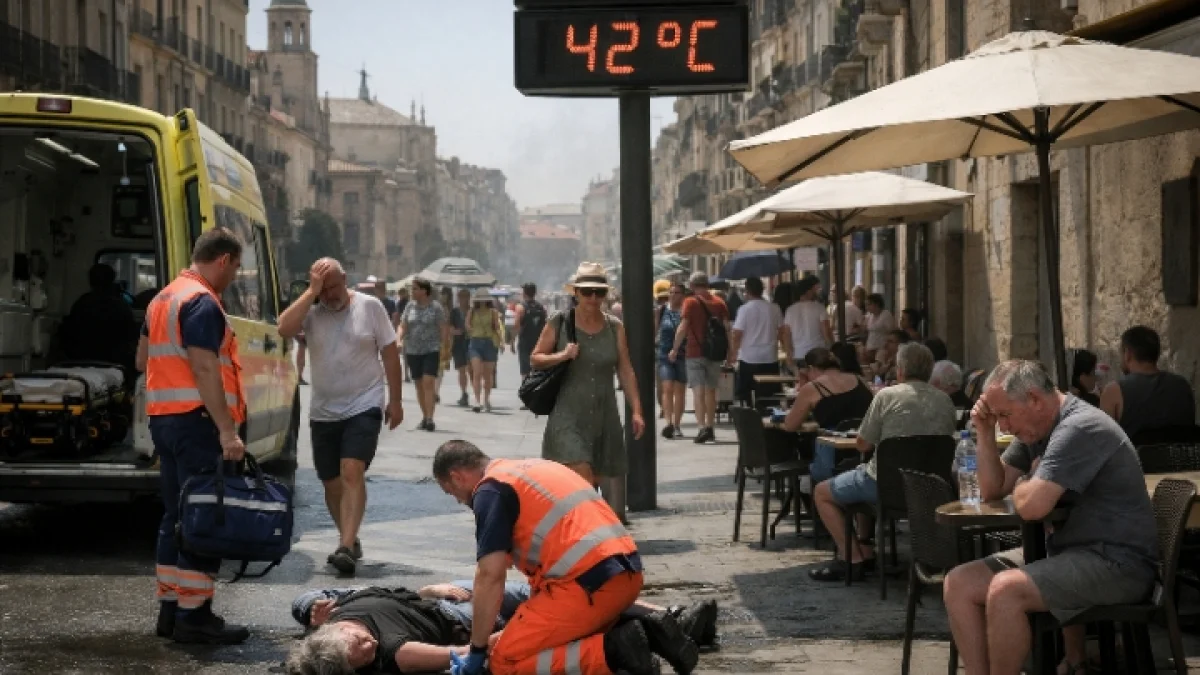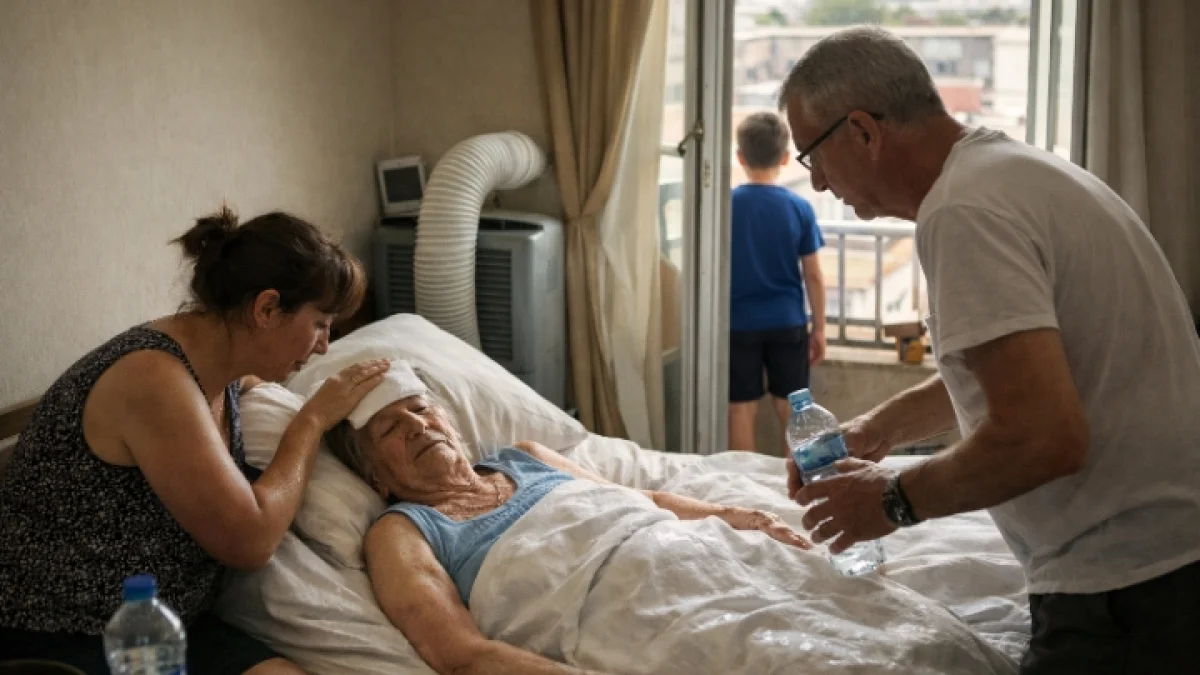
When France's June heatwave settled over cities and villages, families improvised in ways that have become increasingly familiar across Europe. Windows stayed shuttered through the afternoon. Visits to elderly relatives shifted to the coolest hours of the day. Fans ran continuously where they were available, and municipal officials opened cooling spaces as temperatures climbed to record levels.
Weeks later, the scale of the crisis became clearer. France's public health agency, Santé publique France, reported that between June 17 and July 2 the country recorded 5,764 excess deaths compared with expected mortality for that period, making it the deadliest heat event in France since the catastrophic summer of 2003. The updated figures were substantially higher than preliminary estimates released while the heatwave was still unfolding.
For many families, the statistics represent relatives whose underlying illnesses worsened during days of relentless heat rather than deaths officially classified as caused by extreme temperatures. Public health experts have long noted that heat can trigger fatal complications by aggravating cardiovascular and respiratory diseases, particularly among older adults and people with chronic medical conditions.
The revised mortality figures illustrate how the consequences of heat often emerge only after hospitals, care homes and families have already endured the emergency. According to Santé publique France, nearly half of the excess deaths occurred in hospitals, while increases were also recorded in private homes and residential care facilities. Unlike previous heatwaves, excess mortality extended beyond the oldest age groups, although people aged 75 and above still accounted for roughly two-thirds of the deaths.
The findings have renewed comparisons with the 2003 European heatwave, which prompted France to overhaul its public health response. Since then, authorities have developed national heat alert systems, expanded monitoring of vulnerable residents and encouraged municipalities to maintain registries of elderly people living alone. Hospitals and care providers now routinely prepare contingency plans when meteorological agencies forecast prolonged periods of extreme heat.
Yet officials acknowledge that even those measures face growing pressure as unusually intense heat arrives earlier in the summer and affects larger parts of the country simultaneously. The June event covered almost all of metropolitan France during its most intense phase, pushing temperatures beyond seasonal norms and placing sustained strain on health services.
France was not alone. Across western Europe, health authorities compiled evidence of unusually high mortality during the same period. Data collected through EuroMOMO, the European mortality monitoring network supported by the European Centre for Disease Prevention and Control and the World Health Organization, showed that European countries registered more than 10,000 excess deaths during the late-June heatwave, with more than 9,000 among people aged 65 and older.
Lasse Vestergaard, chief physician at Denmark's Statens Serum Institut, which hosts EuroMOMO, told Reuters that mortality at that time of year was unusually high and that the extreme heat was the most likely explanation for the increase. Scientists have also said the late-June heatwave would have been virtually impossible without human-caused climate change, which has increased both the frequency and intensity of extreme heat across Europe.
The health burden extends beyond fatalities. During prolonged periods of extreme heat, emergency departments typically see more patients suffering dehydration, heat exhaustion and heat stroke, while existing heart and lung diseases become more difficult to manage. Older people, young children, outdoor workers and socially isolated residents remain among those considered most vulnerable.
Public officials have also highlighted practical challenges that accompany such events. High nighttime temperatures reduce opportunities for recovery, particularly in homes without air conditioning. Families caring for elderly relatives often shoulder additional responsibilities, checking regularly on hydration, medication schedules and indoor temperatures as official warnings urge residents to avoid strenuous activity during the hottest hours.
The revised French figures underscore another characteristic of heat-related mortality: it is rarely visible in real time. Unlike floods, fires or storms, extreme heat leaves little immediate physical evidence, and many deaths occur after existing illnesses worsen. As a result, public health agencies rely on excess mortality analysis, comparing observed deaths with expected levels, to understand the full impact only after data have been compiled.
The latest assessment also reflects how official understanding of the crisis evolved. Earlier in July, French authorities had estimated about 2,025 excess deaths linked to the heatwave. As additional mortality data became available, the national health agency concluded that the toll was considerably higher, demonstrating the importance of delayed statistical analysis in measuring heat's effects on public health.
Meanwhile, much of southern Europe continues to confront recurring episodes of extreme heat alongside drought and major wildfires. Spain, Italy, Greece and other Mediterranean countries have faced dangerous temperatures during the same season, reinforcing warnings from health authorities that adaptation measures will become increasingly important as heatwaves grow more frequent.
For French families, however, the significance of the updated mortality figures lies less in continental comparisons than in the confirmation of what many experienced during those weeks in June. Behind the national total are thousands of households whose losses became visible only after statisticians completed their work, turning an invisible weather emergency into one of France's deadliest public health events in more than two decades.