WASHINGTON — New research examining toxic metals in commercially available tampons has added to scientific understanding of potential exposure, with U.S. regulators concluding that trace amounts of metals detected in tested products are unlikely to pose a health risk under normal conditions of use, while researchers continue to call for additional study of menstrual product safety.
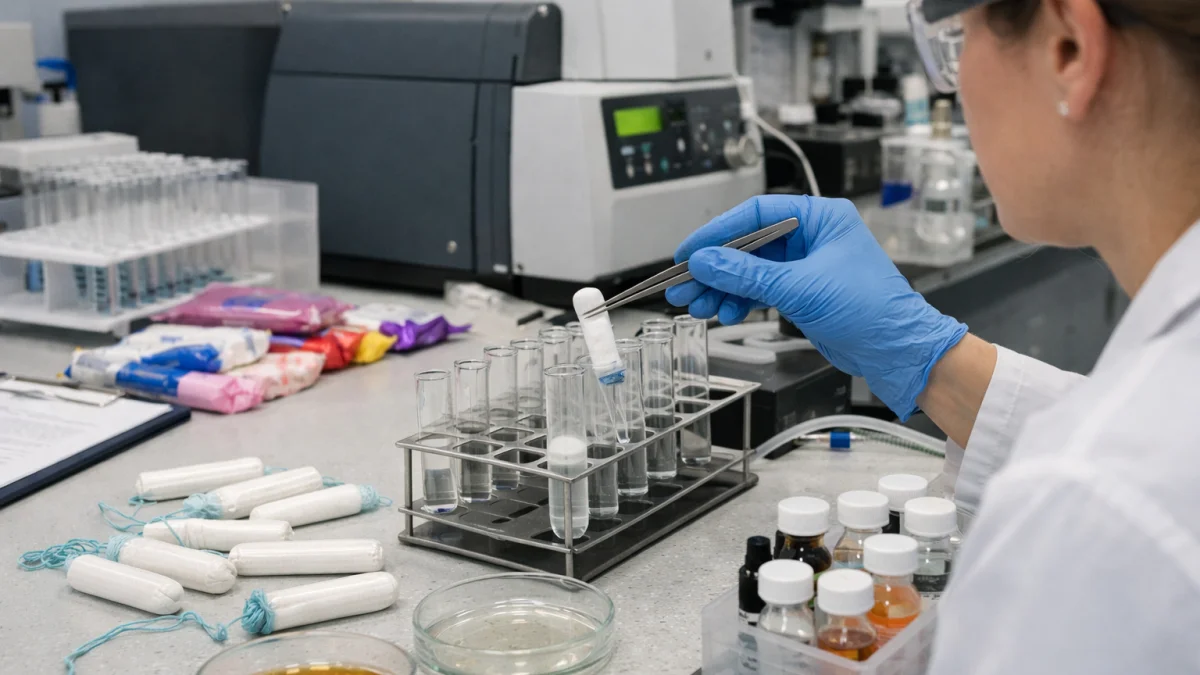
The latest findings stem from a toxicological risk assessment by scientists at the U.S. Food and Drug Administration (FDA), published in the peer-reviewed journal Toxicological Sciences in 2026. The researchers analyzed 11 tampon products legally marketed in the United States, detecting 19 metals, including trace levels of arsenic, cadmium and lead. They also evaluated how much of those metals could be released under laboratory conditions intended to simulate use.
According to the FDA study, the estimated exposure from metals released during tampon use remained well below established toxicological thresholds. The agency said the calculated margins of safety indicated "negligible toxicological concern" for the metals detected in the products examined. The FDA stated that while trace metals were present, the amounts released during use were too small to cause harm based on its assessment.
The research follows a widely cited 2024 study published in Environment International, which reported measurable concentrations of 16 metals in 30 tampon samples representing multiple brands sold in the United States and Europe. That study detected metals including lead, arsenic, cadmium and mercury but did not determine whether those substances could leach from tampons during use or be absorbed through vaginal tissue. The authors said further research was needed to answer those questions.
The FDA said its investigation was designed to address that gap by measuring both the metals present in tampon materials and their potential release under testing conditions. Researchers concluded that even under conservative assumptions, estimated exposure remained minimal.
Scientists involved in the earlier research have continued to emphasize that detecting metals in products does not by itself establish a health risk. They have called for additional studies examining real-world exposure, long-term health outcomes and broader testing across menstrual products.
The FDA said tampons marketed in the United States are regulated as medical devices and that its latest findings expand scientific evidence regarding metal content and potential exposure. Researchers noted that continued investigation could further refine understanding of menstrual product safety, but the agency's current assessment found no evidence that trace metals detected in the tested tampons present a meaningful toxicological risk during normal use.