GENEVA — Public health authorities are closely monitoring the potential health consequences of ongoing geopolitical tensions, warning that conflict-related disruptions to health services, humanitarian supply chains and population displacement could increase risks for vulnerable communities even beyond areas directly affected by violence.
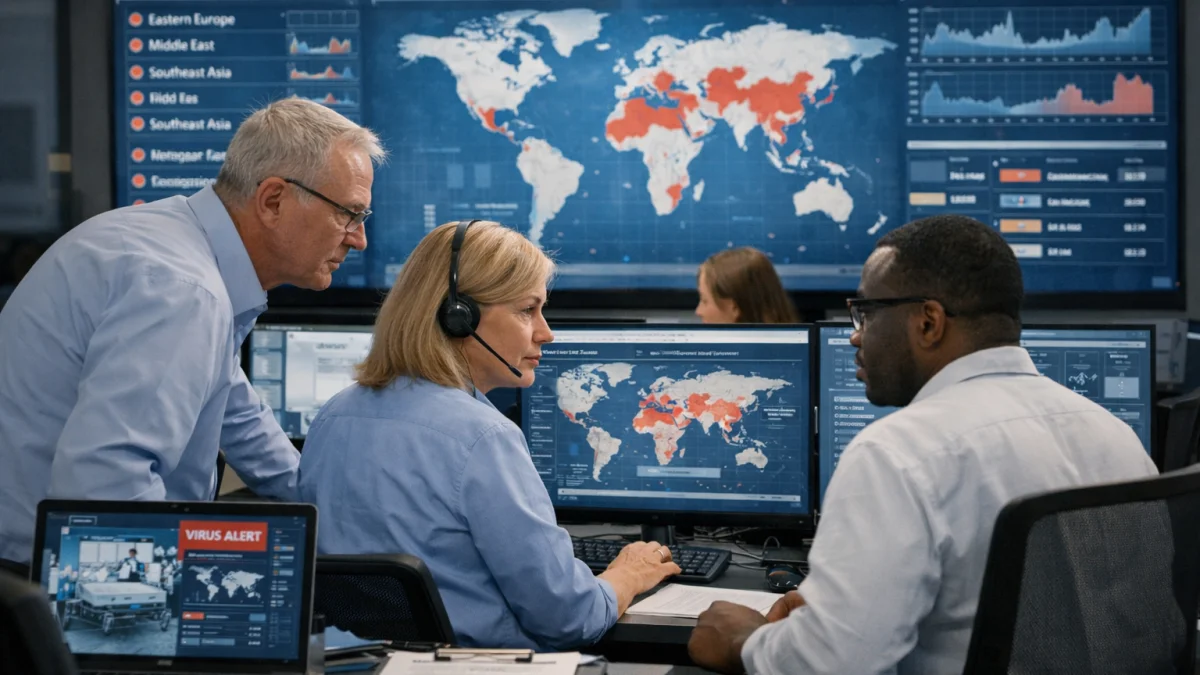
The World Health Organization (WHO) said it continues to coordinate with national health ministries and humanitarian partners to track the impact of conflicts on health systems, disease surveillance and access to essential medical services. The agency has emphasized that interruptions to transport routes and logistics networks can delay deliveries of medicines, vaccines and emergency medical supplies needed in multiple countries.
WHO Director-General Tedros Adhanom Ghebreyesus said earlier this year that the organization was concerned about the broader public health implications of escalating regional conflicts, including attacks on health facilities, displacement of civilians and potential interruptions to emergency operations. The agency has also highlighted concerns over possible chemical, biological or radiological risks in areas affected by hostilities while stressing that healthcare facilities and personnel must be protected under international humanitarian law.
According to WHO, disruptions to its emergency logistics hub in Dubai and restrictions affecting regional transport routes have complicated the movement of humanitarian health supplies, delaying assistance intended for multiple countries. The organization said it is working with partners to pre-position medicines, trauma supplies and laboratory materials where access remains possible.
Health officials have also warned that conflict can heighten the risk of infectious disease outbreaks by damaging water and sanitation infrastructure, interrupting vaccination campaigns and forcing large numbers of people into overcrowded shelters. Such conditions can increase transmission of respiratory illnesses, diarrheal diseases and other communicable infections, particularly among children, older adults and people with chronic medical conditions.
Separately, international health agencies continue to respond to disease outbreaks in conflict-affected regions. In the Democratic Republic of Congo, health officials and aid organizations have said insecurity, population displacement and reduced humanitarian access have complicated efforts to contain an Ebola outbreak, while attacks on healthcare workers have disrupted response operations in some affected areas.
WHO said it is maintaining enhanced monitoring of humanitarian health needs and supporting countries in sustaining essential health services while strengthening surveillance systems. The agency has continued to call for safe humanitarian access, protection of healthcare workers and facilities, and international support to maintain emergency health operations as global tensions persist.