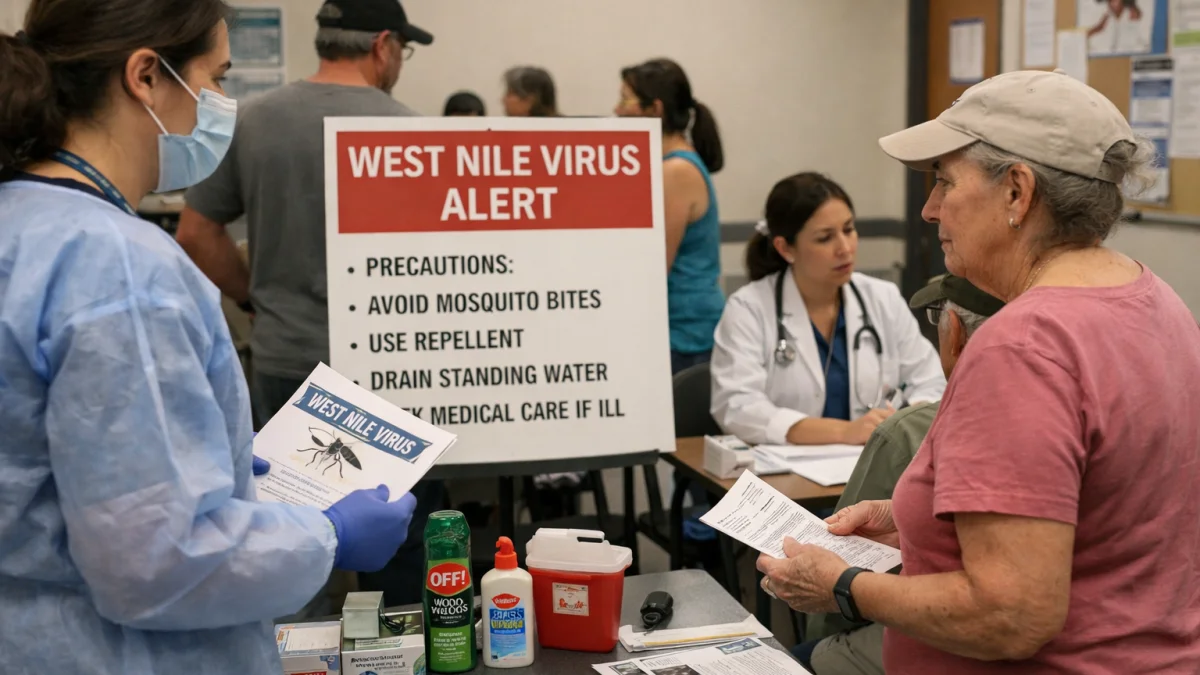
A sharp early-season rise in West Nile virus activity across the United States has prompted health authorities to expand surveillance and renew public health warnings, reflecting what federal officials describe as the earliest and most active start to the mosquito-borne disease season in more than two decades. The U.S. Centers for Disease Control and Prevention (CDC) said the number of reported human infections by the end of June was the highest for that point in the year since 2004, while virus activity had already been detected in 23 states.
The development is significant because West Nile virus follows a well-established seasonal pattern, with human infections typically increasing during the summer before peaking in late summer and early autumn. An unusually early rise in mosquito infections, infected birds and human cases extends the period during which transmission can occur and increases the likelihood that health agencies will need to sustain surveillance and mosquito-control measures over a longer period than usual. Public health officials stress that surveillance data remain preliminary, but they view the early trend as an important indicator of elevated seasonal risk rather than a definitive forecast of the year's final case total.
According to the CDC, West Nile virus remains the leading cause of mosquito-borne disease in the contiguous United States. The virus is maintained primarily in a transmission cycle between mosquitoes and birds, while humans become infected through the bite of an infected mosquito. Most infected people experience no symptoms, but approximately one in five develops a febrile illness, and a small proportion develop severe neurological disease, including meningitis or encephalitis. Older adults and people with weakened immune systems face the greatest risk of serious illness.
Federal officials attributed the current concern not simply to the number of reported infections but also to the severity of many early cases. As of June 30, the CDC reported at least 48 confirmed human cases, including 38 cases of neuroinvasive disease. By comparison, the agency said the average number of reported cases by the end of June since 2004 has been about 10. The CDC also noted that activity had been identified across more states than at the same point in any of the previous 10 years, suggesting widespread early circulation of the virus.
The early increase has coincided with reports from multiple states of infected mosquito pools, birds and human infections. California officials have reported a marked increase in infected birds compared with the previous year, while local authorities have intensified mosquito surveillance and urged residents to report dead birds that may indicate virus circulation. Texas has detected the virus in hundreds of mosquito traps across several jurisdictions, prompting additional public advisories. Similar surveillance findings have also been reported in parts of New England, demonstrating that virus activity is not confined to one geographic region.
Environmental conditions are among the principal factors being examined by experts. Mosquito populations are highly sensitive to temperature, rainfall and standing water, all of which influence breeding and virus amplification. Researchers have long observed that warmer conditions can accelerate viral replication inside mosquitoes while increasing mosquito activity. However, specialists caution that weather alone does not determine the severity of a season, as local ecology, bird populations, mosquito species and public health interventions also influence transmission dynamics.
The current response has emphasized prevention rather than medical treatment. There is no approved human vaccine for West Nile virus, and treatment remains supportive once infection occurs. Consequently, public health agencies continue to recommend measures aimed at reducing mosquito exposure, including using Environmental Protection Agency-registered insect repellents, eliminating standing water around homes, wearing long sleeves and trousers during peak mosquito activity, and ensuring window and door screens remain intact. Vector-control agencies are simultaneously expanding mosquito trapping, larviciding and testing programs to identify areas where transmission risk is increasing.
The surveillance data also require careful interpretation. CDC officials note that reporting delays mean state and local health departments may identify cases before they appear in national datasets. Moreover, mild infections are substantially underreported because many patients do not seek medical care or undergo laboratory testing. Severe neurological infections are therefore considered a more reliable indicator of underlying transmission intensity than total reported cases alone.
The current increase does not necessarily indicate that the 2026 season will become the largest on record. West Nile virus activity has historically fluctuated considerably from year to year, with localized outbreaks depending on environmental conditions and mosquito ecology. Health experts therefore caution against drawing conclusions about the eventual national burden based solely on early-season surveillance while acknowledging that the unusually rapid emergence warrants heightened attention.
The confirmed picture remains one of unusually early and geographically widespread virus activity, supported by federal surveillance and multiple state health reports. Public health agencies continue to monitor human infections, mosquito populations and infected wildlife while updating surveillance data throughout the summer. Officials say the coming weeks will be critical in determining whether the early surge develops into a broader seasonal increase or stabilizes as mosquito-control efforts and changing environmental conditions influence transmission.