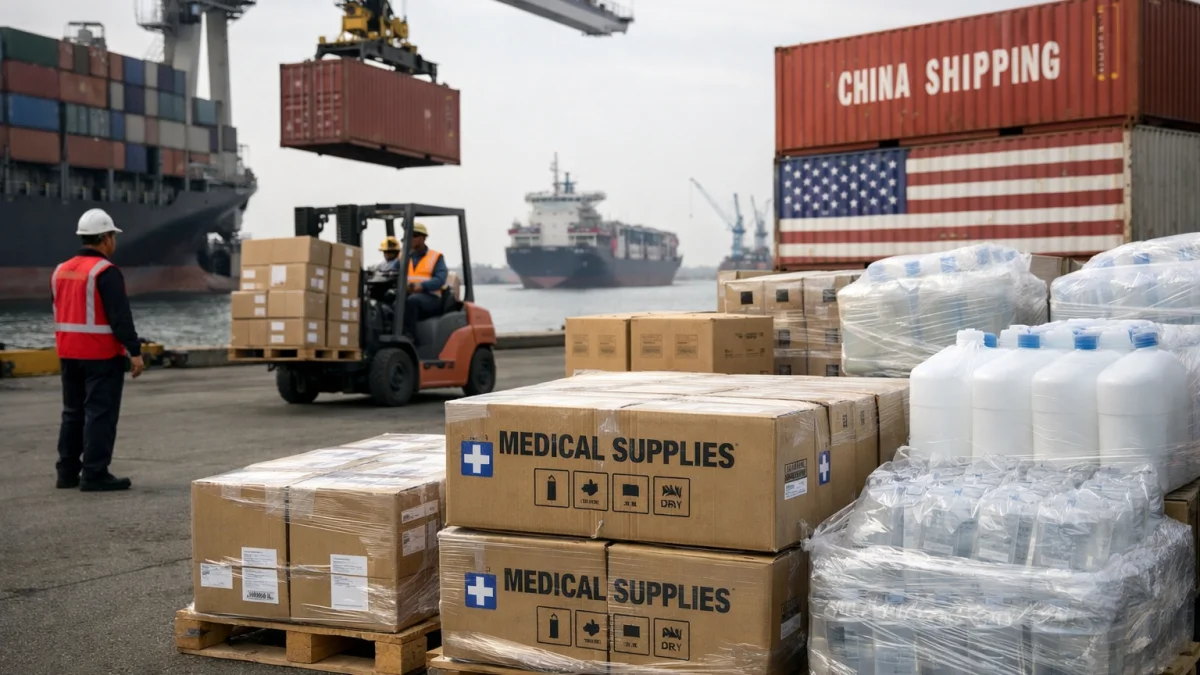
GENEVA — Governments, health agencies and manufacturers are stepping up efforts to strengthen medical supply chains as geopolitical tensions, trade restrictions and transport disruptions increase pressure on the movement of medicines, medical devices and essential healthcare materials, according to officials and industry organizations.
The renewed focus follows months of disruptions affecting global shipping routes, rising energy and raw material costs, and continued efforts by governments to reduce dependence on single-country suppliers for critical medical products. Health authorities in several countries have expanded supplier diversification strategies and stockpile planning while reviewing procurement policies for essential medicines and hospital equipment.
The World Health Organization has urged countries to build more resilient and digitally integrated procurement systems, saying lessons from the COVID-19 pandemic have been reinforced by subsequent conflicts and economic instability. Speaking at a World Health Assembly side event in May, WHO Eastern Mediterranean Regional Director Dr. Hanan Balkhy said resilient supply chains must be established before crises emerge rather than during emergencies.
Healthcare procurement agencies have also reported growing concern over products that depend on petrochemical-derived materials, including medical plastics and other hospital consumables. Britain's NHS Supply Chain said it had strengthened intelligence-led monitoring of suppliers and introduced a watchlist for products potentially affected by developments in the Middle East, while noting there had been no material change to patient services.
Singapore's Ministry of Health has said procurement costs for some medical consumables increased earlier this year because of higher petrochemical feedstock prices linked to regional tensions, but described the overall impact on public healthcare as manageable and said efforts to diversify suppliers were continuing.
Industry logistics providers have reported that shipping routes through the Middle East remain subject to operational adjustments, with longer transit times and higher transport costs influencing sourcing decisions across Asia and other regions.
Analysts say pharmaceutical supply chains remain especially vulnerable because active pharmaceutical ingredients, manufacturing, packaging and distribution frequently span multiple countries. Any disruption affecting shipping, export controls or critical raw materials can delay deliveries and increase costs for healthcare providers, although the scale of the impact varies by product and region.
Governments and international health organizations continue to promote supplier diversification, regional manufacturing capacity and greater visibility across procurement networks as part of longer-term resilience strategies. No major international health authority has reported widespread global shortages directly attributable to the latest geopolitical developments, but officials continue to monitor supply risks and coordinate with manufacturers and distributors.