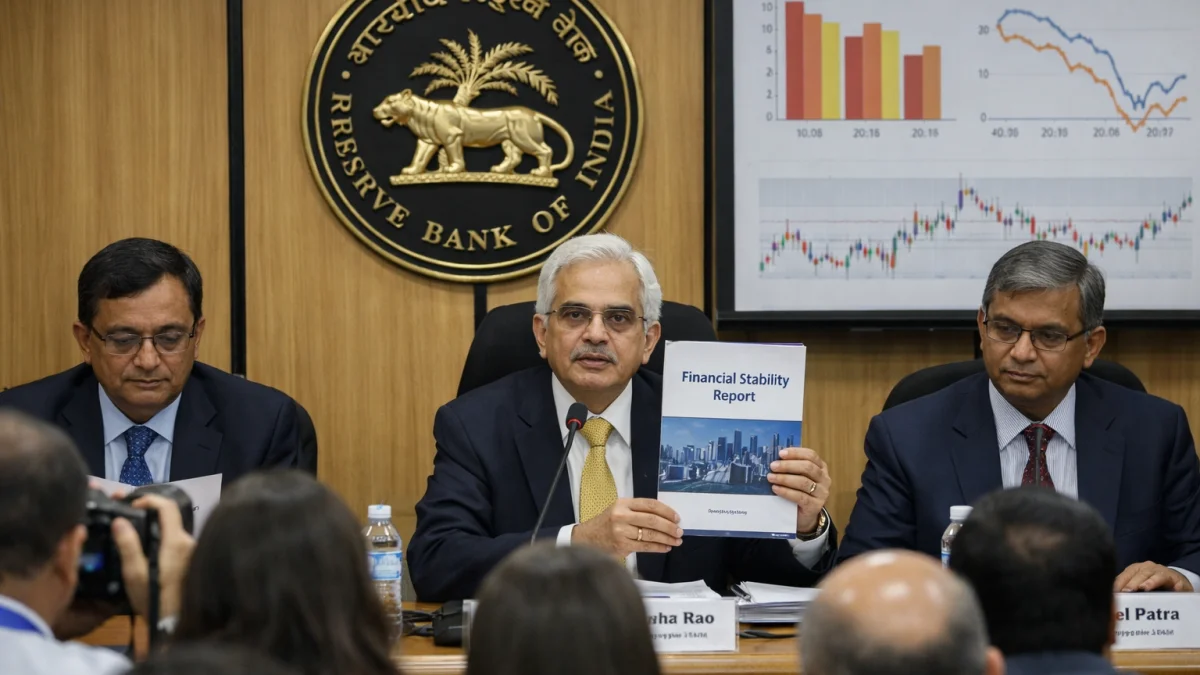
MUMBAI—The Reserve Bank of India (RBI) said the country's financial system remains resilient despite a more challenging global environment, while warning that geopolitical tensions, weather-related disruptions, inflationary pressures and volatility in financial markets continue to pose risks to financial stability.
The assessment came in the RBI's latest Financial Stability Report, released on Saturday, which said India's banking sector has maintained strong capital buffers and adequate liquidity, even as external uncertainties have increased. The central bank said stress tests indicated that most banks would remain above minimum regulatory capital requirements under adverse scenarios.
RBI Governor Sanjay Malhotra said India's macroeconomic fundamentals remained strong but cautioned that risks stemming from weak monsoon conditions, conflict in West Asia and uncertainty in the global economy could weigh on growth and financial conditions. He said policymakers would continue to monitor emerging vulnerabilities closely.
The report highlighted the banking sector's continued improvement in asset quality and capitalisation while urging financial institutions to strengthen risk management as credit growth, digitalisation and interconnected financial markets increase operational and cyber risks. The RBI also reiterated the need for regulated entities to maintain robust governance over third-party service providers and data security.
The central bank's assessment comes as inflation has recently moved above the RBI's 4% target after higher food and fuel prices, prompting markets to reassess the outlook for monetary policy. While some economists had previously expected additional interest-rate increases, several analysts have since revised their forecasts, citing expectations that inflationary pressures could moderate if supply conditions improve.
According to Reuters reporting earlier this week, India's consumer inflation accelerated to 4.38% in June, the first breach of the central bank's target in more than a year, driven by higher food and fuel costs linked to delayed monsoon rains and global energy market disruptions.
The RBI said it would continue monitoring domestic and international developments to preserve financial stability, noting that evolving geopolitical conditions, climate-related shocks and shifts in global financial markets require continued vigilance. The central bank said safeguarding the resilience of banks and other financial institutions remains a priority as economic conditions evolve.