KINSHASA — The Ebola outbreak in eastern Democratic Republic of the Congo has continued to spread, with health authorities reporting more than 1,100 confirmed cases as the virus affects multiple provinces in the region.
The outbreak, caused by the Bundibugyo virus and declared on May 15, 2026, in Ituri Province, is the 17th Ebola outbreak in the DRC since 1976. As of June 24, officials recorded 1,118 confirmed cases and 291 confirmed deaths in the country, according to the European Centre for Disease Prevention and Control. Ituri Province remains the most affected, with over 1,000 cases reported across numerous health zones.
Cases have also been confirmed in North Kivu and South Kivu provinces, with limited cross-border transmission reported in Uganda. The World Health Organization declared the outbreak a public health emergency of international concern on May 17.
The rapid increase in cases marks one of the fastest-growing Ebola outbreaks on record in its early stages. Response efforts face significant challenges due to insecurity, population displacement, mining-related movements and cross-border travel in the affected areas.
“There is no approved vaccine or treatment for this virus,” Doctors Without Borders noted in a mid-June update on the response.
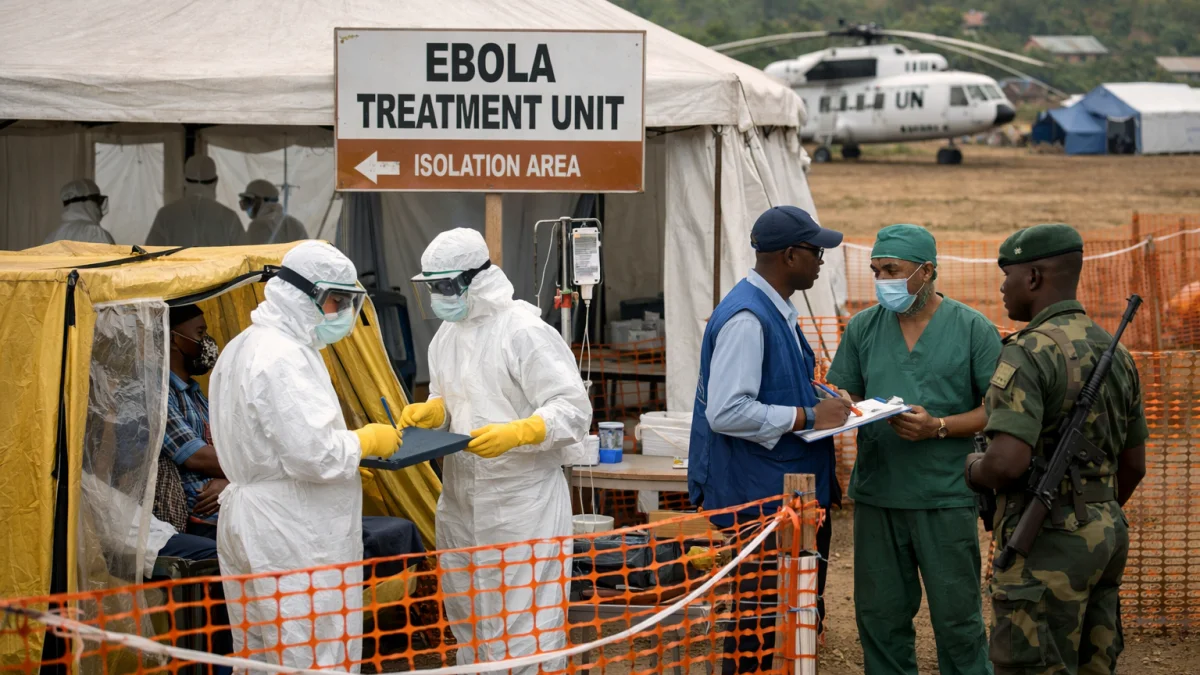
International partners including the WHO, CDC and humanitarian organizations have deployed teams for surveillance, contact tracing, case management and community engagement. However, gaps in these areas, along with community resistance and resource constraints, have complicated containment.
The outbreak occurs amid ongoing humanitarian needs in eastern DRC, where armed groups and conflict have displaced populations and strained health infrastructure. No specific treatment exists for Bundibugyo virus, though supportive care is provided in isolation facilities.
As of Thursday, the outbreak had not yet peaked, according to response officials. Health authorities continue to monitor for further geographic spread, with neighboring countries enhancing surveillance. Details on the exact current case count and response funding gaps remained subject to daily updates by the DRC Ministry of Health and international agencies.