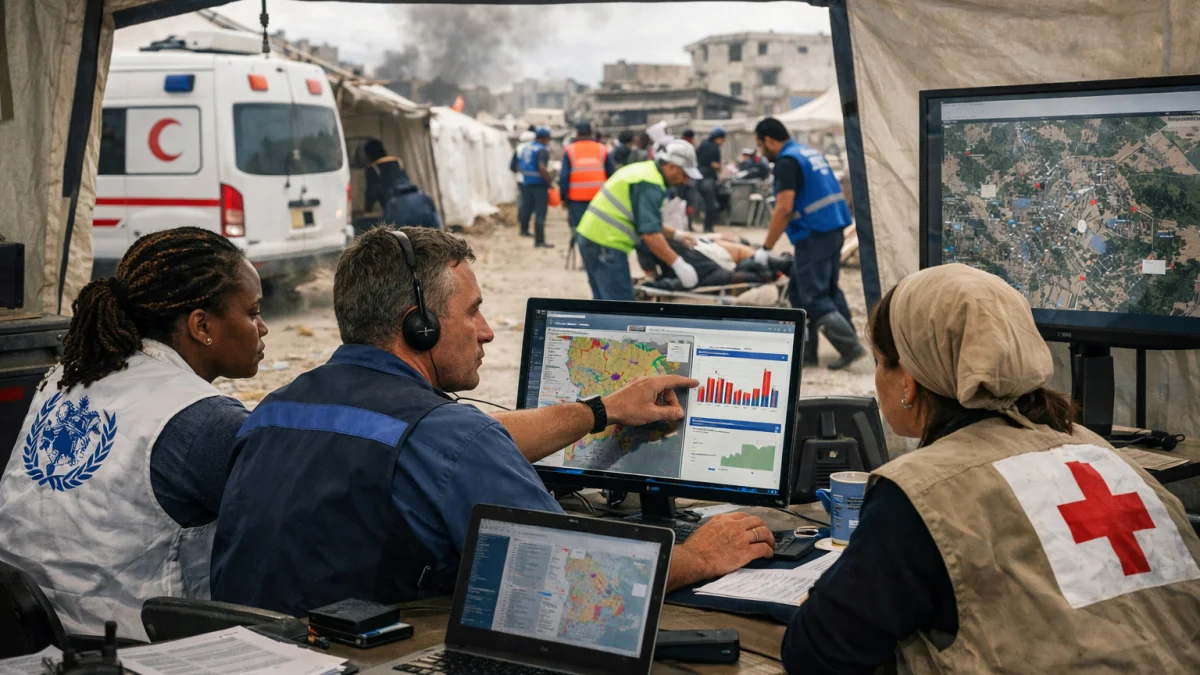
GENEVA — Global health and humanitarian organizations said they are intensifying efforts to monitor medical needs and sustain emergency assistance across conflict-affected regions, as violence, displacement and funding shortfalls continue to strain already fragile health systems.
The World Health Organization (WHO) said ongoing conflicts in several regions have disrupted essential health services, damaged hospitals and clinics, and complicated the delivery of medicines and humanitarian supplies. The agency said it is working with national health authorities and humanitarian partners to strengthen disease surveillance, coordinate emergency medical responses and help maintain continuity of care for people requiring lifesaving treatment.
The International Committee of the Red Cross (ICRC) said its teams continue to provide medical assistance, food, water and protection services in multiple conflict zones while monitoring rapidly changing humanitarian conditions. The organization said recent operations include support for civilians affected by intensified fighting in Sudan and Ukraine, where hostilities have increased humanitarian needs.
Health agencies warned that attacks affecting health facilities, interruptions to supply routes and population displacement increase the risk of disease outbreaks and reduce access to routine and emergency care. WHO said disruptions to regional airspace and transport corridors have also delayed the movement of humanitarian personnel and medical equipment, creating additional challenges for emergency operations.
Humanitarian organizations also warned that financial pressures are limiting their ability to respond as needs continue to grow. UN Women said at least one million women and girls have lost access to humanitarian assistance and essential services over the past 18 months because of funding reductions, while many women-led organizations operating in conflict settings have reduced services or face possible closure.
In a joint statement issued in May, the heads of WHO, the ICRC and Médecins Sans Frontières called on governments to strengthen protections for medical care during armed conflict, saying attacks on health workers, facilities and transport continue despite international legal obligations. The organizations urged states to uphold international humanitarian law and improve safeguards for civilians seeking medical treatment.
The ICRC has said the number of active armed conflicts worldwide has more than doubled over the past 15 years, contributing to rising humanitarian needs while available resources remain under increasing pressure. The organization appealed for continued international support to sustain assistance for populations affected by conflict.
Health and humanitarian agencies said they will continue assessing conditions on the ground, coordinating with local authorities and aid partners, and updating operational priorities as security conditions and humanitarian needs evolve.