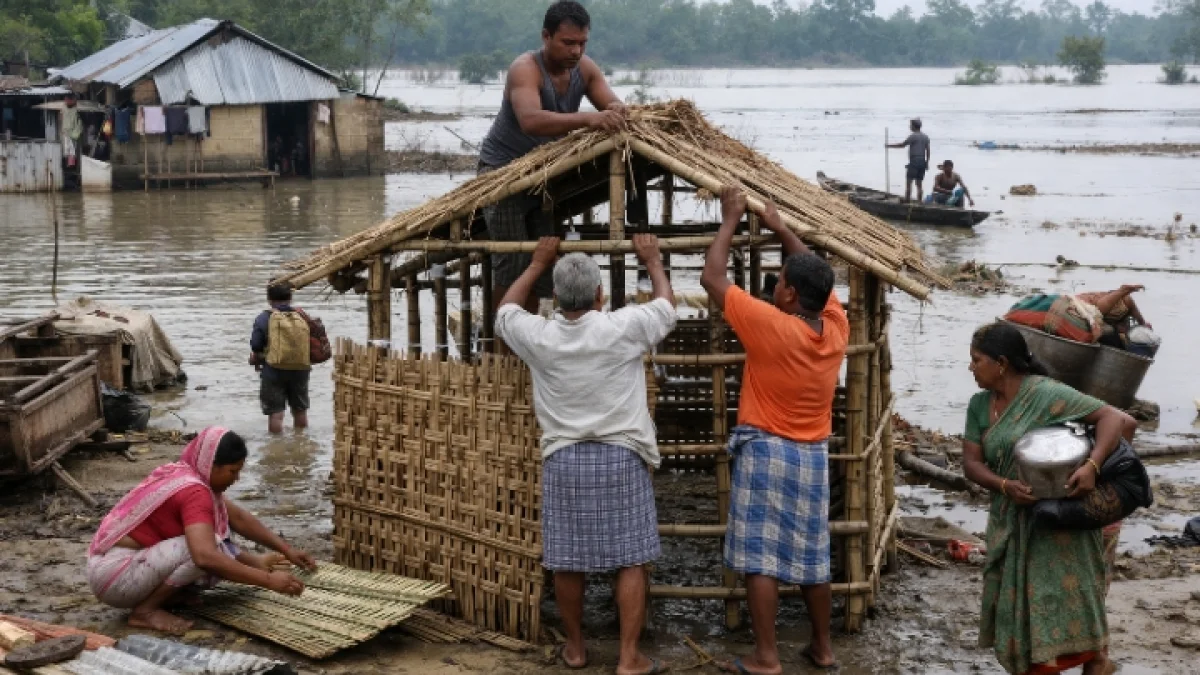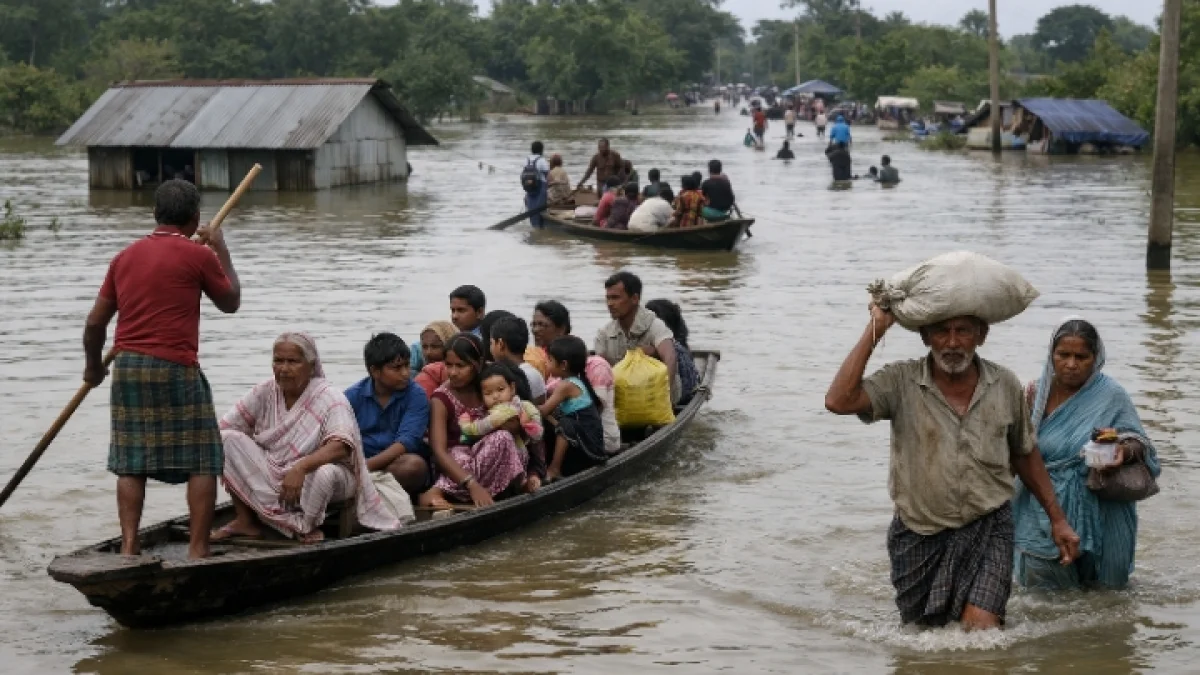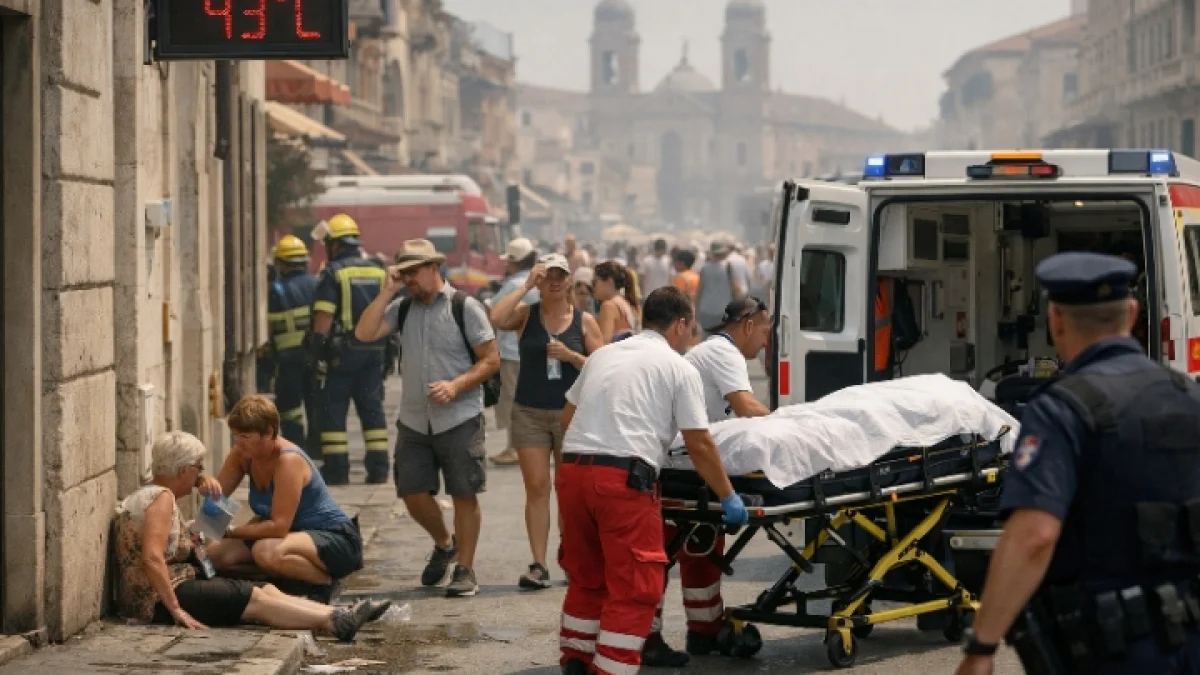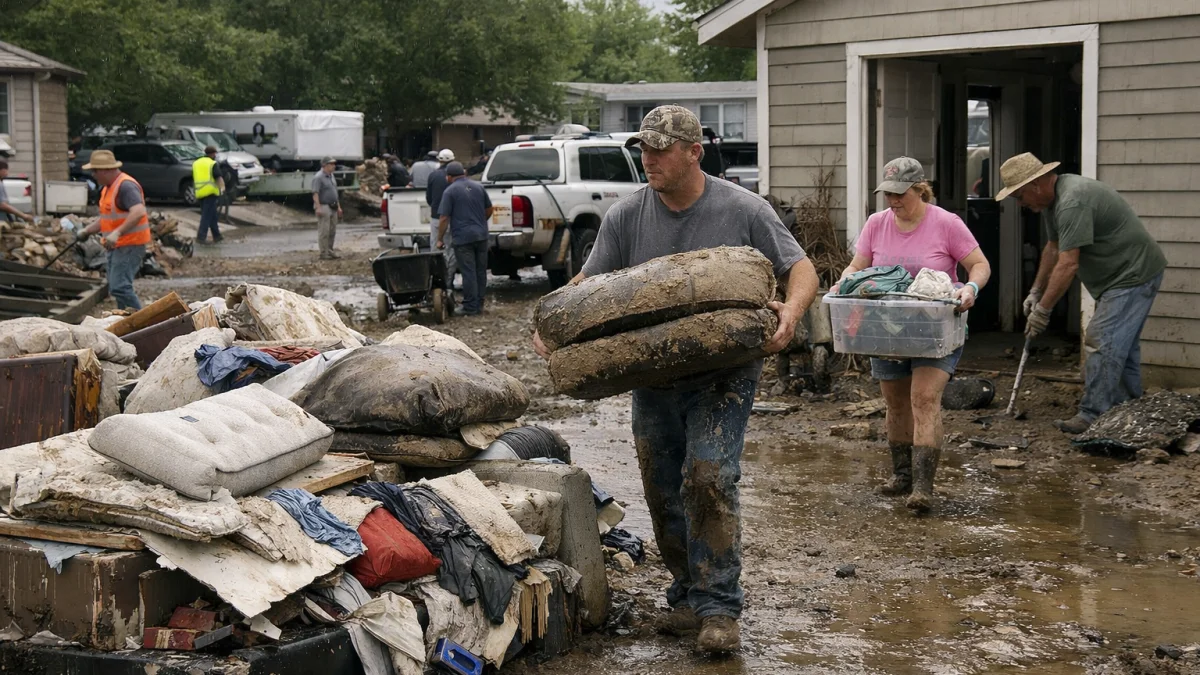
On a stretch of the Guadalupe River where homes once stood, construction crews now work alongside volunteers clearing debris that lingered long after the floodwaters receded. Fresh lumber, concrete slabs and stacks of building materials have replaced some of the wreckage left by the July 2025 catastrophe, but empty lots remain visible reminders of neighbors who have not returned. In nearby communities, signs reading "Hunt Strong" and "All 119 Lives Deserve Answers" still stand, reflecting a recovery that has become as much about memory and accountability as rebuilding.
A year after one of the deadliest flood disasters in modern Texas history, residents across parts of the Hill Country are rebuilding homes, businesses and community institutions while confronting a difficult question: how to recover in places where destructive flooding is no longer viewed as an isolated event.
The story unfolding across Kerr County and neighboring communities is no longer defined solely by the hours when rivers rose with devastating speed. It is increasingly about the months and years that follow—insurance claims, construction delays, financial uncertainty, grief, volunteer efforts and renewed debates over flood preparedness.
In Kerrville, Worship and Connections Minister Ricky Pruitt of Kerrville Church of Christ has watched that transition firsthand. Standing near neighborhoods where floodwaters erased homes, he described a community attempting to reconnect while continuing to absorb the disaster's consequences.
"We gather again at a table together, our kids play on a sports team again together," Pruitt said in Reuters video interviews. "How do we move forward together is really a question that our community asks, and we're trying to answer that."
Across the region, rebuilding is visible but uneven.
Some homeowners have returned after months of reconstruction. Others continue living elsewhere while disputes over insurance, financing or permits delay repairs. Businesses that anchored local economies face similar uncertainty.
Lorena Guillen, owner of Howdy's Restaurant and Blue Oak RV Park, said the process has been slower than many expected.
"We're still rebuilding," she told Reuters. "There's still a lot of homes being rebuilt. There's still a lot of businesses that, like myself, that we still, waiting on loans that we're applying for to be able to rebuild." She said recovery would likely require at least another year.
Recovery has depended heavily on volunteers, many arriving from elsewhere in Texas with experience responding to previous disasters.
Allie Larson, an 18-year-old volunteer working on rebuilding projects, said communities often face their greatest challenge after national attention fades.
"They're really just trying to get their foot out of this hole of grieving and mourning and to continue and to thrive again," Larson said.
Another volunteer, Peyton Smithson, said personal connections to previous disasters motivated many young Texans to help. Having witnessed Hurricane Harvey's impact near her own home, she said those experiences shaped her understanding of what survivors needed beyond immediate emergency relief.
The rebuilding effort has unfolded alongside continuing scrutiny of emergency planning before the floods.
Families who lost relatives continue seeking answers through investigations and legal proceedings examining evacuation planning, warning systems and emergency communications before floodwaters overwhelmed river communities. Attorneys representing some families argue more could have been done to reduce the loss of life, while investigations continue into official decision-making before and during the disaster.
The disaster also prompted broader questions about how Texas communities prepare for increasingly severe weather.
Researchers have long identified central Texas as vulnerable to flash flooding because of its terrain, fast-rising rivers and concentrated rainfall. Scientists also warn that a warming climate can increase the likelihood of heavier downpours, although attributing any individual flood directly to climate change requires separate scientific analysis.
Those concerns have become more immediate as forecasts again warn of flooding across parts of Texas.
State officials this week activated emergency resources, including National Guard personnel, rescue boats and helicopters, ahead of another period of heavy rainfall expected to affect much of the state. Governor Greg Abbott urged residents to monitor forecasts and avoid driving through flooded roads, invoking the long-standing safety message: "Turn Around, Don't Drown."
For residents still rebuilding from last year's disaster, those warnings carry a different weight.
Construction crews racing to finish repairs now work under skies once again watched closely for approaching storms. Newly rebuilt homes often incorporate higher elevations or additional flood-resistant features where updated requirements apply, reflecting efforts to reduce future risk while acknowledging that no design can eliminate it entirely.
The emotional landscape has changed as well.
Public memorials, community gatherings and church events continue to honor those who died while creating spaces where residents can reconnect. Some businesses have reopened, parks have welcomed visitors again and children have returned to recreational activities near the river, signs that daily life has gradually resumed even as reminders of loss remain visible throughout the region.
Recovery, residents say, is measured less by construction milestones than by whether communities can once again imagine a stable future.
That future remains uncertain as Texas enters another season of heavy rain, with flood watches replacing anniversary ceremonies as the latest focus of public attention. Along the Guadalupe River, rebuilt homes stand beside vacant foundations, reflecting both the resilience of communities determined to remain and the enduring reality that rebuilding after catastrophic flooding is not a single event but an ongoing process.