Villagers across Assam have spent much of July doing the work that has become an annual ritual: carrying salvaged belongings from flooded homes, drying clothes and household items under uncertain skies, and waiting to learn whether rising rivers will recede before another spell of rain arrives.
The cycle has intensified this year as severe monsoon flooding swept across large parts of the northeastern Indian state, inundating villages, damaging farmland and forcing hundreds of thousands of people from their homes. In districts where roads disappeared beneath floodwater and boats became the primary means of transport, rebuilding often began before families knew whether they would be displaced again.
The disaster has highlighted both the vulnerability and resilience of communities that live along the Brahmaputra River and its tributaries, where seasonal flooding is part of life but increasingly intense rainfall has made recovery more difficult. According to the Assam State Disaster Management Authority, more than 650,000 people were affected across multiple districts during the latest flooding, while dozens of deaths were reported as rescue operations continued. Authorities said exceptionally heavy rainfall in neighboring Nagaland between July 18 and July 20 contributed to unusually high river flows that overwhelmed many areas.
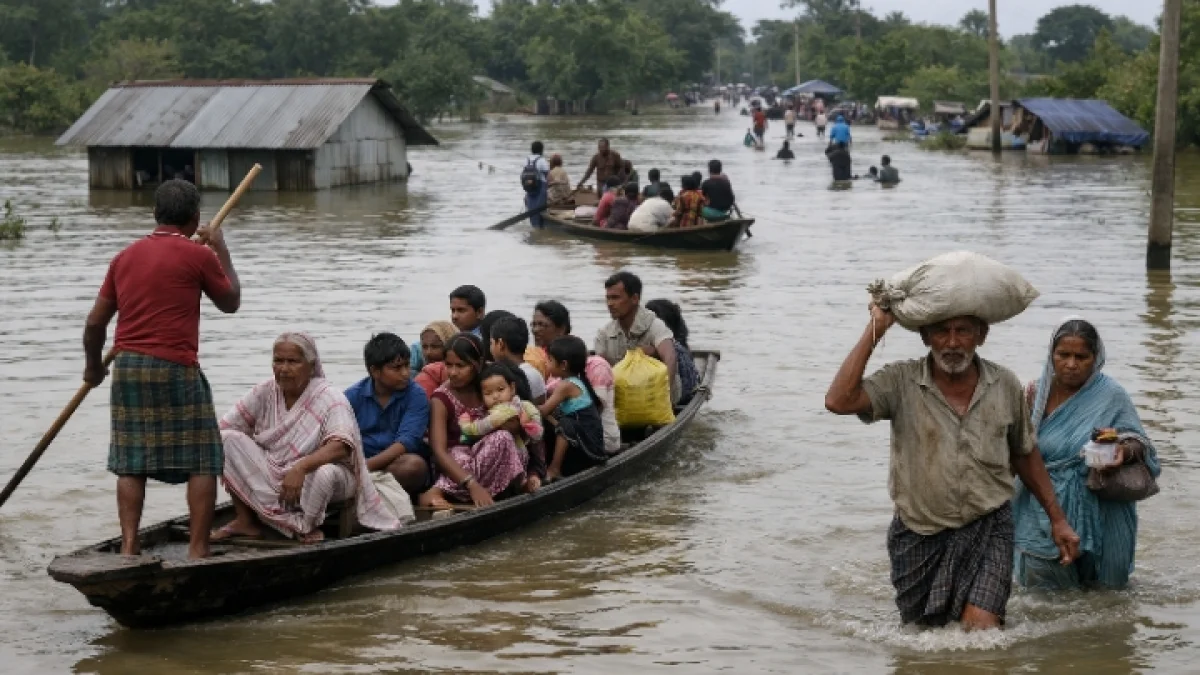
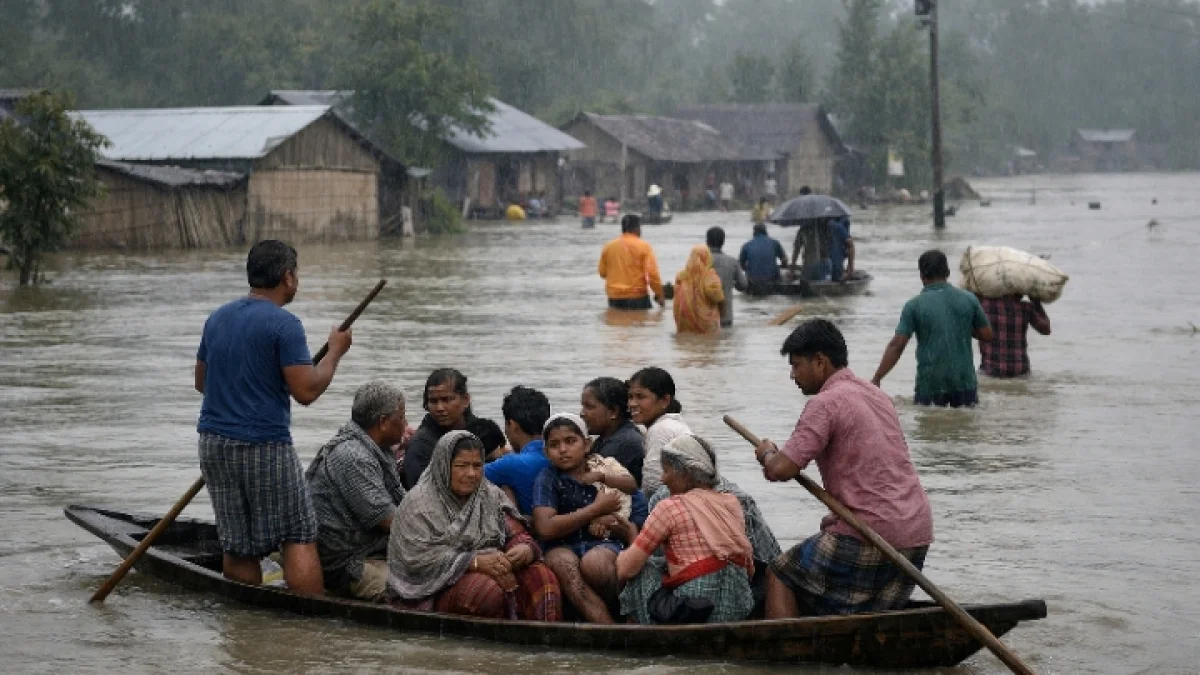
Photographs from flood-hit districts showed residents spreading waterlogged clothing and household possessions in open spaces after waters entered their homes. Others transported furniture, bedding and livestock by boat through submerged villages, trying to preserve whatever remained before returning to damaged houses. Those scenes reflected a familiar pattern in Assam, where recovery often begins while floodwaters are still present.
State authorities, the Indian Army and disaster response agencies have carried out evacuations and relief operations as floodwaters spread across districts. Temporary shelters have housed displaced residents while officials distributed food and essential supplies, although access remained challenging in several locations where transport links were disrupted. Rail services were interrupted in some areas, while submerged roads complicated the delivery of assistance.
For many families, the loss extends beyond damaged homes. Floodwaters submerged agricultural land and tea-growing areas that support local employment, threatening incomes as well as food security. In Upper Assam, flooding affected tea estates and commercial activity, adding economic pressure to communities already coping with repeated natural disasters.
Scientists and disaster specialists have long described Assam as one of India's most flood-prone regions. The Brahmaputra basin receives intense seasonal rainfall, while sediment-laden rivers frequently change course, erode riverbanks and inundate low-lying settlements. Climate researchers have warned that heavier rainfall events associated with a warming climate can increase flood risk, even though no single event can be attributed solely to climate change.
Historical experience shapes how many villagers respond. Homes are often built or modified with flooding in mind, livestock are moved when warnings are issued, and communities rely heavily on local networks during evacuations. Yet officials and researchers say increasingly severe floods are placing greater strain on coping mechanisms that evolved around more predictable seasonal patterns.
Government figures cited by local authorities show that flooding has claimed thousands of lives in Assam over recent decades while repeatedly damaging villages, crops and infrastructure. The recurring losses have fueled calls for stronger flood-control measures, better drainage, improved river management and more resilient infrastructure alongside emergency response systems.
The latest disaster also underscored the importance of early warnings. State agencies issued alerts as river levels rose, but the volume of rainfall and rapid runoff left many communities with limited time to prepare. Officials said rescue efforts remained focused on reaching isolated settlements while monitoring weather conditions and river levels.
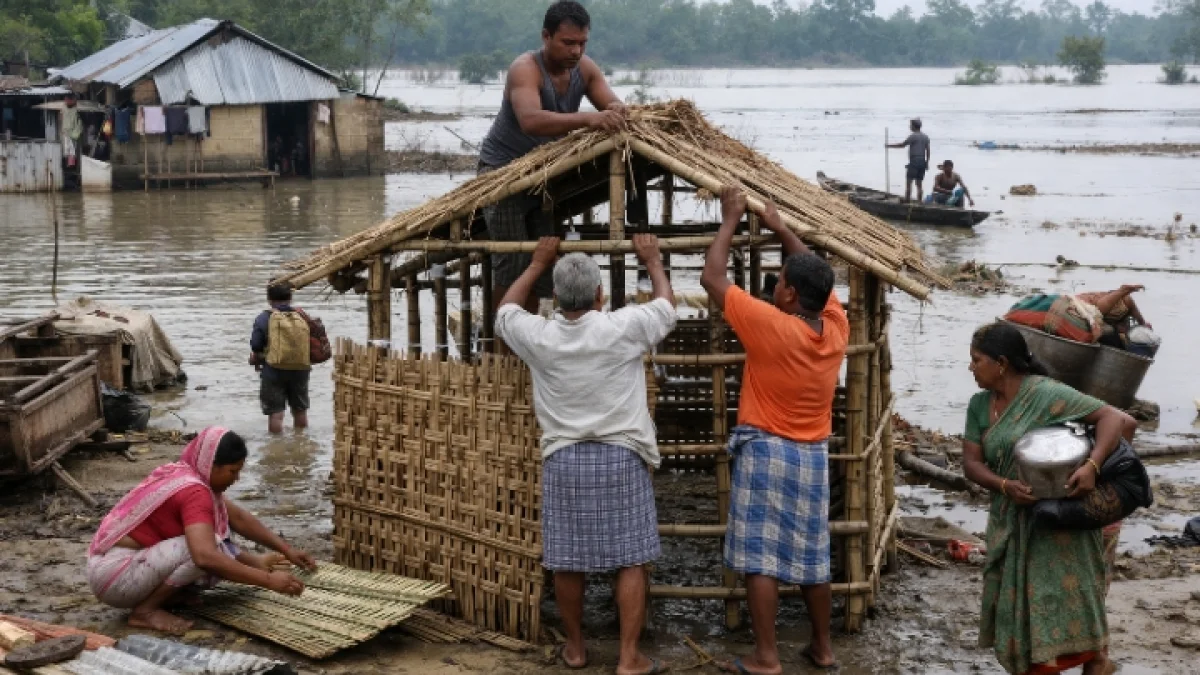
For residents returning home, recovery is measured in practical tasks rather than milestones. Walls must be cleaned of mud, drinking water sources restored, fields assessed and damaged belongings replaced where possible. Families whose crops were destroyed face additional uncertainty as they calculate how much of the agricultural season can still be salvaged.
Local economies also face longer-term challenges. Flood damage to transportation, tea production and agricultural output can affect employment well beyond the emergency phase. Businesses and farmers alike often require weeks or months to recover, particularly when repeated floods interrupt rebuilding before repairs are complete.
As waters gradually recede in some districts, authorities continue damage assessments while monitoring forecasts for additional rainfall. Relief operations remain active in areas where communities are still cut off, reflecting the reality that recovery unfolds unevenly across the state.
For many villagers, rebuilding is neither a single event nor a symbolic act. It is the repeated work of cleaning homes, repairing livelihoods and preparing for another monsoon in a region where life has long been shaped by the rivers, even as those rivers become increasingly unpredictable.