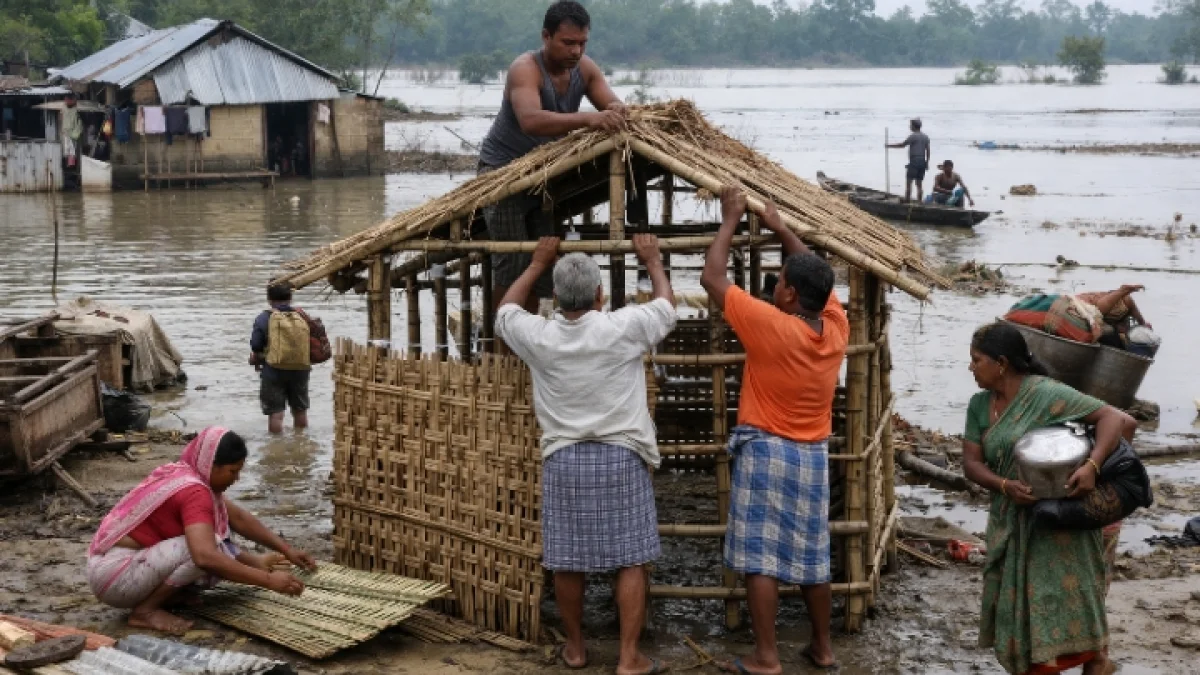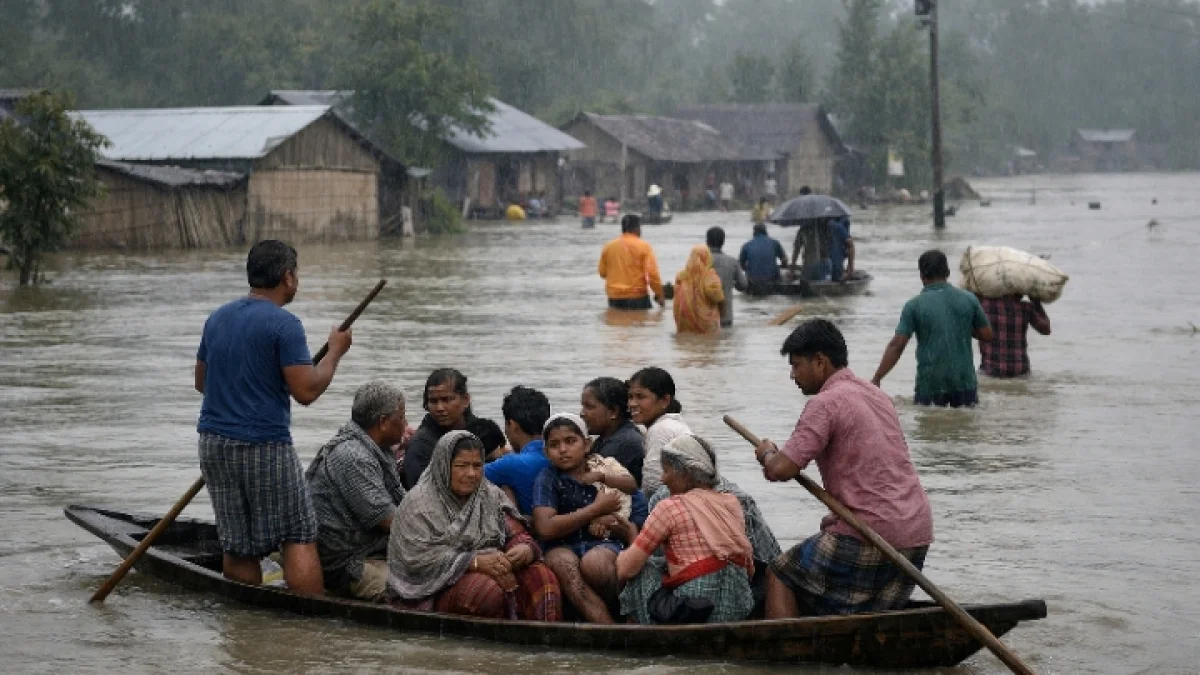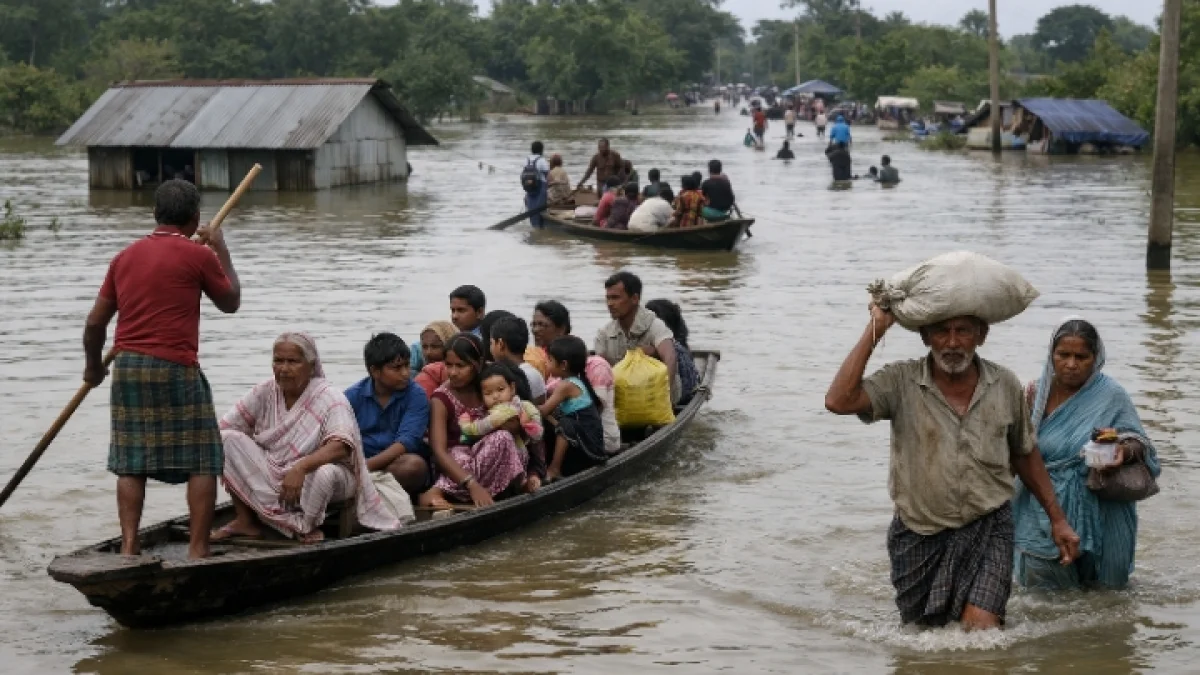
Flooding across Assam has intensified into one of the state's most severe monsoon emergencies in recent years, with official reports indicating dozens of deaths, more than 100 people missing and hundreds of thousands displaced as heavy rainfall swells the Brahmaputra and its tributaries. The disaster has affected large parts of the state, prompting expanded rescue operations and relief efforts while authorities warn that additional rainfall could prolong the crisis.
The scale of the flooding matters beyond the immediate humanitarian toll because it illustrates the growing challenge facing one of India's most flood-prone regions. Assam experiences seasonal inundation almost every year, yet the latest flooding has once again exposed the vulnerability of densely populated riverine communities, transport networks, agriculture and critical infrastructure to increasingly intense monsoon conditions. Officials have described the current event as unprecedented in several heavily affected districts, underscoring concerns that existing flood-management measures remain under strain.
The immediate driver has been persistent heavy rainfall across northeastern India, with the India Meteorological Department issuing repeated warnings for heavy to very heavy rain over Assam and neighbouring Meghalaya during the week. Continued precipitation has raised water levels across the Brahmaputra basin, limiting opportunities for rivers to recede and complicating evacuation and relief operations.
While flooding is a recurring feature of Assam's geography, disaster specialists have long argued that multiple factors combine to increase risk. The Brahmaputra carries one of the world's highest sediment loads, reducing channel capacity in some areas while altering river courses over time. Riverbank erosion, identified by the Assam State Disaster Management Authority as a persistent hazard, has displaced communities for decades and reduced available land in several districts. At the same time, rapid urban expansion, encroachment into flood-prone areas and changing rainfall patterns have increased exposure to flood impacts.
The humanitarian implications extend beyond fatalities. Hundreds of thousands of residents have been forced from their homes, requiring temporary shelters, food assistance, medical care and clean drinking water. Floodwaters also disrupt schools, healthcare services and local markets while damaging roads and bridges that are essential for delivering emergency supplies. Such disruptions often continue long after floodwaters begin to recede, particularly in remote districts where access remains difficult.
Economic consequences are also likely to be significant. Assam's economy depends heavily on agriculture, tea production, oil and natural gas operations and transport links that connect India's northeast with the rest of the country. Flooding during the peak monsoon season can destroy crops, interrupt industrial activity and increase repair costs for public infrastructure. Although comprehensive damage assessments remain underway, the concentration of affected economic assets has raised expectations that losses could be substantial.
The disaster also highlights the importance—and limitations—of India's disaster management framework. Assam's State Disaster Management Authority coordinates preparedness, early warnings and relief alongside district administrations established under the Disaster Management Act, while national agencies provide additional rescue resources when required. Standard operating procedures for evacuation, early warning dissemination and relief camp management are already in place, but repeated large-scale flooding continues to test institutional capacity as multiple districts require simultaneous assistance.
Researchers have increasingly emphasized that improving resilience requires more than emergency response. Studies of flood management in India have argued for stronger district-level risk assessment, better historical impact data and improved planning to prioritize mitigation investments. Such work suggests that repeated high-impact districts require sustained attention through infrastructure upgrades, land-use planning and more effective early-warning systems rather than relying primarily on post-disaster relief.
Climate scientists have also noted that while no single flood event can be attributed solely to climate change, a warmer atmosphere can increase the intensity of extreme rainfall events, potentially worsening flood hazards when combined with local geographic and hydrological conditions. For Assam, where seasonal flooding is already embedded in the natural environment, this raises broader policy questions about adaptation, infrastructure resilience and disaster preparedness rather than simply emergency response.
Official efforts remain focused on rescue, evacuation and relief as authorities monitor river levels, rainfall forecasts and the condition of affected communities. The confirmed death toll, the number of missing people and the full extent of economic damage remain subject to official verification as floodwaters evolve and assessment teams gain access to isolated areas.