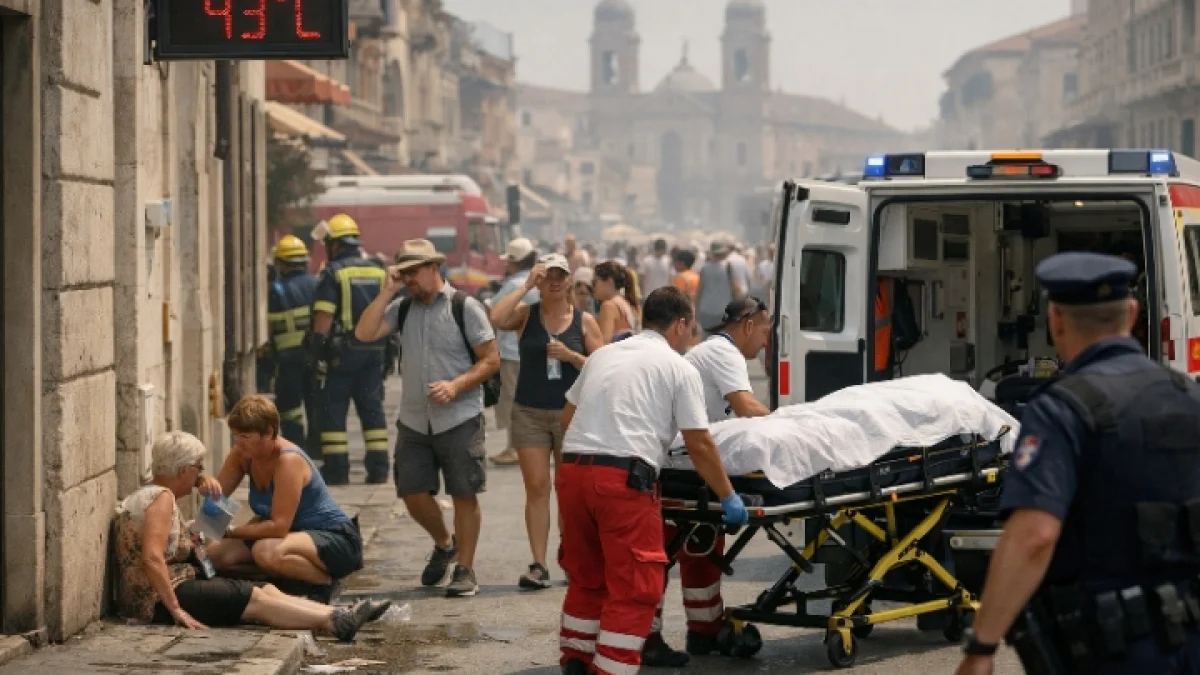
GENEVA — Europe’s prolonged heatwaves in 2026 have driven a sharp rise in heat-related deaths across the continent, with public health authorities reporting thousands of excess fatalities and warning that extreme temperatures are becoming an increasingly severe public health emergency.
The World Health Organization’s Regional Office for Europe said data from five countries had already recorded nearly 10,000 excess deaths linked to this summer’s heat, while stressing that the overall toll was still being assessed as additional national mortality data become available. The agency said Europe remains the world’s fastest-warming continent and warned that recurring heatwaves are placing growing pressure on health systems and vulnerable populations.
France reported one of the highest confirmed national tolls. Public health agency Santé publique France said about 5,764 excess deaths occurred between June 17 and July 2, making the episode the country’s deadliest heatwave since 2003. Authorities said excess mortality was recorded across hospitals, nursing homes and private residences and extended beyond the oldest age groups, although older people remained disproportionately affected.
Health officials across Europe have continued to urge residents to limit outdoor activity during peak temperatures, stay hydrated and check on elderly relatives and neighbors. WHO Regional Director Dr. Hans Henri P. Kluge has described extreme heat as a recurring public health crisis rather than an isolated weather event, saying many heat-related deaths are preventable through stronger preparedness, early-warning systems and heat-health action plans.
The heat has coincided with worsening drought conditions across much of western, central and southern Europe. Scientists from the World Weather Attribution initiative said exceptionally high temperatures accelerated evaporation, rapidly drying soils, rivers and vegetation even in areas that had received substantial winter rainfall. Researchers concluded that human-induced climate change significantly increased the likelihood and severity of the conditions affecting the region.
The prolonged hot and dry weather has also contributed to major wildfires, water restrictions and disruptions to agriculture, inland shipping and electricity generation in several countries. Spain has battled large wildfires during successive heatwaves, while other Mediterranean nations have also remained on heightened alert for fire risk.
WHO said heat is among the leading causes of weather-related deaths globally and noted that Europe has historically accounted for more than one-third of annual heat-related mortality worldwide. The agency said governments should continue expanding adaptation measures as forecasters and health authorities monitor further periods of extreme heat during the remainder of the summer.