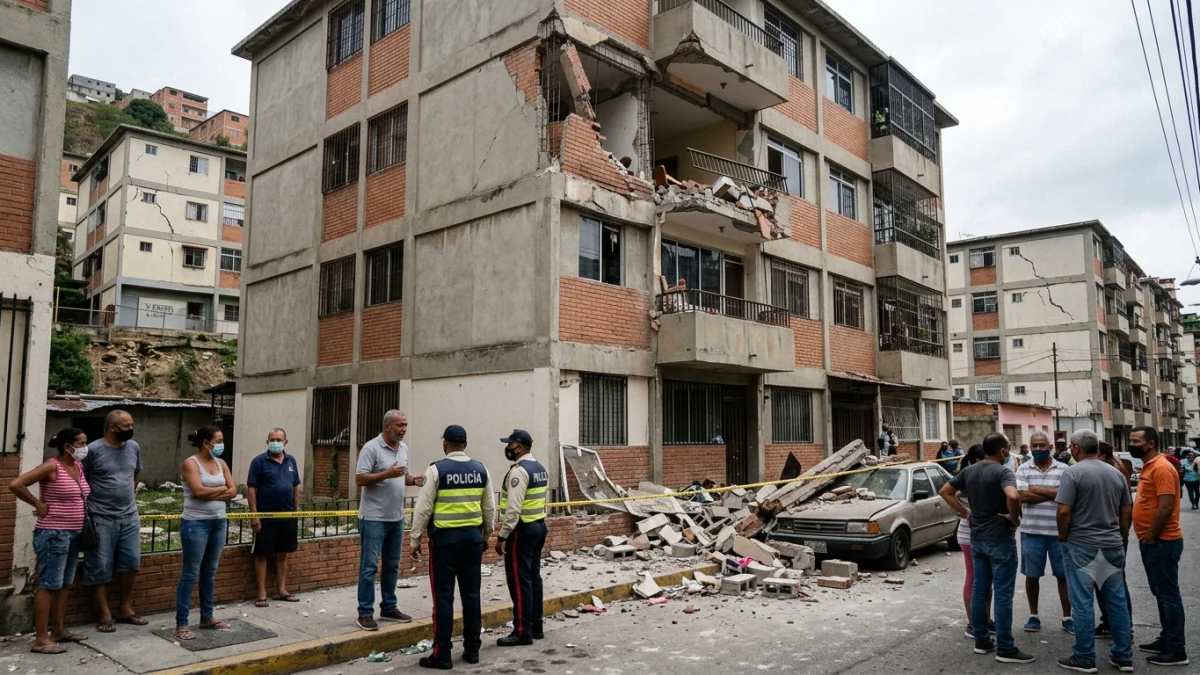
The rising death toll from Venezuela's twin earthquakes has shifted attention from the immediate humanitarian emergency to deeper questions about the country's long-term resilience to seismic hazards, exposing structural weaknesses in disaster preparedness, infrastructure, public health capacity and risk governance that extend well beyond the latest catastrophe.
Authorities said the number of confirmed deaths continued to increase during recovery operations following the magnitude 7.2 and 7.5 earthquakes that struck north-central Venezuela on June 24, while thousands remained injured and displaced. The gradual rise in fatalities weeks after the disaster reflects the scale of building collapses, prolonged search efforts and continuing assessments of affected communities.
The disaster is significant not only because of its human toll but because it has highlighted how exposure to seismic hazards intersects with aging infrastructure, uneven urban development and constrained institutional capacity. Venezuela has long been recognized as vulnerable to earthquakes because of its location along the boundary between the Caribbean and South American tectonic plates. Although destructive earthquakes are relatively infrequent compared with some other regions, scientists have consistently identified the country's northern coastal corridor as an area of elevated seismic risk.
The June earthquakes affected densely populated and economically important areas, including La Guaira and communities connected to the Caracas metropolitan region. According to the United Nations Development Programme, preliminary assessments estimated billions of dollars in direct physical damage, affecting housing, transport networks and public infrastructure. Such losses extend beyond reconstruction costs by disrupting economic activity, public services and household livelihoods.
One of the clearest lessons emerging from the disaster concerns the resilience of critical infrastructure. Assessments by the Pan American Health Organization (PAHO) found damage across dozens of health facilities, while several hospitals continued operating under significant functional constraints weeks after the earthquakes. Reduced specialist capacity, disrupted referral systems and shortages affecting mental health services illustrated how infrastructure damage can evolve into broader public health challenges during recovery.
The prolonged sequence of aftershocks has added to operational difficulties. PAHO reported that more than 1,200 aftershocks had been recorded, complicating engineering inspections, delaying repairs and increasing safety concerns for displaced residents and emergency workers. In seismic disasters, prolonged aftershock activity often slows the transition from emergency response to long-term recovery because authorities must continually reassess damaged buildings and essential facilities.
The earthquakes have also underscored the importance of preparedness rather than response alone. International disaster-risk specialists generally view strong building standards, land-use planning, public education and rapid emergency coordination as the primary determinants of earthquake mortality. Because earthquakes cannot currently be predicted with operational precision, reducing vulnerability before disasters occur remains the central objective of seismic risk management.
Historical experience supports that assessment. Countries exposed to comparable earthquake hazards have achieved markedly different outcomes depending on building-code enforcement, emergency planning and investment in resilient infrastructure. The Venezuelan disaster therefore reinforces a broader international finding that seismic hazards become humanitarian catastrophes primarily when vulnerable populations and critical infrastructure are insufficiently protected.
The response has increasingly shifted toward restoring essential services while addressing secondary risks. PAHO said recovery priorities now include rebuilding health facilities, strengthening referral networks, supporting emergency medical teams and preventing disease outbreaks in affected communities. Mental health services have also become an important component of recovery planning because damaged facilities and displaced populations have increased demand while reducing available capacity.
International assistance reflects recognition that recovery will extend well beyond emergency relief. The European Union announced additional humanitarian funding to support medical equipment and search-and-rescue operations, while United Nations agencies have expanded assistance covering healthcare, reproductive services, logistics and infrastructure recovery. These efforts complement Venezuelan government operations but also demonstrate the scale of external support required following a disaster of this magnitude.
The disaster also illustrates the growing importance of integrating disaster-risk reduction into broader development policy. Urban expansion, infrastructure maintenance, health-system resilience and emergency management increasingly influence how countries absorb natural hazards whose physical occurrence cannot be prevented. International frameworks promoted by the United Nations emphasize reducing vulnerability before disasters occur through resilient construction, stronger institutions and coordinated preparedness rather than relying primarily on post-disaster reconstruction.
For policymakers, the earthquakes provide an evidence-based reminder that recovery and resilience are closely linked. Rebuilding damaged infrastructure offers an opportunity to strengthen construction standards and improve emergency coordination, but doing so requires sustained financial resources, technical expertise and institutional capacity over many years.
The confirmed situation remains fluid as recovery operations continue and authorities update casualty figures. Officials, international health agencies and humanitarian organizations are monitoring aftershock activity, restoration of essential services, infrastructure assessments, public health conditions and the pace of reconstruction while continuing to verify the full extent of damage and humanitarian needs.