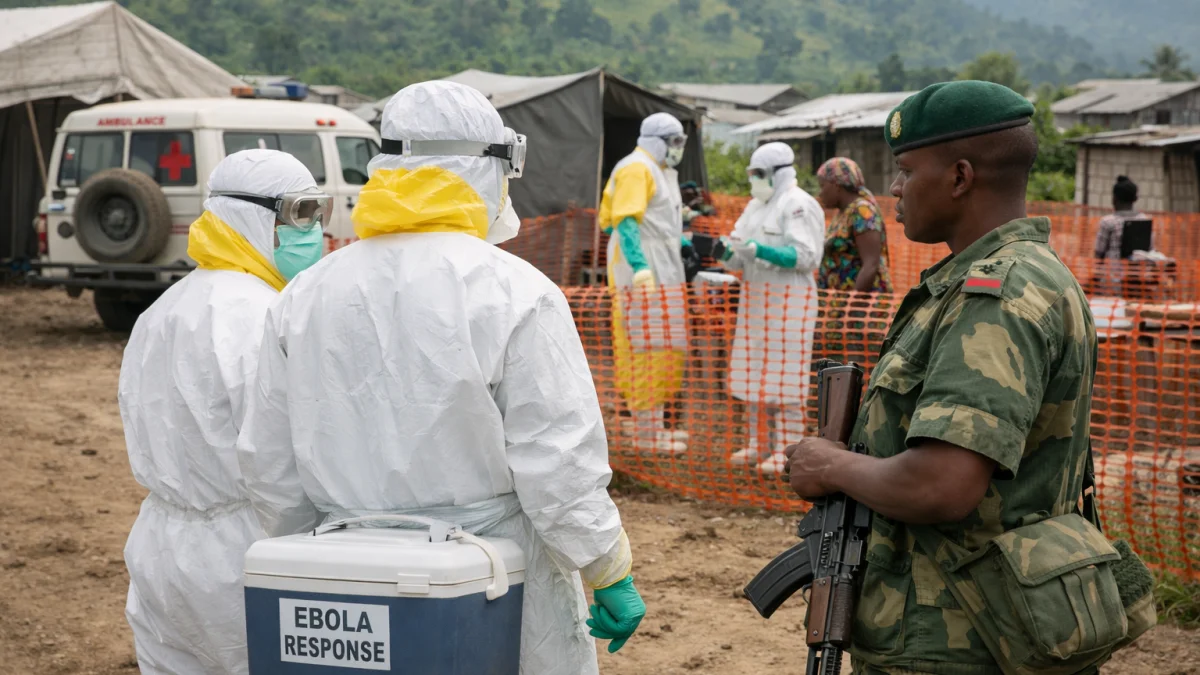
BUNIA, Congo — Safety threats, including attacks on health facilities and response workers, are restricting efforts to contain an Ebola outbreak in the Democratic Republic of Congo, public health officials and humanitarian agencies said, as authorities continue efforts to control transmission in affected provinces.
At least a dozen attacks targeting Ebola response operations have been recorded, disrupting activities such as patient care, surveillance and community outreach, according to officials cited by humanitarian organizations. The violence has forced some response teams to limit movements in high-risk areas and has complicated efforts to reach communities where infections are occurring.
The outbreak, caused by the Bundibugyo virus, remains active in eastern Congo. The World Health Organization said that as of July 15, Congo had reported more than 2,100 confirmed cases and more than 800 deaths linked to the outbreak. WHO said security incidents affecting health facilities had created additional operational challenges, including restricted access for response teams and disruption of surveillance activities.
Health workers have faced resistance from some communities over Ebola control measures, including restrictions around burials and infection prevention procedures. Officials and aid groups have also raised concerns about misinformation contributing to distrust of response teams and increasing tensions around treatment centers and field operations.
The security problems come as responders are working in areas already affected by humanitarian challenges, including displacement, limited access to health services and ongoing instability. WHO has said the outbreak environment is complicated by mobile populations and difficulties delivering basic services, which can increase the risk of continued transmission.
Funding shortages have added pressure to the response. WHO said it had received only a portion of the funds required for its Ebola operations, warning that sustained international support was needed to maintain emergency activities.
Authorities and international partners are continuing measures including case detection, contact tracing, laboratory testing, treatment support and community engagement. WHO said response efforts must remain centered on cooperation with local communities to improve access and reduce transmission risks.
Officials have not announced an end date for the outbreak. Response teams remain deployed in affected areas while monitoring new cases and working to restore access to communities where security concerns have limited operations.