GENEVA — Hospitals in several countries are reviewing emergency response protocols and expanding preparedness exercises as health authorities seek to strengthen resilience against crises linked to geopolitical tensions, including armed conflict, cyberattacks and disruptions to critical infrastructure, according to guidance from the World Health Organization (WHO) and national emergency planning frameworks.
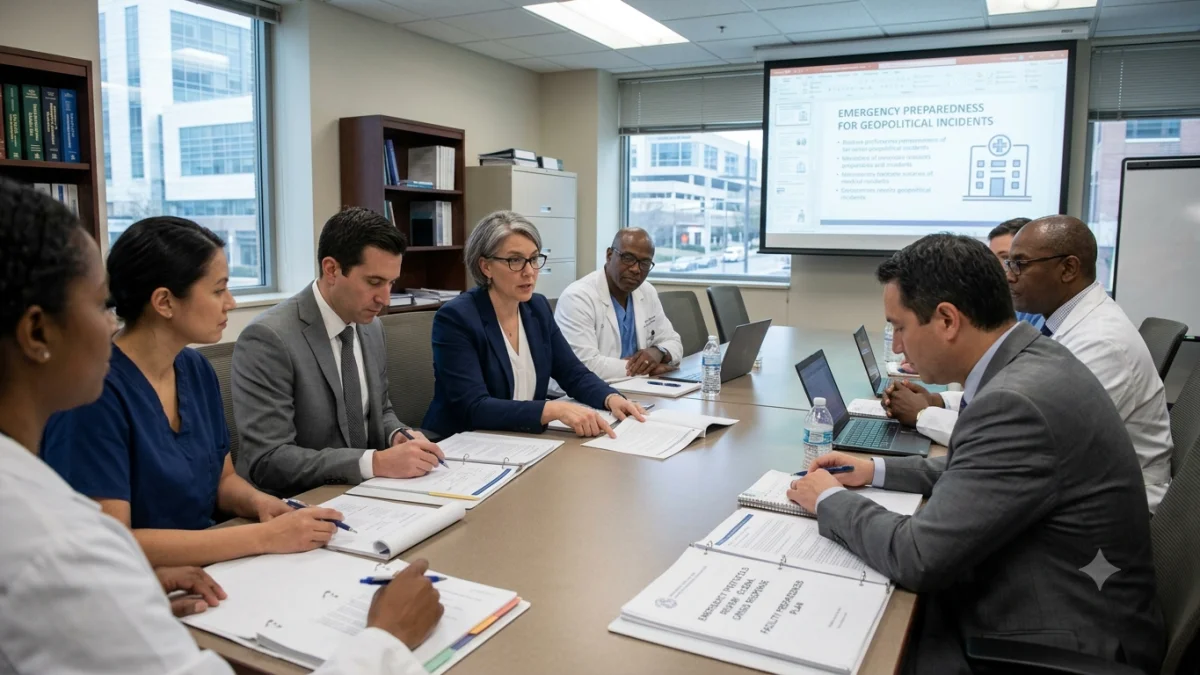
The renewed emphasis on readiness comes as governments and health systems reassess risks that could interrupt medical services or trigger sudden surges in patients. Recent WHO guidance encourages countries to institutionalize regular simulation exercises rather than relying on occasional emergency drills, describing preparedness as a continuous process that identifies operational gaps before a crisis occurs.
WHO has also expanded international simulation exercises involving governments, public health agencies and emergency response partners. In April, its Exercise Polaris II brought together representatives from 26 countries and territories to test coordination during a fictional cross-border disease outbreak, allowing participants to assess emergency workforce deployment, information sharing and health system coordination under realistic conditions.
Health emergency planning increasingly adopts an all-hazards approach that extends beyond infectious disease outbreaks to include armed conflict, cyber incidents, chemical exposures and disruptions affecting essential services such as electricity, communications and medical supply chains, according to WHO technical guidance.
WHO says resilient hospitals depend on infrastructure capable of remaining operational during emergencies, secure access to medicines and equipment, reliable utilities and transport links, and trained personnel able to continue delivering care under adverse conditions. The agency's Hospital Safety Index is designed to help authorities evaluate whether facilities are likely to remain functional during disasters and other emergencies.
Regional health officials have also called for stronger emergency workforce capacity. In June, WHO's Western Pacific office urged governments across Asia and the Pacific to invest in preparedness measures, citing overlapping risks from disease outbreaks, climate-related disasters and other large-scale emergencies that can strain healthcare systems simultaneously.
Separately, cybersecurity specialists have continued to warn that attacks on critical infrastructure could have cascading effects on healthcare delivery by disrupting utilities, communications and supply chains, reinforcing the importance of contingency planning across sectors.
WHO says countries are increasingly shifting from periodic emergency planning toward sustained preparedness programmes that incorporate regular testing, evaluation and lessons learned. The organization has urged governments to integrate simulation exercises into national health security strategies so hospitals and emergency responders can update procedures as risks evolve.