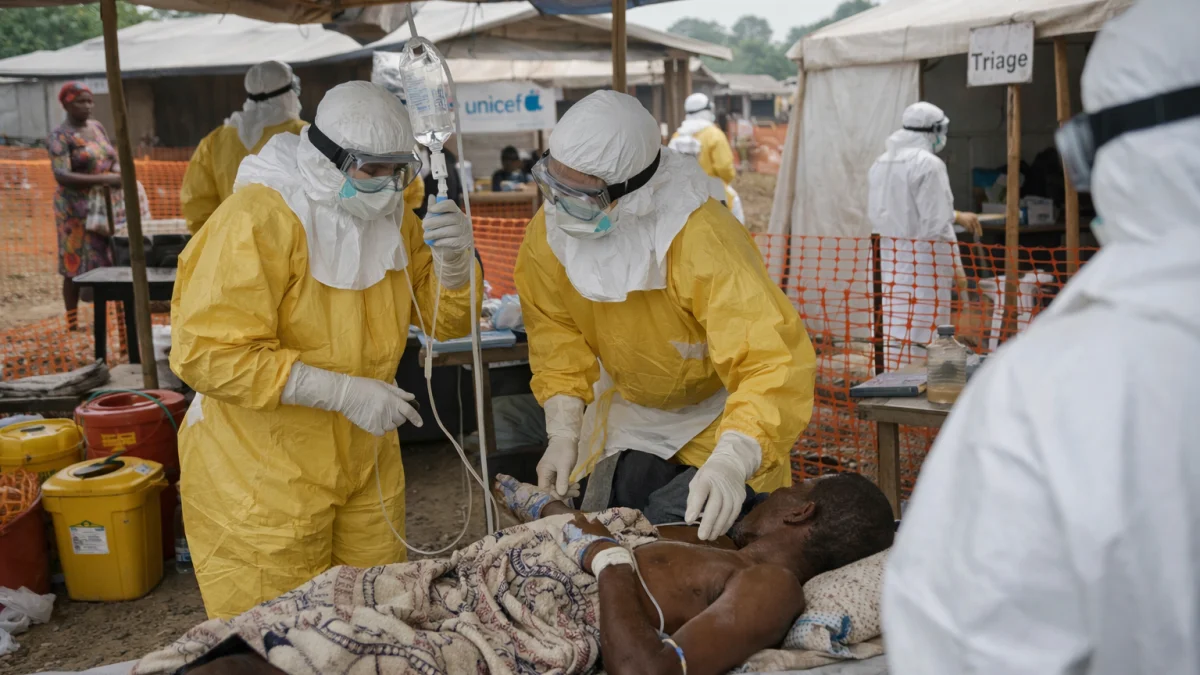
KINSHASA — The Ebola outbreak in the Democratic Republic of the Congo has become the fastest-growing ever recorded on the African continent, according to the Africa Centres for Disease Control and Prevention (Africa CDC), as health authorities warned on Monday that the epidemic continues to outpace response efforts and spread into new areas.
Congolese health authorities reported 1,926 confirmed cases and 702 deaths as of July 11 after the outbreak expanded into the northeastern provinces of Haut-Uele and Tshopo, adding to previously affected Ituri, North Kivu and South Kivu provinces. Officials declared the outbreak on May 15 after undetected transmission had already been underway for weeks.
The outbreak is caused by the rare Bundibugyo strain of Ebola virus, for which there is no approved vaccine or specific treatment. The World Health Organization (WHO) said sustained transmission continues in eastern Congo despite an extensive response involving national authorities and international partners.
WHO officials warned that the true scale of the outbreak could be substantially larger than confirmed figures indicate. Chikwe Ihekweazu, executive director of the WHO Health Emergencies Programme, told Reuters that modeling and surveillance data suggest actual infections may be two to four times higher than reported because many newly identified patients have no known epidemiological links to previously confirmed cases.
The geographic expansion has raised concerns about increasingly difficult containment efforts. Health authorities said Tshopo recorded four confirmed cases and two deaths, while Haut-Uele reported one death after the disease spread beyond its original epicenter in Ituri province. Officials said most of the new infections appear linked to transmission originating in Ituri, although investigations continue into cases without established connections.
The response has also faced operational challenges. Workers at an Ebola treatment center in Ituri staged a strike over unpaid salaries and bonuses, temporarily disrupting services. Congolese Health Minister Roger Kamba acknowledged problems verifying payroll records and said authorities were working to resolve the dispute.
Separately, the University of Oxford has launched the first human clinical trial of a vaccine targeting the Bundibugyo strain, a development researchers hope will accelerate longer-term countermeasures against the virus, although the trial is in its early stages and is not expected to affect the current outbreak immediately.
WHO and Congolese authorities said surveillance, contact tracing, isolation, laboratory testing and cross-border preparedness measures remain underway as officials seek to slow transmission while monitoring for additional spread within the region.