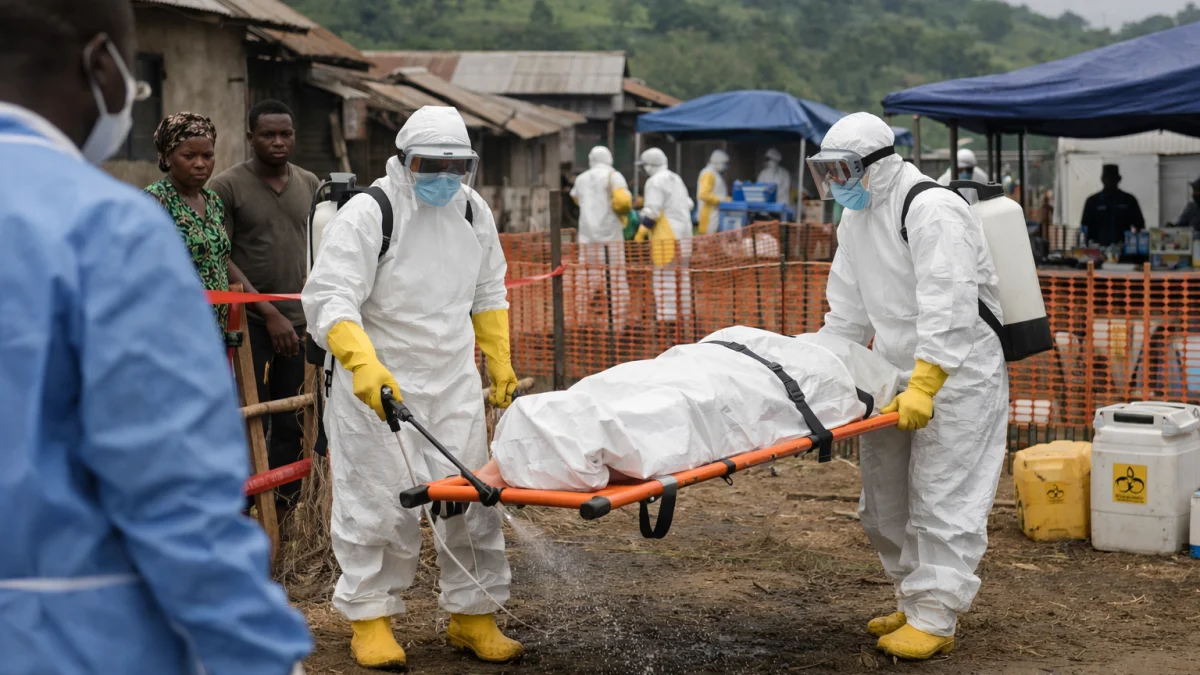
BUNIA, Democratic Republic of the Congo — The Ebola outbreak in eastern Democratic Republic of the Congo is spreading faster than health authorities can trace new infections, with the World Health Organization warning that most recent cases are emerging from previously unidentified chains of transmission, complicating efforts to contain the epidemic.
The WHO said around 80% of newly confirmed infections are not linked to known contacts of existing patients, indicating that transmission is occurring beyond the reach of current surveillance systems. Health officials say the outbreak, caused by the Bundibugyo strain of the Ebola virus, remains in an expansion phase despite intensified response efforts.
According to Congolese health authorities, more than 2,000 confirmed cases and more than 750 deaths had been recorded by mid-July, making the epidemic the fastest-growing Ebola outbreak on record. Médecins Sans Frontières (MSF) said the number of confirmed infections has nearly tripled in less than five weeks, while warning that existing medical and surveillance capacity is insufficient to keep pace with transmission.
The outbreak is centered in Ituri province, where insecurity, population displacement and limited access to healthcare have complicated response operations. WHO and aid organizations say delayed treatment, undetected community transmission and challenges in tracing contacts have allowed the virus to spread more rapidly than response teams can identify new cases.
Health officials said more than 100 healthcare workers have contracted Ebola since the outbreak began in May. At the same time, strikes by some medical staff over unpaid salaries and hazardous working conditions have further strained treatment facilities in affected areas, according to local authorities and hospital officials.
The Bundibugyo strain has presented additional challenges because no approved vaccine or specific treatment is currently available for widespread use, unlike the more common Zaire strain of the virus. WHO said clinical studies evaluating potential therapies are under way as authorities continue expanding testing, isolation, infection prevention measures and community engagement.
The outbreak has also resulted in cross-border cases linked to neighboring Uganda, while France previously confirmed an imported infection involving a healthcare worker returning from Congo. WHO has said regional preparedness measures remain in place and continues to assess the risk as very high within the Democratic Republic of the Congo because of sustained transmission and the expanding geographic spread of the disease.