The price of gold has climbed to historic highs, drawing investors seeking safety amid global uncertainty. Far from the financial centers where bullion changes hands, the consequences are unfolding in forests, river valleys and mining towns where communities are confronting a different side of the precious metal's value.
Across parts of the Amazon, Indigenous leaders say rivers that once supplied fish and drinking water have become increasingly contaminated as illegal and poorly regulated mining expands. Speaking during a June webinar on illicit gold, Asháninka leader Jackeline Mendoza Díaz described the changes affecting her community in Peru, saying mercury pollution has made traditional food sources less reliable and forced residents to travel farther for clean water. "Our rivers are being contaminated with mercury," she said, adding that her people depend on those waterways for their survival.
Her testimony reflects a broader pattern emerging across major gold-producing regions, where record prices have increased pressure on landscapes already struggling with illegal extraction, weak governance and competing economic needs.
The surge in demand has strengthened livelihoods for many legal miners and boosted export earnings for producing countries. Yet environmental researchers, government officials and community representatives say the same market forces have also intensified deforestation, mercury pollution and disputes over land.
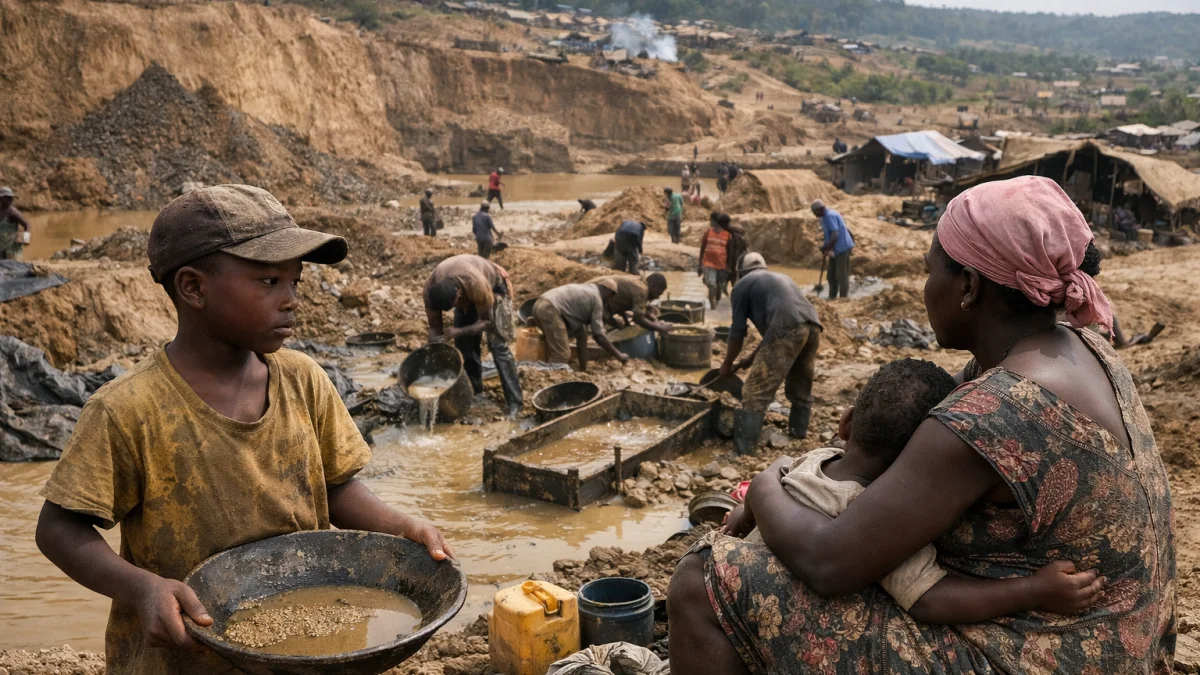
In Ghana, artisanal and small-scale mining has become an increasingly important pillar of the national economy. The country's Gold Board said this month that purchases from the sector reached between 50 and 54 metric tons during the first half of 2026, putting output on course to match or exceed last year's record production. Officials say reforms have helped reduce smuggling and increase foreign exchange earnings.
But the benefits have not eliminated longstanding tensions over mining's local impacts.
A Reuters investigation last year documented how soaring gold prices encouraged more unauthorized mining around industrial concessions in Ghana. Residents interviewed by Reuters described communities where generations had combined farming with small-scale mining before large commercial projects arrived. As prices rose, companies expanded surveillance using drones while confrontations between security forces and illegal miners became more frequent. Investigators found abandoned processing sites containing mercury- and cyanide-contaminated water, illustrating the environmental hazards left behind after informal operations moved on.
Thousands of kilometers away, Brazil continues to struggle with illegal mining inside the Amazon despite an intensified government crackdown.
A Greenpeace study reported in May estimated that billions of dollars' worth of gold continues to be extracted illegally from the Brazilian rainforest, including protected areas. President Luiz Inácio Lula da Silva pledged to eliminate illegal mining on Indigenous lands after taking office, but enforcement agencies face the challenge of dismantling highly mobile operations that frequently relocate when authorities intervene.
Satellite monitoring and conservation groups say the environmental footprint extends well beyond individual mine sites. Forests are cleared to create access roads and excavation pits, while mercury used to separate gold from sediment enters rivers that support both wildlife and human settlements.
Communities living near those rivers often experience the consequences long after miners leave.
Experts participating in the June webinar organized around illicit gold warned that mercury contamination remains one of the least visible but most persistent legacies of artisanal mining. Monika Stankiewicz, executive secretary of the Minamata Convention on Mercury, said millions of people living near mining areas remain exposed to the toxic metal, particularly women and children.
In Venezuela, residents of the mining town of Las Claritas described a different reality as security forces moved against armed groups controlling parts of the country's gold belt. Five residents told Reuters they heard explosions and gunfire during military operations, with businesses closing and many people staying indoors. The government has sought to reassert control over mining areas while encouraging investment in the country's long-stagnant mineral sector.
The pressures extend beyond Latin America.
Analysts say higher gold prices have encouraged organized criminal groups to finance increasingly sophisticated mining operations in several regions, blurring the line between informal mining and transnational crime. Environmental organizations argue that profits from illegal gold extraction are increasingly linked with other illicit activities, including illegal logging and land grabbing, complicating enforcement efforts.
For many families, however, mining also remains one of the few available sources of income.
Governments face the difficult task of balancing environmental protection with employment and export revenue. In Ghana, officials argue that reforms can formalize artisanal mining while reducing environmental harm and illegal trade. Conservation groups counter that stronger oversight and more transparent supply chains are essential if rising demand is not to deepen existing social and ecological damage.
As investors continue to view gold as a financial refuge, communities closest to its extraction remain at the center of a different calculation—one measured not by market prices but by the condition of forests, rivers and livelihoods.
For leaders like Mendoza Díaz, the debate is grounded in daily experience rather than commodity markets. Her remarks to policymakers and financial institutions during the June discussion underscored a message increasingly echoed across mining regions: the value assigned to gold in global markets carries consequences that are often borne far from the trading floors where its price is set.