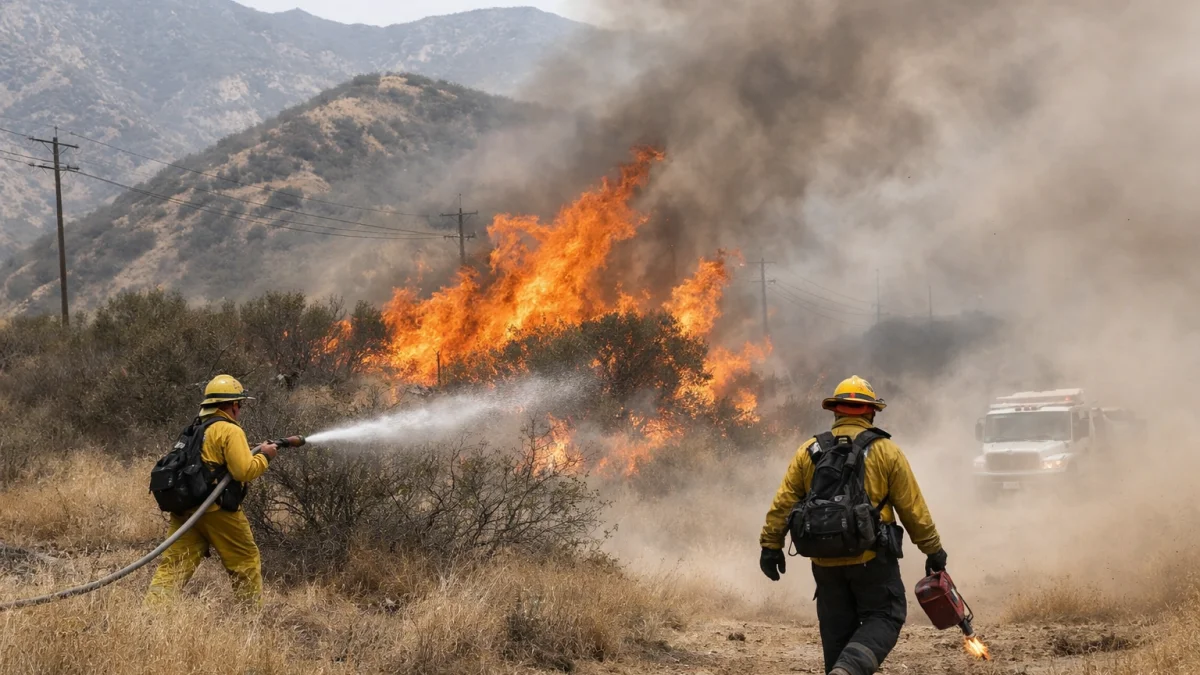
SALT LAKE CITY — Wildfire activity across the western United States intensified as hot, dry conditions, record-low humidity levels in some areas and strong winds fueled rapid fire growth, prompting emergency declarations, evacuations and expanded firefighting efforts across several states, officials said.
Fire crews were battling dozens of active wildfires across the West, with particularly severe conditions reported in Utah, Colorado, Arizona and New Mexico, where weather officials warned that gusty winds and extremely dry vegetation could accelerate fire spread. The National Weather Service issued Red Flag warnings across parts of the region because of critical fire weather conditions.
In Utah, the Cottonwood Fire became one of the largest active wildfires in the country after expanding rapidly in the Fishlake National Forest area. Officials said the fire grew to more than 90,000 acres amid strong winds and low humidity, damaging structures and prompting closures and emergency measures. Utah officials declared an emergency and restricted fireworks ahead of the July Fourth holiday as crews worked to contain the blaze and prevent additional ignitions.
The U.S. Forest Service said changing weather conditions remained a major challenge for firefighters, with high temperatures, wind and dry fuels contributing to periods of extreme fire behavior. The agency has warned that even when conditions briefly improve, afternoon heat and increasing winds can quickly raise fire intensity.
The broader fire threat has been amplified by ongoing drought conditions across parts of the West. The National Integrated Drought Information System said much of the Southwest entered summer with significant drought impacts, including unusually low snowpack levels following the 2025-26 winter season. Officials said reduced snowpack and dry conditions have increased pressure on water supplies and contributed to elevated wildfire risk.
Authorities said firefighters, aircraft crews and emergency personnel were continuing suppression operations while monitoring forecasts for changes in wind, humidity and temperatures. Some aircraft operations have been limited during the most dangerous weather periods because of conditions that increase risks for aerial firefighting.
Officials urged residents in affected areas to follow evacuation orders, avoid activities that could spark fires and monitor local emergency updates. Fire agencies said containment progress would depend on weather conditions and the ability of crews to safely operate in active fire zones.