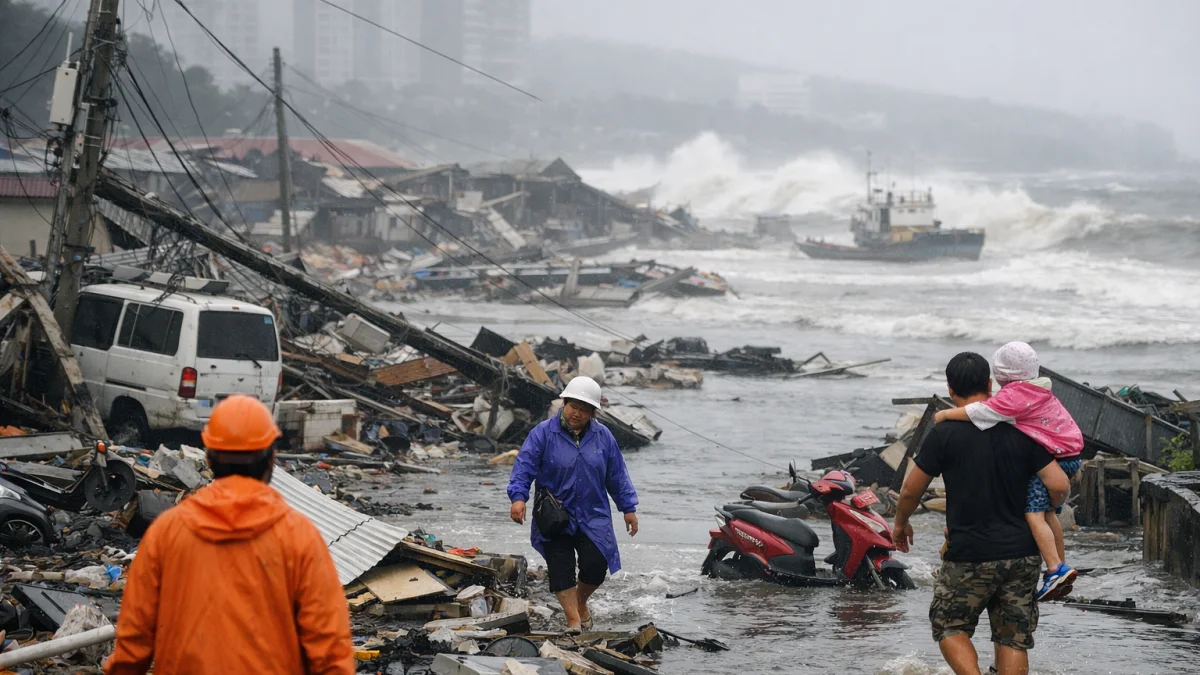
Super Typhoon Bavi's passage across the Mariana Islands has highlighted the growing exposure of communities, critical infrastructure and military facilities across the western Pacific to increasingly destructive tropical cyclones, even as scientists continue to distinguish between individual weather events and long-term climate trends. The Category 5 storm struck Rota on July 6 with catastrophic winds before continuing westward, prompting emergency measures across Guam and the Northern Mariana Islands.
The storm's significance extends beyond its immediate humanitarian impact. Bavi arrived after several recent high-impact cyclones in the region, reinforcing concerns among disaster agencies and climate researchers that densely populated islands and strategic infrastructure face mounting risks from extreme weather. While no single typhoon can be attributed solely to climate change, assessments by the Intergovernmental Panel on Climate Change (IPCC) have concluded with high confidence that warmer oceans increase the potential for more intense tropical cyclones and heavier rainfall, even as regional changes in storm frequency remain more uncertain.
Meteorological agencies described Bavi as one of the strongest storms of 2026. The U.S. National Weather Service warned of catastrophic wind damage and life-threatening flooding, with rainfall expected to reach between about 12 and 20 inches in some locations. Officials in Guam opened evacuation centers, while authorities urged residents to remain sheltered until conditions improved.
The western Pacific has long been one of the world's most active tropical cyclone basins, but rising sea-surface temperatures have become an increasingly important factor in scientific assessments of storm intensity. Tropical cyclones derive their energy from warm ocean waters, and unusually high sea temperatures can provide additional fuel for rapid intensification under favorable atmospheric conditions. Researchers caution that storm development also depends on wind shear, atmospheric moisture and broader climate patterns, meaning ocean warming alone does not determine cyclone behavior.
Rapid intensification has become a growing operational challenge for forecasters and emergency managers. Storms that strengthen dramatically over short periods reduce the time available for evacuation, infrastructure preparation and emergency response. For island communities with limited evacuation options and concentrated populations, even modest reductions in preparation time can significantly increase disaster risk.
Bavi also underscores the strategic dimension of climate-related hazards in the western Pacific. Guam and the Northern Mariana Islands host major U.S. military facilities that support operations across the Indo-Pacific. Severe typhoons can disrupt airfields, ports, communications networks and logistics while simultaneously affecting civilian populations. Governments have increasingly incorporated climate resilience into infrastructure planning, recognizing that extreme weather events pose both humanitarian and operational challenges.
Economic exposure has likewise expanded. Small island economies depend heavily on tourism, transportation, utilities and imported goods, sectors that can experience prolonged disruption after major storms. Damage to power systems, ports and telecommunications often slows recovery long after winds have subsided. Previous major typhoons in the region have demonstrated that indirect economic losses frequently exceed immediate physical damage as businesses, schools and public services remain affected for weeks or months.
Scientific observations indicate that heavier rainfall is becoming a more consistent feature of stronger tropical cyclones in a warming climate because warmer air can hold more moisture. That increases the potential for flash flooding and landslides even where wind damage is limited. For low-lying Pacific islands, storm surge combined with intense rainfall creates compound hazards that can overwhelm drainage systems and contaminate freshwater supplies.
The event also illustrates the increasing importance of investments in forecasting and early warning systems. Satellite observations, numerical weather prediction models and improved emergency communications have substantially increased forecast accuracy over recent decades. These advances have enabled authorities to issue earlier warnings and organize protective measures before landfall, although rapidly changing storm intensity continues to challenge operational forecasting.
Climate adaptation strategies across the Pacific have increasingly focused on strengthening building standards, protecting critical infrastructure, improving coastal defenses and expanding community preparedness. International organizations and regional governments have argued that resilience investments are becoming increasingly necessary as populations, infrastructure and economic assets continue to grow in hazard-prone coastal areas. The effectiveness of those measures, however, varies according to local resources, governance capacity and geography.
The broader climate discussion surrounding Bavi remains grounded in scientific attribution rather than individual events. Climate researchers generally emphasize that no single storm proves or disproves climate change. Instead, long-term observations of ocean temperatures, rainfall extremes and cyclone intensity provide the basis for assessing changing risks. The IPCC and other scientific bodies have consistently concluded that continued global warming is expected to increase the proportion of the strongest tropical cyclones and intensify extreme precipitation associated with them, while uncertainties remain regarding future changes in overall cyclone numbers.
As Bavi continues westward after crossing the Mariana Islands, authorities remain focused on damage assessments, humanitarian needs and the storm's projected path. Forecasters continue to monitor its intensity and track, while emergency agencies assess impacts on affected communities and infrastructure. Longer-term analysis will examine how the event fits within evolving patterns of tropical cyclone risk across the western Pacific, but those assessments will depend on post-storm observations and peer-reviewed scientific evaluation rather than the storm alone.