The first signs that this Independence Day would be different appeared before many celebrations began. Across cities from the Midwest to the Northeast, officials erected misting stations, opened cooling centers and urged people to shorten outdoor plans as temperatures climbed toward record levels. In Washington, visitors seeking to mark the United States' 250th anniversary gathered on the National Mall under triple-digit heat, while organizers modified schedules and temporarily closed parts of the Great American State Fair to protect attendees.
For many Americans, the holiday's familiar rhythm—morning parades, afternoon barbecues and evening fireworks—gave way to decisions shaped less by tradition than by weather forecasts and public health warnings.
The shift reflected more than a difficult holiday weekend. It illustrated how extreme heat is increasingly influencing everyday life, even during one of the country's most deeply rooted civic celebrations. Meteorologists attributed the dangerous conditions to a powerful heat dome stretching across much of the eastern half of the United States, trapping hot air over densely populated regions just as millions prepared to celebrate outdoors. More than 185 million people were under heat alerts as the holiday approached, according to the National Weather Service.
Public officials responded with an unusually broad range of precautions. Washington's Great American State Fair temporarily shut down during the hottest part of the afternoon before reopening with cooling tents and misting stations. The National Park Service canceled the capital's Independence Day parade because of safety concerns. Elsewhere, cities postponed or canceled parades, concerts and fireworks displays after local authorities concluded that prolonged exposure posed unacceptable risks for participants, volunteers and emergency personnel.
Philadelphia was among the cities forced to abandon long-standing plans after organizers first explored shortening parade routes and adjusting schedules before ultimately canceling events. Communities in Maryland and Virginia also postponed celebrations as forecasts pointed to dangerous heat index values approaching 115 degrees Fahrenheit (46 degrees Celsius).
Rather than encouraging people to avoid celebrations altogether, emergency officials urged them to celebrate differently. Public advisories emphasized hydration, frequent breaks in air-conditioned spaces, checking on elderly relatives and neighbors, and recognizing signs of heat illness. Cities expanded access to cooling centers, while New York deployed cooling vans stocked with water, meals and medical supplies and extended public swimming pool hours.
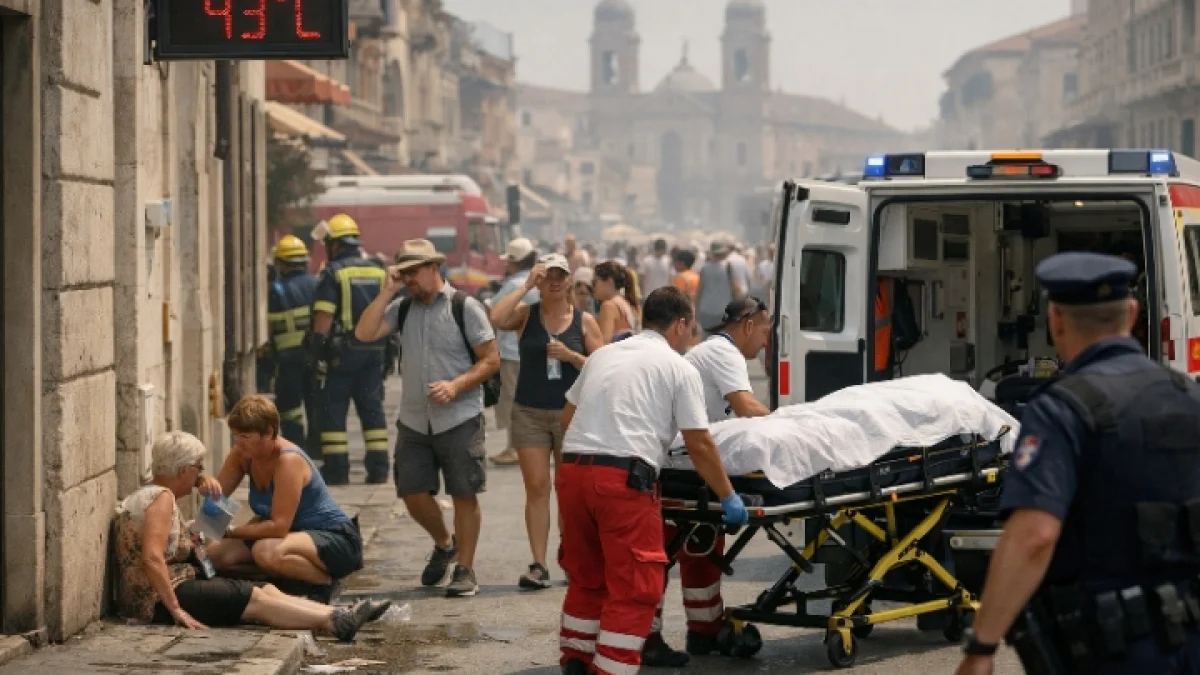
Those precautions reflected growing concern about the health consequences of prolonged extreme heat. Forecasters repeatedly warned that the weather could become life-threatening, particularly for older adults, outdoor workers and people without reliable access to air conditioning. By the end of the holiday weekend, multiple states were reporting suspected heat-related deaths as emergency responders treated dozens of people suffering from heat illnesses during public events.
The weather also exposed stresses extending beyond individual celebrations. Regional electricity providers asked customers to conserve power as air-conditioning demand surged. PJM, the country's largest grid operator, issued emergency conservation requests covering approximately 67 million customers, while New York utility Con Edison appealed for reduced electricity use after thousands of customers lost power.
Meteorologists noted that heat domes are not unusual weather patterns, but their impacts become more severe when they persist over large population centers during peak summer. This year's event followed an exceptionally warm start to July and coincided with outdoor gatherings marking the nation's semiquincentennial, increasing both exposure and public attention.
For communities accustomed to treating Independence Day as an outdoor holiday, the adjustments illustrated a broader adaptation already underway. Organizers increasingly planned for shaded seating, cooling stations, medical support and flexible schedules capable of responding to changing weather conditions. Some municipalities shifted activities into the evening or postponed them entirely rather than asking participants to endure the hottest hours of the day.
Climate scientists have consistently reported that rising global temperatures are increasing the likelihood and intensity of extreme heat events. While no single heat wave can be attributed solely to climate change, researchers say warming trends are making record-breaking temperatures more frequent and extending heat seasons in many parts of the country.
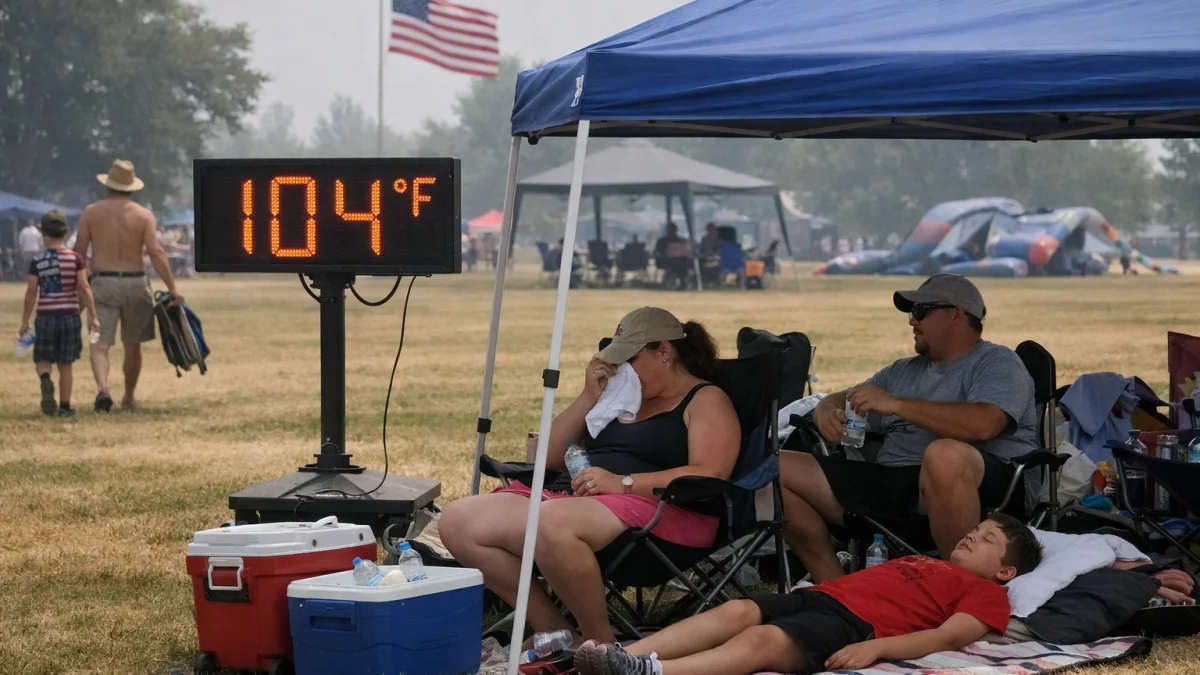
Even where celebrations continued, the atmosphere reflected those realities. Families sought shade beneath trees instead of open lawns. Visitors carried umbrellas for protection from the sun rather than rain. Volunteers distributed water alongside flags and commemorative programs. Medical personnel remained visible near gathering places, prepared to respond quickly if heat exhaustion or dehydration overtook spectators.
The fireworks still illuminated the night sky across much of the country, preserving one of Independence Day's defining traditions. Yet the day's earlier scenes—closed fairgrounds, canceled parades, cooling tents and repeated warnings to seek shelter from the heat—offered another enduring image of the holiday in 2026.
For many Americans, celebrating the nation's 250th birthday meant balancing patriotism with precautions, marking an Independence Day in which the weather itself became one of the defining features of the occasion.