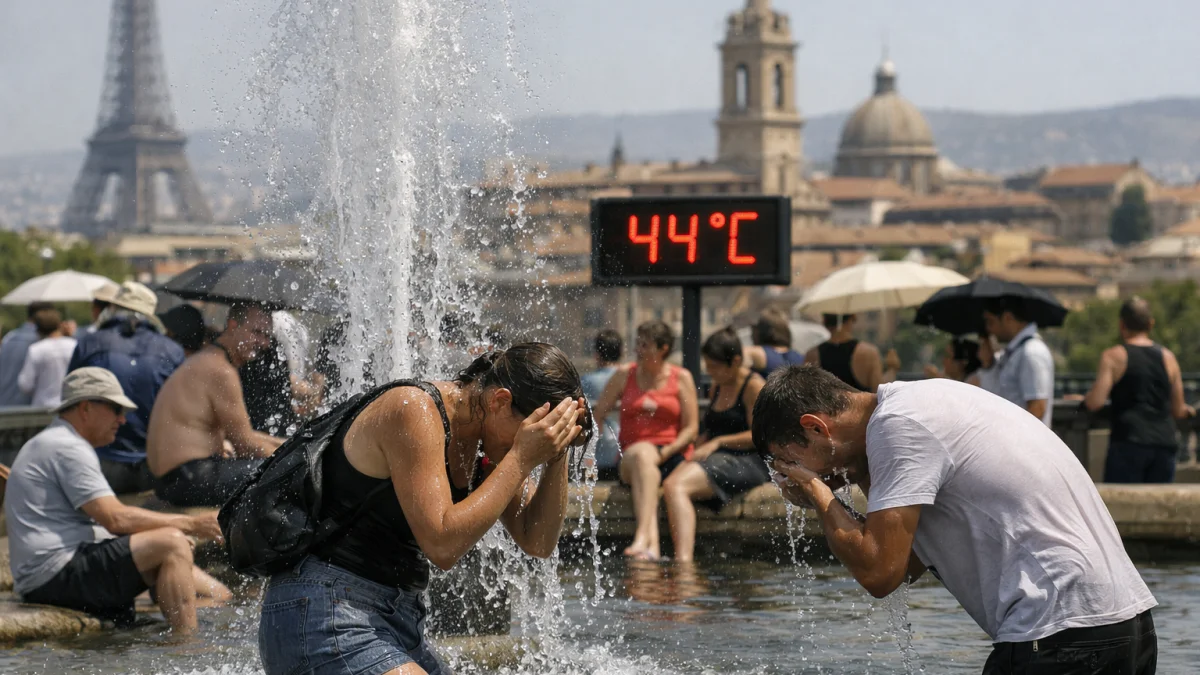
LONDON—A rapid scientific assessment by the World Weather Attribution (WWA) group has concluded that the record-breaking heatwave that swept across Western Europe in late June was the region's most severe on record and would have been virtually impossible without human-caused climate change, as authorities across the continent continued to assess the toll from the extreme temperatures.
The analysis, released by the international network of climate scientists, found that persistent fossil fuel-driven warming significantly increased both the likelihood and intensity of the event, which brought temperatures 5 to 12 degrees Celsius above seasonal averages across parts of France, Germany, Italy, Spain and southern England. Researchers said similar conditions in June would not have occurred in a pre-industrial climate and would have been virtually impossible even 50 years ago.
WWA researchers described the event as scientifically unprecedented because of its geographic extent, timing and combination of exceptionally high daytime temperatures, unusually warm nights and elevated humidity. Nearly 45% of more than 800 European cities examined experienced or were expected to experience record levels of heat stress during the episode, according to the study.
"The climate the country has today is fundamentally different" from previous generations, Theodore Keeping, an extreme weather researcher at Imperial College London and a co-author of the WWA analysis, said in comments accompanying the findings. Researchers said the study reinforces evidence that global warming has sharply increased the frequency of extreme heat events across Europe.
The report came after governments across Europe reported widespread disruption, including school closures, transport delays, pressure on health services and heat-related fatalities. Public health authorities in several countries have warned that the final human toll may rise as excess mortality data continue to be compiled.
Scientists said Europe remains the world's fastest-warming continent and warned that rising average temperatures are making severe heatwaves increasingly likely earlier and later in the year. While atmospheric patterns such as persistent high-pressure systems triggered the immediate weather conditions, researchers said human-induced climate change amplified their severity. They also noted that the late-June event was not driven by El Niño.
Authorities across affected countries continued monitoring public health impacts and infrastructure disruptions on Saturday, while climate researchers said further attribution studies would help refine estimates of how much global warming has altered the probability and intensity of future extreme heat events.