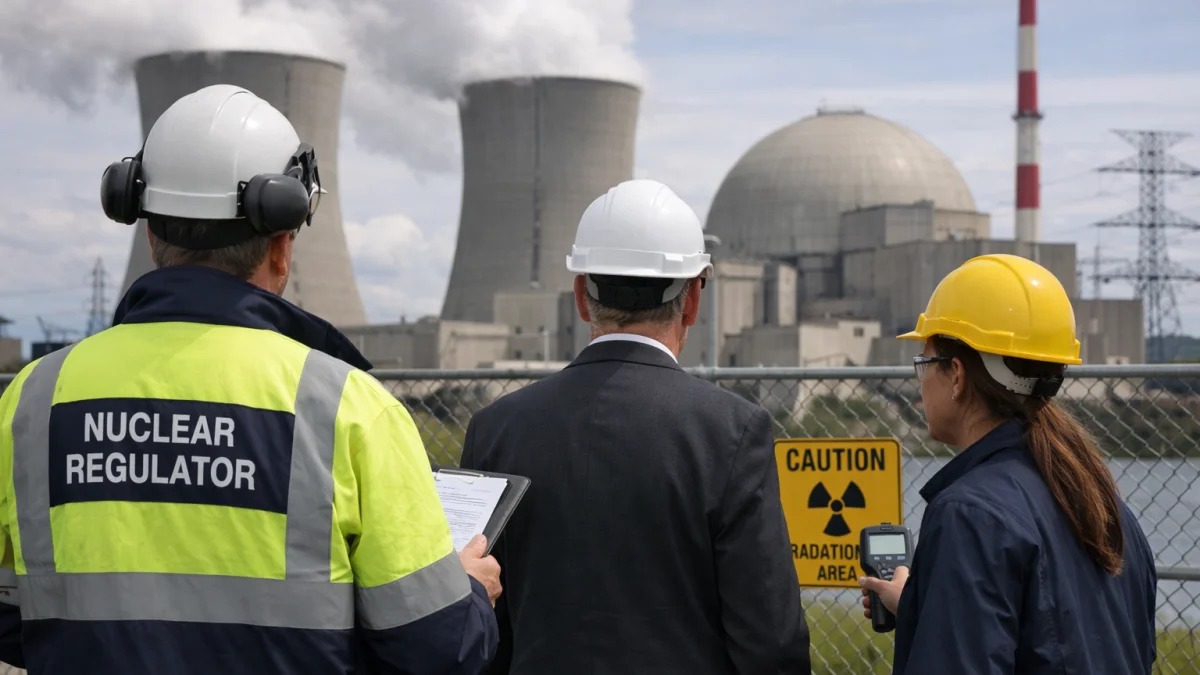
WASHINGTON — The U.S. Nuclear Regulatory Commission (NRC) has proposed changes to federal radiation protection standards alongside broader regulatory reforms aimed at facilitating an expansion of nuclear power capacity, according to official documents and statements released this week.
The proposal, unveiled on July 1, would remove long-standing regulatory language requiring nuclear facilities to keep radiation exposure “as low as reasonably achievable” (ALARA), while retaining existing numerical dose limits for workers and the public, the NRC said in a notice published in its news releases and regulatory filings.
NRC Chairman Ho Nieh said in a briefing that the change is intended to improve regulatory clarity and consistency as the agency adapts rules for new reactor technologies and increased deployment plans. “This rulemaking is raising the bar on clarity in our regulations; it is not lowering the bar on our safety standards,” he said, according to official NRC statements.
The radiation rule is part of a broader set of modernization efforts linked to executive actions issued in 2025 directing the agency to streamline licensing and accelerate development of advanced nuclear reactors. The administration has set long-term targets to significantly expand nuclear generating capacity to meet rising electricity demand, including from data centers and industrial electrification.
Under the proposed framework, regulators would adopt a more “risk-informed” and “graded” approach to radiation dose management, allowing operators greater flexibility in how exposure is evaluated while maintaining compliance with established limits. The NRC said the changes are intended to reduce administrative complexity and improve predictability for new reactor developers.
The proposal also includes provisions for updated methods of assessing radiation exposure for workers and the public, and for allowing certain medical and industrial applications involving radioactive materials to operate under revised exposure management guidance.
The plan has drawn criticism from some nuclear safety advocates, who argue that removing ALARA could weaken a foundational principle of U.S. radiation protection. Edwin Lyman, a physicist at the Union of Concerned Scientists, said the change could result in higher exposure levels for workers and the public, though his comments reflect a dissenting position within ongoing policy debate.
Supporters of the revision, including industry-aligned analysts cited in regulatory filings, argue that ALARA has been inconsistently applied and has contributed to unnecessary costs and delays in nuclear development without demonstrable safety gains.
The NRC emphasized that existing reactors and facilities are not expected to undergo immediate operational changes if the rule is finalized, noting that current licensing frameworks already incorporate long-standing exposure limits and safety systems.
The proposed radiation rule is open for public comment for 45 days following publication in the Federal Register, after which the agency will review submissions before issuing a final rule. The NRC has not announced a final implementation timeline.
The radiation protection proposal is one of several parallel regulatory updates under consideration, including reforms to reactor licensing, security standards, and environmental review procedures, all aimed at supporting the expansion of nuclear energy infrastructure over the coming decades.