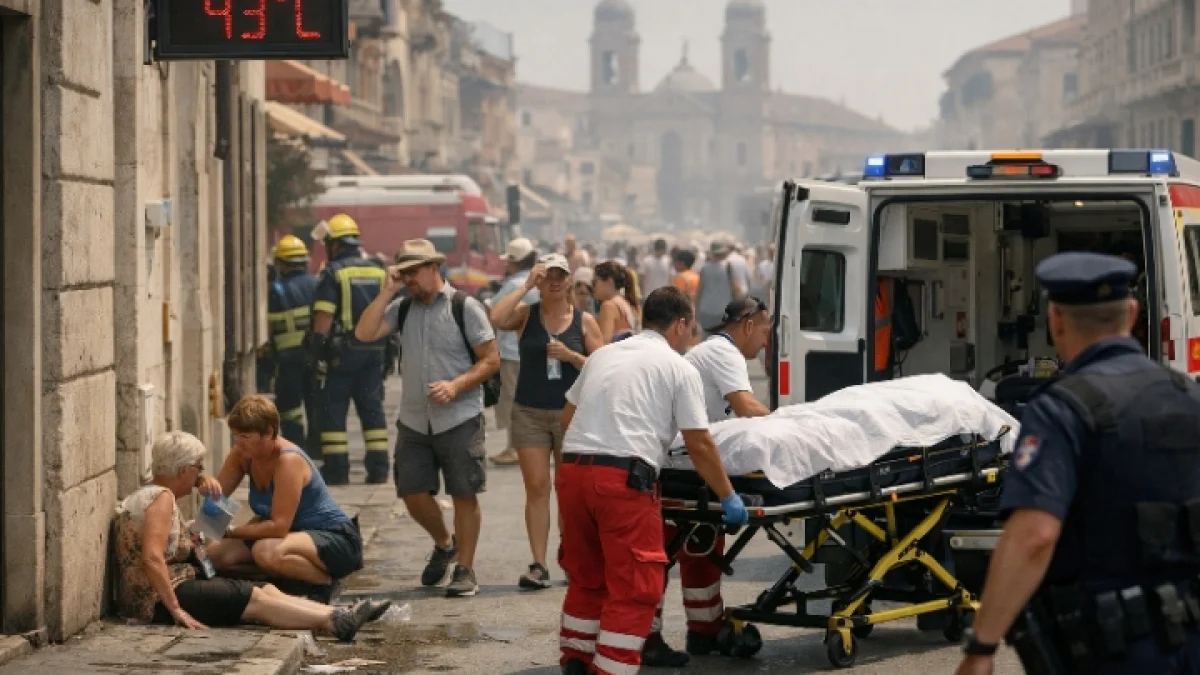
Extreme weather deaths across Europe are exposing persistent gaps in disaster preparedness despite years of warnings that climate change is increasing the frequency and intensity of heatwaves. Preliminary official figures released after the late-June heatwave indicate thousands of excess deaths in several countries, while governments are reassessing whether existing public health systems, infrastructure and emergency planning have kept pace with increasingly severe weather.
The latest mortality data are significant because they suggest that Europe continues to face high human costs from extreme heat even after introducing heat-health action plans following previous deadly summers. The deaths have shifted attention beyond weather forecasting toward broader questions about resilience, including how governments protect vulnerable populations, adapt buildings and critical infrastructure, and coordinate public health responses during prolonged periods of exceptional temperatures.
Authorities in France, Belgium and the Netherlands have reported at least 3,700 excess deaths linked to the June heatwave, while stressing that the figures remain preliminary and could increase as additional data become available. France alone recorded more than 2,000 excess deaths during the period, with health officials reporting particularly large increases in fatalities occurring at private homes rather than hospitals, highlighting the difficulty of protecting vulnerable residents outside institutional care.
The episode follows a broader warning from the World Health Organization that heat remains one of Europe's deadliest natural hazards. WHO Director-General Tedros Adhanom Ghebreyesus has described heat stress as a "silent killer," noting that many European homes, schools and workplaces were designed for colder climates rather than prolonged periods of extreme heat. The agency also identifies Europe as the world's fastest-warming continent, making adaptation increasingly important alongside efforts to reduce greenhouse gas emissions.
Scientists say the latest heatwave fits a longer-term pattern rather than representing an isolated event. Attribution researchers from the World Weather Attribution initiative concluded that the severity of the June heatwave would have been extremely unlikely without human-induced climate change. While no single weather event can be attributed solely to climate change, researchers increasingly find that rising global temperatures substantially increase the probability and intensity of extreme heat across Europe.
The challenge for policymakers extends beyond emergency medical care. Transport systems experienced service disruptions as rail infrastructure overheated, electricity networks faced increased demand for cooling, and power generation was affected in several countries by unusually warm rivers used for cooling nuclear facilities. Such disruptions demonstrate how heat can trigger cascading effects across sectors that were historically designed around different climate assumptions.
Housing has emerged as another critical vulnerability. Much of Europe's residential building stock was constructed to retain warmth during winter, leaving many homes susceptible to dangerous indoor temperatures during prolonged heatwaves. Limited air-conditioning penetration in many European countries reflects both historical climate conditions and energy policy considerations. As a result, indoor heat exposure can remain high even after outdoor temperatures begin to fall, particularly affecting older adults and people with chronic illnesses.
Public health experts increasingly emphasize that excess mortality during heatwaves is not determined solely by temperature records. Outcomes also depend on early warning systems, public communication, access to cooling, social care networks, workplace protections and healthcare capacity. Several European countries have expanded heat warning systems since the devastating 2003 heatwave, which caused tens of thousands of deaths across the continent. However, the latest figures suggest that implementation and preparedness remain uneven as increasingly intense heat events test existing response frameworks.
The political implications are also becoming more visible. In France, opposition parties have questioned whether authorities were adequately prepared for the heatwave despite advance meteorological warnings. Belgian officials have similarly announced reviews aimed at strengthening preparedness for future extreme heat events. These responses indicate that governments increasingly view heatwaves not only as environmental events but also as tests of public administration and emergency management.
The broader policy debate increasingly centers on adaptation rather than emergency response alone. Urban greening, improved building standards, expanded cooling centers, targeted outreach to vulnerable populations and investments in climate-resilient infrastructure are among the measures recommended by public health authorities and climate experts. Many of these initiatives require long-term planning across multiple levels of government rather than temporary measures implemented during heat emergencies.
The confirmed evidence from the June 2026 heatwave indicates that extreme temperatures continue to produce substantial excess mortality despite advances in forecasting and public warning systems. Authorities are continuing to update mortality estimates and assess the effectiveness of emergency responses, while health agencies, governments and climate scientists are monitoring whether further periods of extreme heat later in the summer place additional pressure on Europe's public health systems and critical infrastructure.