GENEVA — United Nations environmental agencies are expanding monitoring of pollution hazards linked to armed conflicts, using satellite imagery, remote sensing and preparations for field assessments to identify risks to human health, water supplies and ecosystems as fighting continues in several regions.
The United Nations Environment Programme (UNEP) said recent conflicts have increased concerns over contamination from damaged oil facilities, industrial sites and critical infrastructure, while also raising the risk that hazardous substances released during hostilities could affect communities long after fighting subsides. The agency said remote sensing has confirmed strikes affecting oil-related infrastructure in parts of the Middle East, where fires and smoke have generated potentially harmful pollutants.
UNEP said heavy smoke from burning oil can expose nearby populations to toxic compounds and fine particulates, while pollutants from uncontrolled fires may contaminate soil, groundwater and agricultural land. The agency also warned that reported marine oil spills and damage to desalination facilities could worsen existing environmental pressures in water-scarce regions.
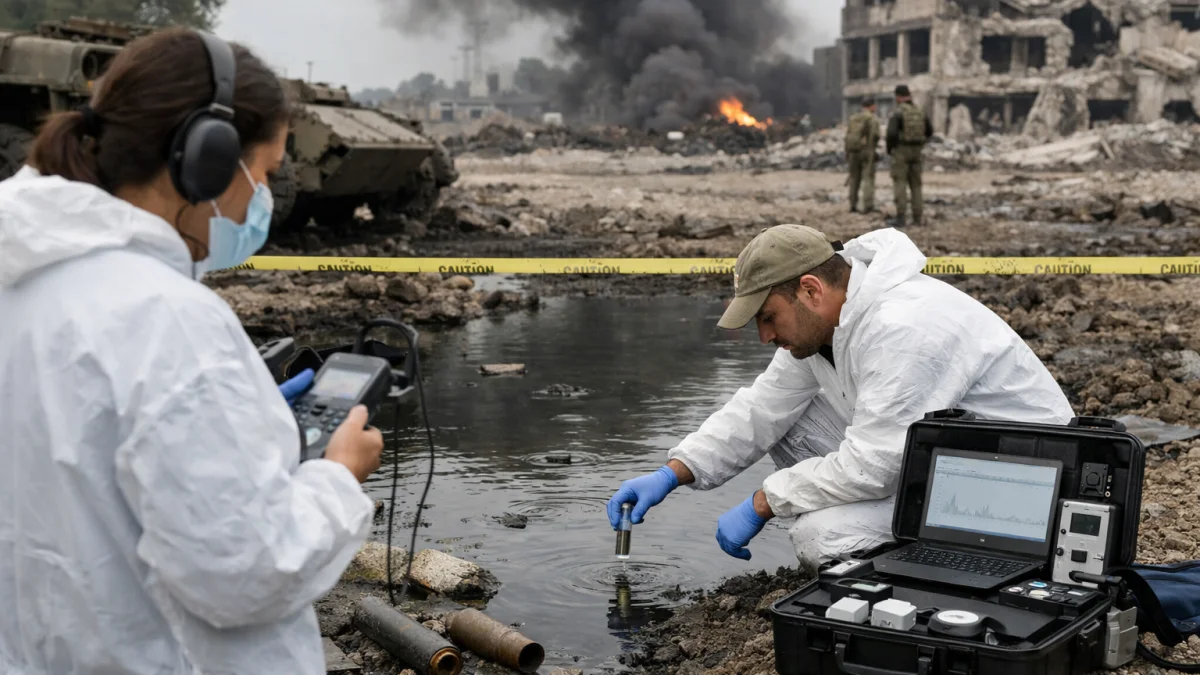
The agency said comprehensive field testing in active conflict areas often remains impossible because of security conditions. As a result, preliminary assessments rely heavily on satellite observations, environmental modelling and information from national authorities and humanitarian partners until access becomes available for on-site sampling and laboratory analysis.
UNEP said experience from previous conflicts has shown that pollution from damaged industrial facilities, oil infrastructure and munitions residues can persist after hostilities end, requiring long-term monitoring and remediation. Under its post-crisis environmental assessment programme, the agency works with governments and other international organizations to evaluate threats to public health, livelihoods and natural resources once conditions permit.
The International Atomic Energy Agency (IAEA) has separately continued monitoring nuclear safety in conflict-affected areas, including Ukraine, reporting on external power supplies, wildfire conditions and radiation monitoring while maintaining assistance to Ukrainian authorities. The agency has said it has detected no reported increases in radiation levels associated with recent wildfires near the Chornobyl site, although it continues to monitor the situation closely.
UNEP has urged all parties to protect civilian infrastructure and minimize environmental harm during hostilities, saying environmental degradation can intensify humanitarian crises by affecting access to clean water, food production and public health. The agency said detailed environmental assessments and recovery planning will depend on secure access to affected areas and requests from national governments once conditions allow.