LONDON — Coastal authorities and maritime agencies across several regions have stepped up preparedness measures for shipping-related incidents, expanding emergency response planning and reinforcing coordination as security threats, severe weather and operational disruptions continue to affect international shipping.
The International Maritime Organization (IMO) said recent attacks on civilian merchant vessels and other maritime security incidents underscore the need for governments, port authorities and shipping operators to strengthen contingency planning while protecting seafarers and the marine environment. IMO Secretary-General Arsenio Dominguez urged parties involved in conflicts to avoid actions that endanger commercial shipping and to respect international law.
The agency has also called on shipowners and operators to conduct thorough voyage risk assessments and maintain appropriate security measures, citing continuing threats from piracy, armed robbery and attacks on commercial vessels in several waterways. According to the IMO, recent incidents in the Red Sea, Gulf of Aden and other strategic sea lanes have reinforced the importance of coordinated international maritime security efforts.
Separately, coastal authorities in storm-prone regions have activated emergency protocols ahead of severe weather expected to affect shipping. In the western Pacific, the U.S. Coast Guard implemented heavy weather conditions for ports in Guam and the Northern Mariana Islands before the arrival of Super Typhoon Bavi, ordering large commercial vessels to leave port unless specifically authorized to remain and restricting inbound maritime traffic. Officials said the measures were intended to reduce risks to vessels, port infrastructure and coastal communities.
Following the storm, Coast Guard crews began inspections of navigation channels, harbor approaches and aids to navigation before gradually reopening ports, saying damaged or displaced navigational markers had to be identified and corrected to ensure safe vessel movements.
In the Philippines, the Philippine Coast Guard reported that stations in Oriental Mindoro had reviewed contingency plans, verified the readiness of rescue teams and emergency equipment, and coordinated with local authorities as Typhoon Inday approached. Officials urged fishermen, operators of small craft and passengers to follow official maritime advisories and avoid unnecessary travel during hazardous sea conditions.
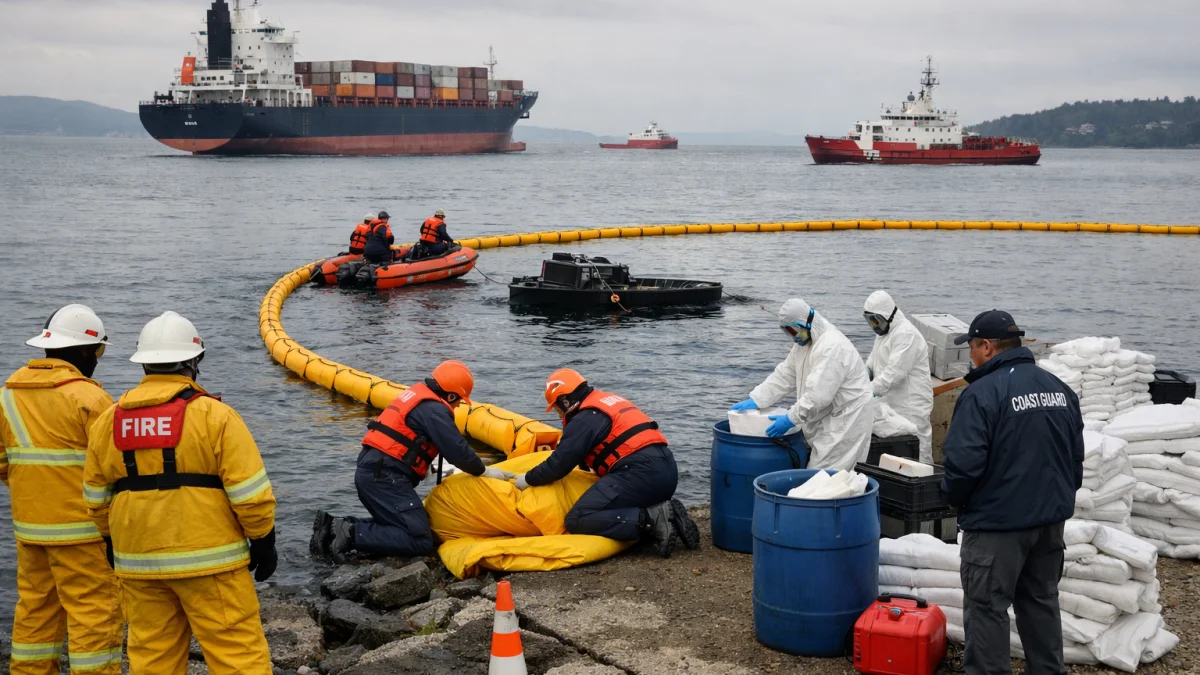
The IMO has also emphasized broader marine pollution preparedness, encouraging member states to strengthen response capabilities for spills involving conventional and alternative marine fuels as shipping routes evolve and operational risks change. The organization said improving preparedness and cooperation remains central to reducing the environmental consequences of shipping-related emergencies while maintaining the safety of international maritime transport.