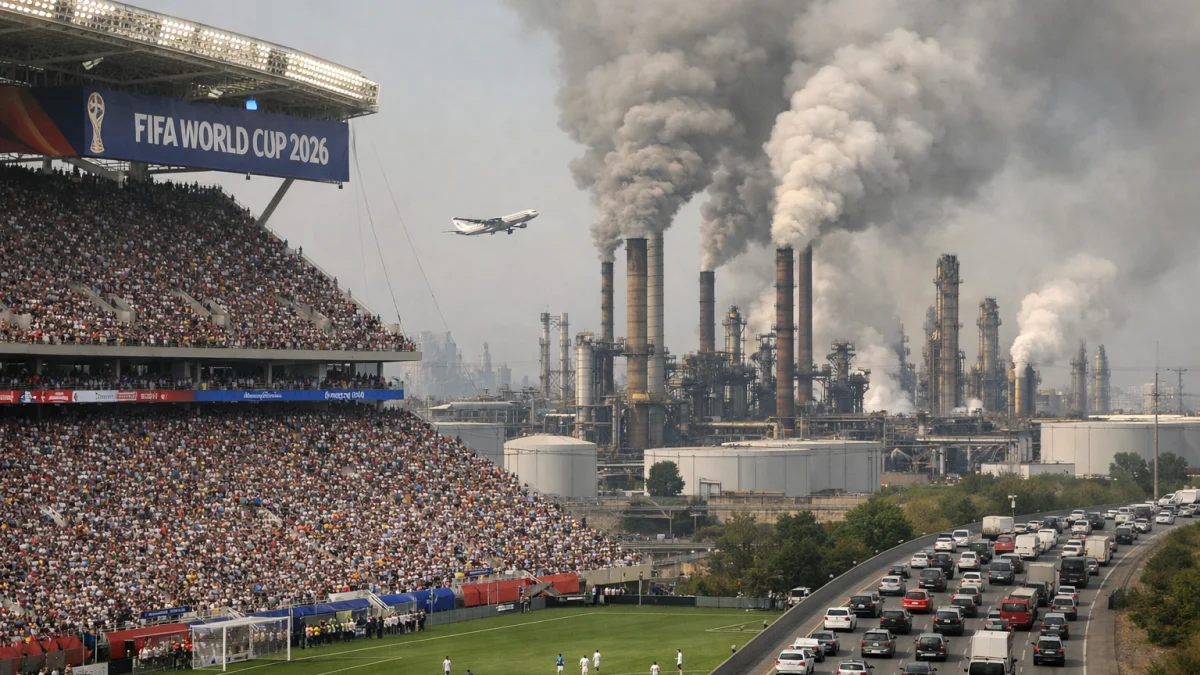
MIAMI — Growing concern over the greenhouse gas emissions associated with the 2026 FIFA World Cup has intensified scrutiny of football's biggest tournament, as environmental groups and climate experts warn that the expanded event's scale and extensive travel requirements could significantly increase its climate impact despite FIFA's sustainability commitments.
The tournament, jointly hosted by the United States, Canada and Mexico, is the first World Cup featuring 48 teams and 104 matches across 16 host cities. Organizers have acknowledged that transport, accommodation and tournament operations generate greenhouse gas emissions and have pledged to measure and address those emissions as part of FIFA's sustainability strategy.
FIFA's sustainability framework states that host cities are required to implement environmental plans covering issues including emissions, waste reduction, air quality and resource management. The governing body says it aims to measure tournament-related greenhouse gas emissions, promote sustainable infrastructure and encourage environmental initiatives across host cities.
Environmental advocates, however, argue that the tournament's unprecedented geographic footprint and expanded format will substantially increase emissions, particularly from air travel between venues spread across North America. Critics have questioned whether mitigation measures can offset the environmental impact of a competition of that size.
The debate has gained additional prominence as much of the tournament has been played during periods of extreme heat across parts of the United States. Researchers from the World Weather Attribution group said human-induced climate change contributed to the severe heat affecting several host cities, raising concerns about conditions for players, officials and spectators.
FIFA has introduced measures including hydration breaks and other heat-management protocols, while maintaining that sustainability and environmental stewardship remain integral parts of tournament planning. The organization has said all matches are being staged in existing stadiums rather than newly constructed venues, a measure intended to reduce infrastructure-related environmental impacts.
U.S. environmental authorities have also supported host cities through technical assistance, including guidance on recycling, food waste reduction, air quality monitoring and environmental education during the tournament. The U.S. Environmental Protection Agency has said those efforts are intended to improve environmental performance before, during and after the competition.
With the World Cup continuing through July, the environmental footprint of the expanded tournament is expected to remain a focus for researchers, policymakers and campaigners alongside the competition on the field.