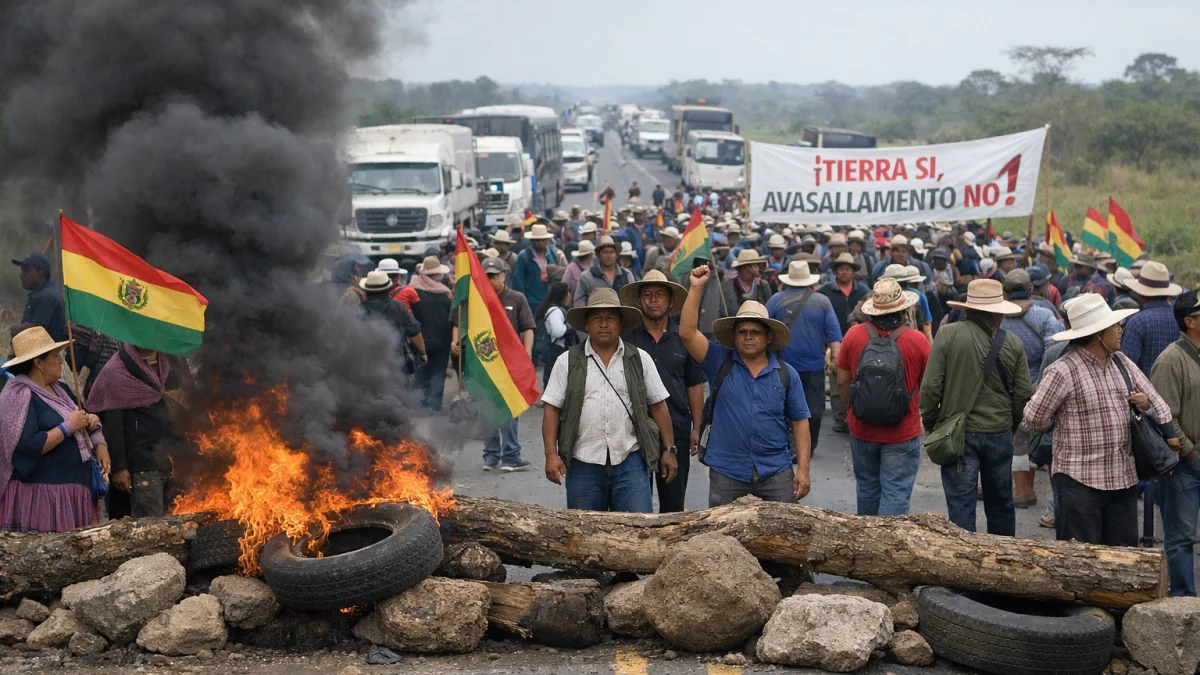
LA PAZ — Peasant farmers and Indigenous organizations in Bolivia have intensified marches, road blockades and other protests against government policies they say would expand industrial agriculture and extractive industries at the expense of protected lands and traditional territories, deepening a dispute over land and environmental policy.
The latest wave of demonstrations follows months of opposition to measures introduced under President Rodrigo Paz's administration that critics say favor large-scale agribusiness and mining development. Protest leaders argue the policies threaten forests, Indigenous land rights and smallholder farming, while the government has said its reforms are intended to encourage investment and improve economic opportunities.
One of the focal points of the protests was legislation approved earlier this year that would have allowed constitutionally protected small family farms to be converted into medium-sized properties, making them eligible for mortgages and potentially more vulnerable to foreclosure or acquisition by larger agricultural interests. Supporters of the measure said it would improve farmers' access to credit, but peasant and Indigenous organizations said it risked accelerating land concentration and deforestation. The government later repealed the law following sustained demonstrations.
Vivian Palomequi, a leader of a peasant farmers' union from Bolivia's Amazon region, was among protesters who marched roughly 900 kilometers (560 miles) to La Paz earlier this year to oppose the legislation and broader environmental policies. "We declared a state of emergency and started marching. We had no other choice," she said.
Environmental groups and Indigenous leaders say they remain concerned despite the repeal, arguing that government decisions to ease restrictions on mining and appoint officials with agribusiness backgrounds signal continued support for expanding resource extraction into environmentally sensitive areas. Environmental economist Stasiek Czaplicki Cabezas said the administration had strengthened an extractive development model rather than moving away from it.
The protests have unfolded alongside broader nationwide unrest over economic reforms, fuel shortages and rising living costs. In recent months, road blockades organized by unions, farmers and Indigenous groups have disrupted transport and supplies across parts of Bolivia, prompting the government to declare a state of emergency and deploy security forces to reopen key highways. Authorities have defended those measures as necessary to restore public order, while protest leaders have maintained that demonstrations are aimed at protecting livelihoods, land rights and constitutional guarantees.
Farmer organizations and Indigenous groups have said they will continue mobilizing while monitoring future government proposals affecting land ownership, protected areas and natural resource development. Government officials have said dialogue with social organizations remains open even as security operations continue in areas affected by road blockades.