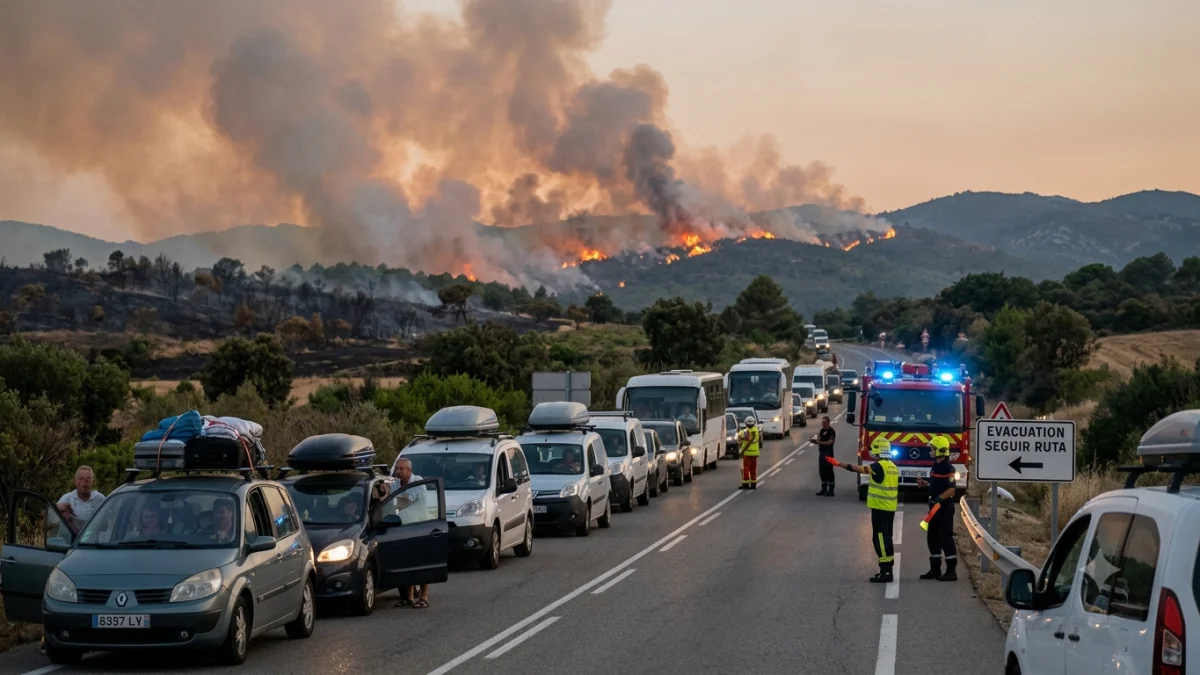
BORDEAUX — Wildfires sweeping southwestern France and parts of Spain have forced more than 300,000 people to evacuate, as firefighters continued battling multiple fast-moving blazes fueled by extreme heat, strong winds and dry conditions, authorities said on Monday.
France accounted for the majority of the evacuations, with Interior Minister Laurent Nunez saying more than 220,000 people had been moved from threatened areas, including communities around Bordeaux and the Cap Ferret peninsula. Officials said the main blaze in the Gironde region remained uncontrolled and was being closely monitored as it burned within several kilometers of Bordeaux.
In neighboring Spain, authorities maintained evacuation orders across several fire-affected regions, including areas around Avila and Castellon. Prime Minister Pedro Sanchez said the government would declare a civil protection emergency to mobilize additional national resources as firefighters, supported by crews from other European countries, worked to contain the blazes.
French authorities deployed about 2,500 firefighters, backed by military personnel, police and water-dropping aircraft, to protect communities in Gironde. Officials described the operation as one of the country's largest wildfire responses in decades, with door-to-door evacuations continuing in areas where shifting winds threatened to accelerate the fire's advance.
In Spain, officials said the wildfire in Avila had become the country's largest on record by area burned, while additional fires in central and eastern regions complicated firefighting efforts. European Union member states, including Greece, Italy, Portugal and Turkey, sent personnel and equipment under the bloc's civil protection mechanism to reinforce domestic emergency services.
Authorities in both countries urged residents to follow evacuation orders and avoid smoke-affected areas, warning that high temperatures and forecast winds could continue to create dangerous fire conditions.
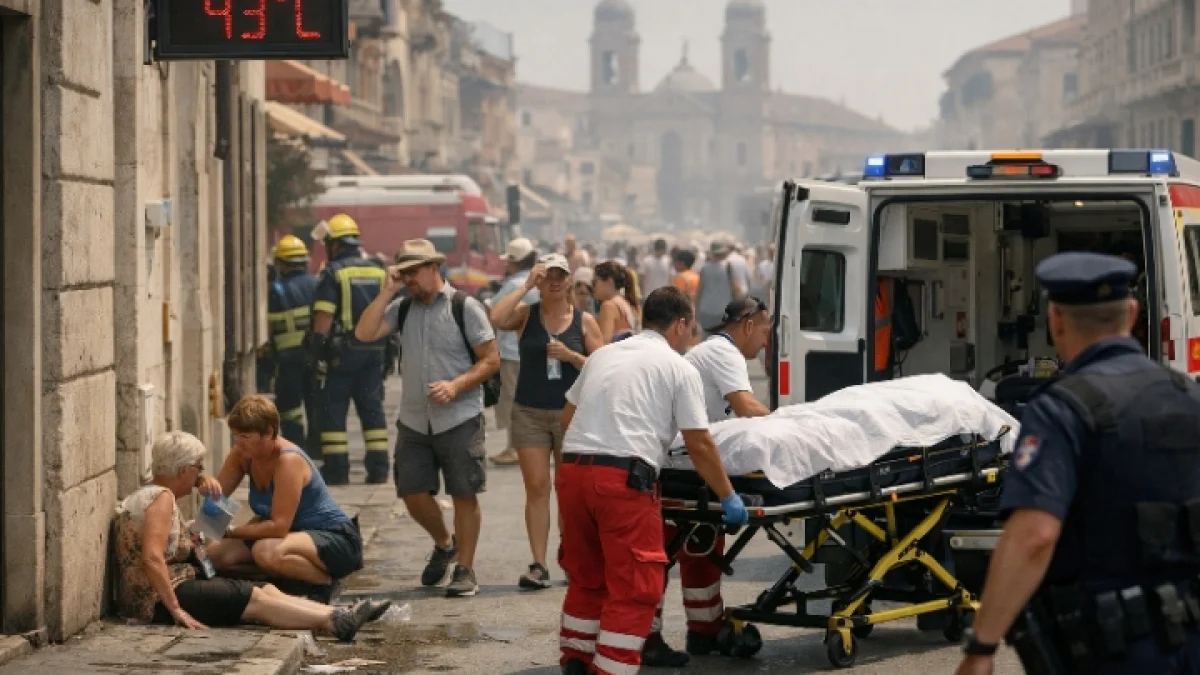
Scientists have long said hotter temperatures, prolonged drought and more frequent heatwaves linked to climate change are increasing wildfire risk across southern Europe, although they caution that individual fires are influenced by multiple factors, including weather, vegetation and land management.
As of Monday, officials said firefighting operations were continuing on multiple fronts, with no indication that the largest fires had been fully contained. Evacuation orders remained in effect in the hardest-hit areas while authorities assessed conditions and monitored weather forecasts.