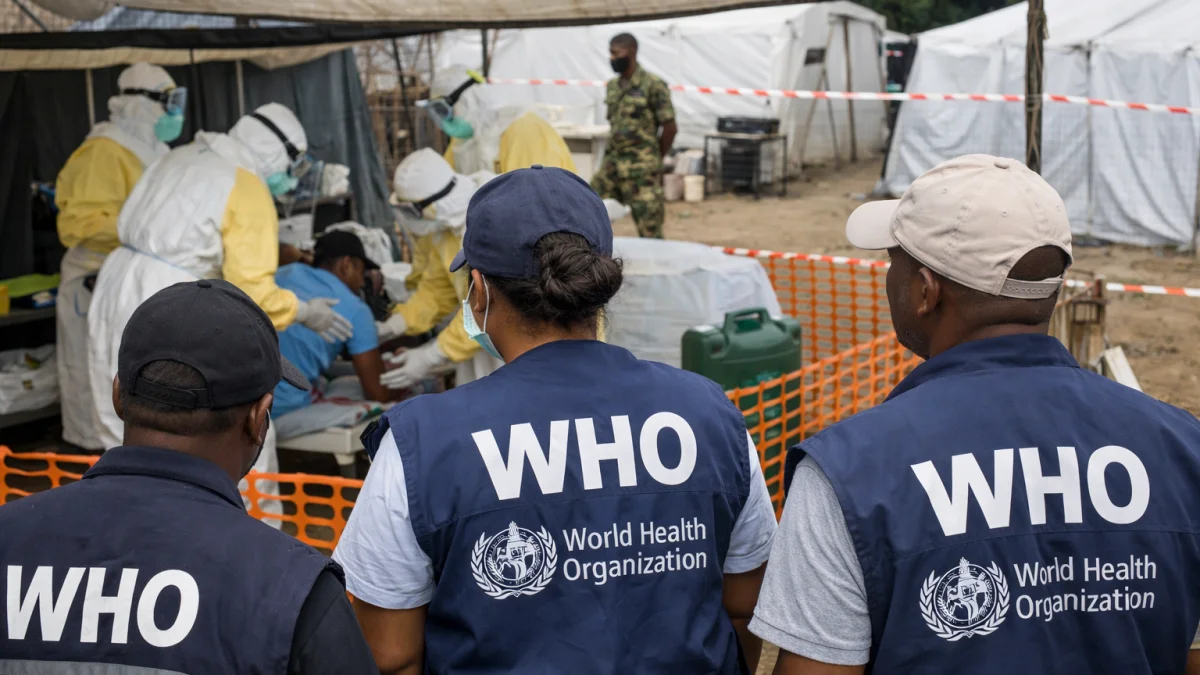
KINSHASA — The World Health Organization (WHO) is tracking the spread of an Ebola outbreak caused by the Bundibugyo strain in the Democratic Republic of Congo and Uganda, as health authorities work to expand surveillance, contact tracing and response operations amid rising infections.
The outbreak was confirmed in May 2026 after laboratory testing identified Bundibugyo virus disease in Congo’s eastern Ituri province. WHO said the outbreak has since involved cross-border transmission into Uganda, where cases have been linked to infections originating in Congo.
WHO has been supporting both governments by strengthening disease surveillance, laboratory capacity, contact tracing, infection prevention measures, treatment preparedness and community engagement, according to the agency’s outbreak updates.
The health agency has reported that the outbreak is occurring in a challenging environment marked by insecurity, humanitarian pressures and population movement across borders, factors that complicate efforts to identify contacts and interrupt transmission chains.
Congo has recorded the majority of confirmed infections. Government data reported by health officials showed confirmed cases and deaths continuing to rise through June, with officials saying expanded testing and surveillance had helped identify additional infections. Uganda has reported confirmed cases connected to travel and secondary transmission from Congo, with WHO monitoring possible spread through movement between affected areas.
WHO Director-General Tedros Adhanom Ghebreyesus has warned that the outbreak requires continued international attention, citing challenges including threats against health workers and difficulties reaching some communities.
The Bundibugyo strain involved in the outbreak is a species of Ebola for which there is currently no licensed vaccine or specific approved treatment, although health authorities and research partners are evaluating potential medical countermeasures.
The outbreak was designated a public health emergency of international concern by WHO in May 2026, following consultations with affected countries under international health regulations.
Health agencies have continued to emphasize early detection, isolation of patients, monitoring of contacts and community cooperation as key measures to contain transmission. WHO said surveillance and preparedness activities remain active in Congo, Uganda and neighboring countries as officials continue to assess the outbreak’s trajectory.