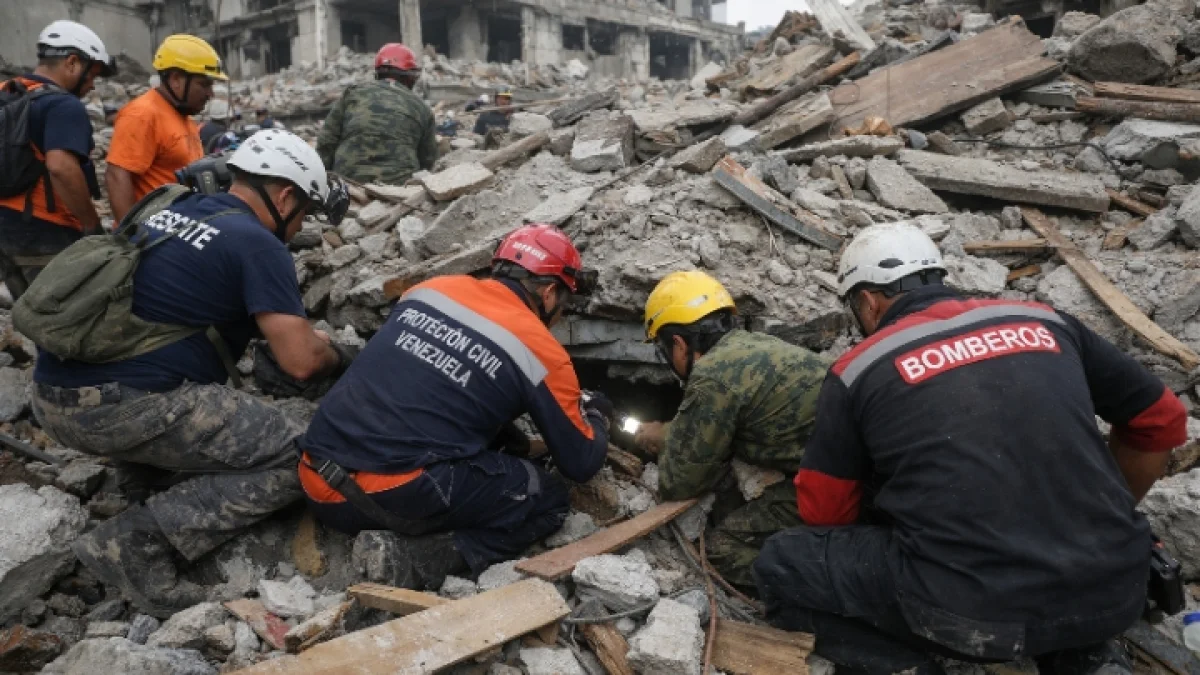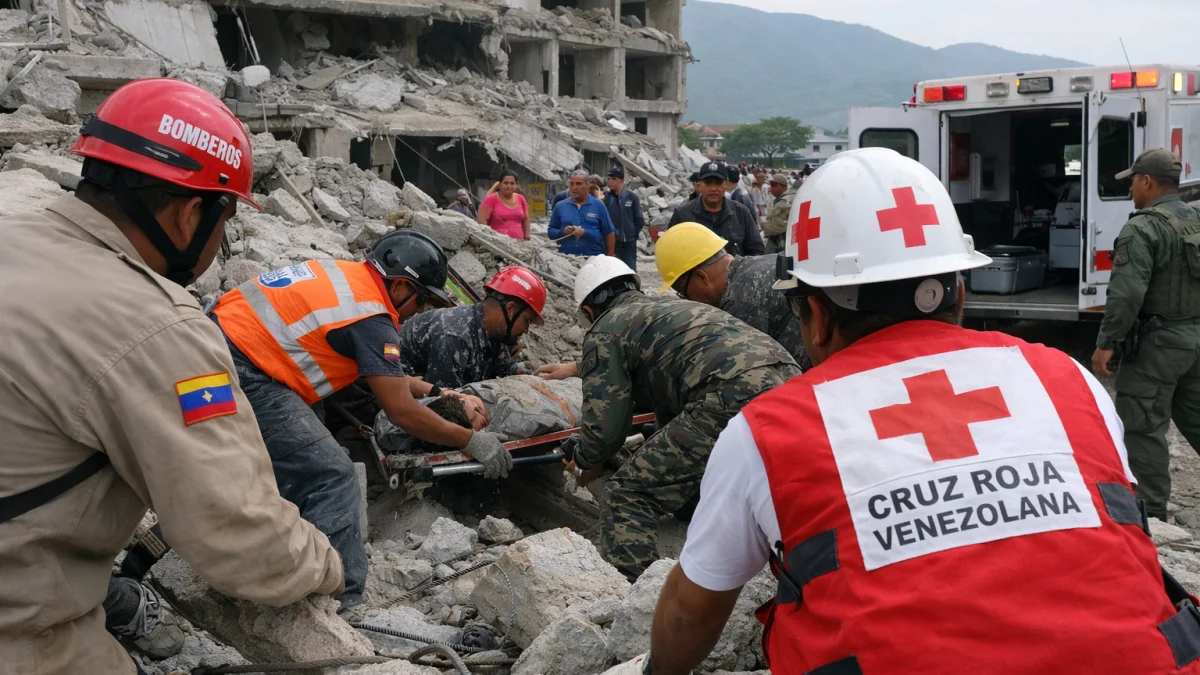
Venezuela's death toll from the June 24 earthquake sequence has climbed past 1,900, with more than 10,500 injured and over 43,200 people still reported missing, according to the latest tallies cited in seismic databases tracking the disaster. Search-and-rescue teams from more than a dozen countries remain active in Caracas and La Guaira more than a week after the twin quakes struck, even as UN agencies warn that humanitarian needs are "skyrocketing" and aftershocks — now numbering more than 600 — continue to hamper recovery, according to UN News.
The scale of the casualties, among the highest from a single earthquake in the Western Hemisphere in decades, has turned attention from emergency response to a harder question: why a well-understood seismic hazard produced destruction of this magnitude. That question carries implications well beyond Venezuela, for a region where multiple capitals sit atop active fault systems with populations and infrastructure that have grown largely unchecked by seismic risk planning.
The earthquakes were not unforeseeable in general terms. Ilan Kelman, a professor of disasters and health at University College London's Institute for Risk and Disaster Reduction, said Caracas is well known to sit in a seismic zone, pointing to major earthquakes in 1812 and 1967, and said that years of difficult governance had weakened building-code enforcement and disaster preparedness, according to comments carried by the Science Media Centre. That assessment aligns with structural analysis from the Associated Press, which reported that engineers found many collapsed buildings were constructed in the 1950s and 1960s, before Venezuela adopted modern earthquake standards, and were never retrofitted.
Enforcement, rather than the absence of standards, emerges as a central factor. Architect Elena Oliver Saiz said fewer than a quarter of buildings in Venezuela comply with seismic codes, attributing the shortfall primarily to weak regulatory application and widespread informal, self-built construction rather than to the codes themselves. Raffaele De Risi, an associate professor of civil engineering at the University of Bristol, said in comments to The Conversation that modern seismic codes are highly effective at preventing catastrophic collapse for new construction, but stressed that a code only protects people if it is properly applied and construction quality is controlled — a distinction that separates code adoption from actual risk reduction.
Satellite-based damage assessments give a sense of the exposure involved. Microsoft's AI for Good Lab, analyzing imagery of Catia La Mar in La Guaira state, found that roughly a third of the city's nearly 30,000 structures sustained damage, the AP reported. David Cocke, a structural engineer and former president of the Earthquake Engineering Research Institute, said the combination of soft soils, taller towers and older concrete construction contributed to widespread pancake-style collapses, in which floors fail sequentially.
The response effort itself has drawn a wide, and in some cases diplomatically unusual, international coalition. The United States has committed $300 million to the response and deployed a specialized Air Force team to help restore Venezuela's damaged airport, a senior administration official said, according to CNN. The U.S. Treasury's Office of Foreign Assets Control issued a general license on June 25 authorizing earthquake-related transactions despite existing sanctions on Venezuela, according to the State Department, underscoring how disaster response can create narrow exceptions to broader geopolitical constraints. Israel, which has had no diplomatic relations with Venezuela for years, also dispatched a disaster response team, a deployment its Foreign Ministry described as notable given that history, CNN reported. Mexico, the European Union, the United Kingdom and Vietnam, among others, have also sent aid, funding or personnel.
Regionally, the disaster echoes a pattern documented across Latin America and the Caribbean, where rapid urbanization has often outpaced seismic-resilient construction. Roger Bilham, a seismologist at the University of Colorado, has separately warned of a broader global gap in institutional experience with major earthquakes, noting that long intervals between catastrophic events can erode preparedness even in regions with known fault systems, according to commentary referencing his research. Analysts at Miyamoto International, an engineering firm specializing in disaster-risk analysis, identified a convergence of factors in the Venezuela sequence — high magnitude, shallow rupture, strong shaking near dense population centers and vulnerable building stock — that they said typifies the risk profile shared by other seismically active, under-resourced cities in the region.
The confirmed death toll, injury count and number of missing remain subject to revision as search operations continue amid ongoing aftershocks. UNICEF has estimated $52 million is needed to meet emergency needs for children in affected areas, part of a broader humanitarian appeal that agencies say is still being finalized. Officials and independent seismologists are continuing to assess structural damage across Caracas and La Guaira, while the scale of retrofitting needed for Venezuela's older building stock, and the extent to which regional governments elsewhere will reassess seismic codes and enforcement in response to the disaster, remain open questions being monitored by engineering and disaster-risk organizations.