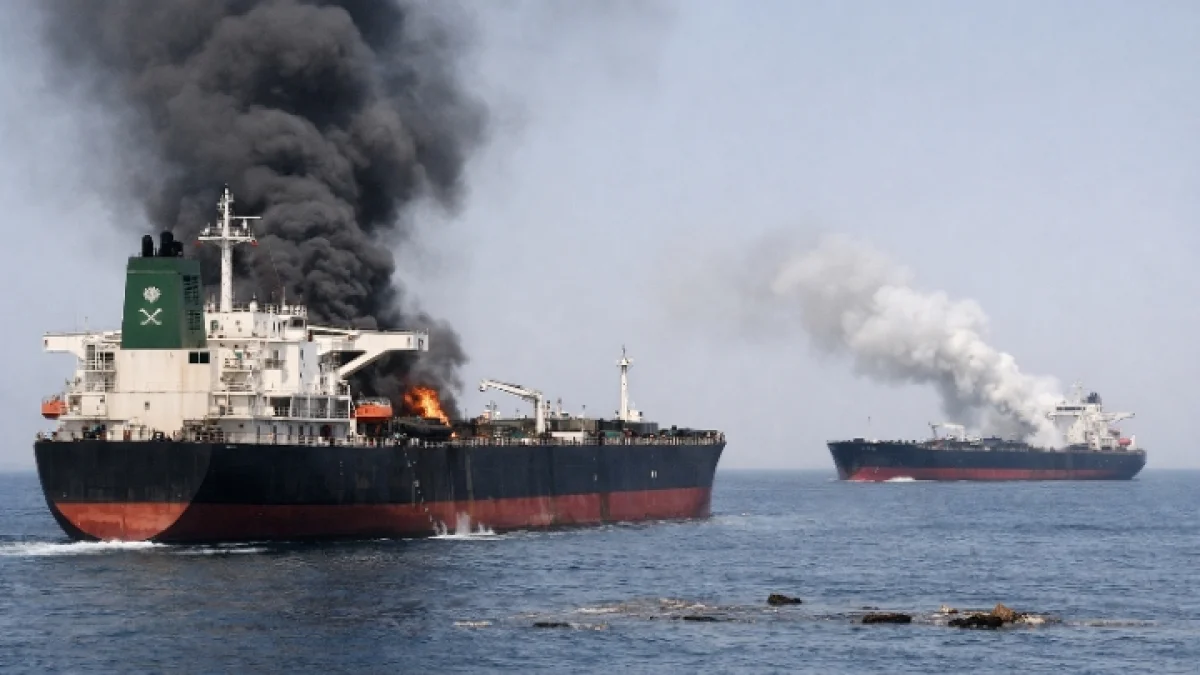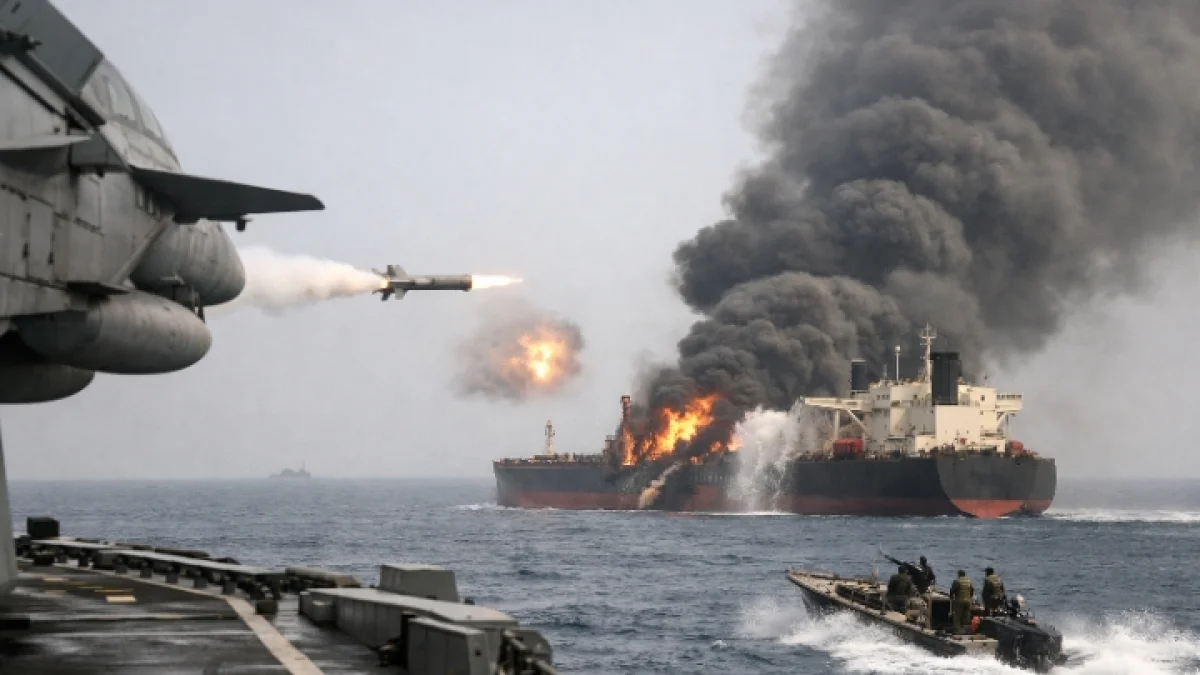
U.S. military strikes on Iranian targets entered a second week on July 23 as the conflict expanded beyond direct exchanges between Washington and Tehran, with Yemen's Iran-aligned Houthis claiming attacks on two Saudi oil tankers in the Red Sea. Saudi authorities confirmed that one tanker caught fire after being struck but said all crew members were safe, while the second reported attack had not been independently verified. The developments mark a widening of the regional security challenge by increasing pressure on another strategic maritime corridor alongside the Strait of Hormuz.
The latest escalation is significant because it demonstrates that the conflict is no longer confined to direct U.S.-Iran military operations. Instead, it increasingly involves Iran's regional partners and threatens multiple maritime chokepoints that are central to global energy trade. Analysts have long warned that simultaneous disruptions in the Strait of Hormuz and the Bab el-Mandeb Strait would amplify risks to international shipping, insurance costs and oil markets beyond the immediate military confrontation. The reported Houthi attacks therefore represent both a tactical military development and a broader economic concern.
According to U.S. officials, American strikes have focused on degrading Iran's military infrastructure, including missile, drone and maritime capabilities. Washington has argued that the campaign is intended to reduce Iran's capacity to threaten U.S. forces and international shipping. Iranian officials, meanwhile, have warned that continued attacks would provoke proportional retaliation and have accused the United States of expanding the conflict. Tehran has consistently denied directing every action taken by regional allied groups while acknowledging political support for what it describes as the "Axis of Resistance."
The Houthi campaign illustrates how regional partners can complicate military calculations without requiring direct Iranian engagement. The group announced earlier this week that it was imposing what it described as a naval blockade against Saudi Arabia, warning commercial vessels against operating in areas it considers part of the blockade. While maritime security experts note that the Houthis lack the naval strength to enforce a traditional blockade, they possess missiles, drones and other capabilities sufficient to raise commercial risks and influence shipping decisions through the threat of intermittent attacks.
Commercial shipping has historically responded quickly to perceived rather than confirmed risks. During previous Red Sea attacks in 2023 and 2024, many shipping companies diverted vessels around the Cape of Good Hope despite only a limited number of successful strikes. Similar behavior is emerging again as operators reassess routes through the Red Sea. Reuters reported that several tankers altered course following Houthi warnings, illustrating how uncertainty alone can affect global logistics before any sustained disruption occurs.
The economic implications extend beyond shipping. The Strait of Hormuz remains one of the world's most important oil transit routes, while the Bab el-Mandeb links the Red Sea with the Gulf of Aden and ultimately the Suez Canal. Simultaneous threats to both waterways increase freight costs, insurance premiums and delivery times even if neither route is completely closed. Financial markets have reflected those concerns through higher crude prices as traders incorporate the possibility of prolonged supply disruptions into pricing.
Diplomatically, the conflict also places additional pressure on regional governments seeking to avoid broader confrontation. Saudi Arabia has attempted in recent years to reduce direct military tensions with the Houthis while pursuing economic diversification under Vision 2030. Renewed attacks on Saudi-linked energy infrastructure complicate those efforts and could test Riyadh's strategy of balancing deterrence with restraint. At the same time, Washington has sought support from regional and international partners to maintain freedom of navigation, arguing that attacks on commercial shipping threaten the global economy rather than only countries directly involved in the conflict.
Security analysts also note that the current phase differs from earlier episodes because multiple theaters are now interconnected. Military developments inside Iran, maritime security in the Gulf and Red Sea, energy markets and diplomatic initiatives are increasingly influencing one another. That interconnectedness makes it more difficult for policymakers to isolate military operations from wider economic and geopolitical consequences, even if individual incidents remain geographically limited. Those assessments remain analytical rather than predictive, reflecting the complexity of simultaneous military, commercial and diplomatic pressures.
For now, the confirmed situation is that U.S. strikes on Iranian targets have continued into a second week while the Houthis claim to have expanded military operations against Saudi-linked shipping in the Red Sea. Saudi Arabia has confirmed damage to one tanker but reported that its crew is safe, and some Houthi claims remain independently unverified. Officials and maritime authorities continue to monitor shipping security in the Red Sea and Strait of Hormuz, military activity across the region, oil market reactions and diplomatic efforts aimed at preventing further escalation.