US-Iran military strikes continued into Wednesday despite renewed diplomatic efforts to halt the fighting, underscoring the central problem facing mediators: the channels for negotiation remain open, but the military logic of retaliation is still driving events on the ground. The U.S. military said it had completed an 11th consecutive night of strikes on Iran, while Iran continued attacks against U.S. positions and regional targets, according to reports from Reuters and the Associated Press. U.S. Secretary of State Marco Rubio said Washington remained willing to negotiate, even as he accused Tehran of failing to engage seriously in diplomacy.
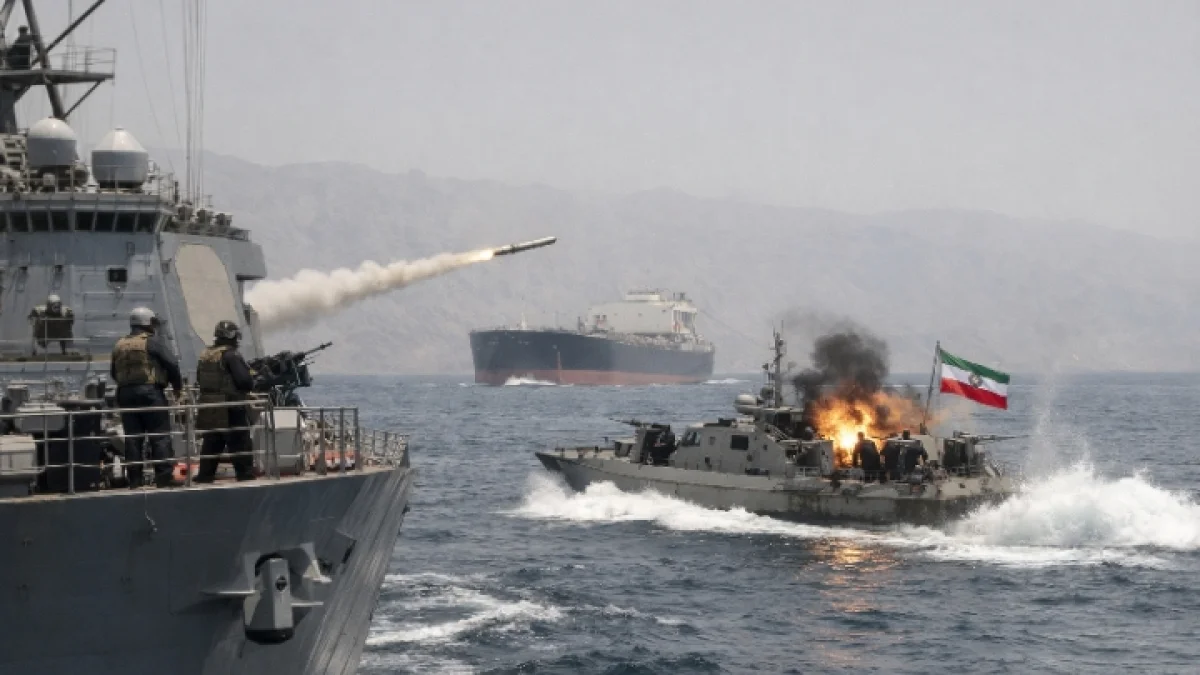
The immediate significance is that the conflict has moved beyond a straightforward ceasefire dispute into a cycle in which diplomacy and military operations are proceeding simultaneously. That makes the Strait of Hormuz particularly important. The waterway is a critical route for global energy supplies, and its disruption has already forced commercial shipping to alter routes and contributed to higher oil prices. The longer the confrontation persists, the harder it becomes to separate negotiations over the war from the practical question of whether ships can safely transit one of the world's most strategically important maritime chokepoints.
The current crisis follows an earlier attempt to establish a political framework for de-escalation. A U.S.-Iran interim agreement was intended to stop the fighting, facilitate negotiations on broader issues including Iran's nuclear program and reopen the Strait of Hormuz to commercial traffic. But subsequent exchanges of fire around the waterway exposed the weakness of the arrangement. Both sides have accused the other of violating its commitments, while Washington has described its strikes as responses to Iranian attacks and Tehran has characterized U.S. military action as a breach of the ceasefire.
That pattern matters because ceasefires depend not only on political agreement but also on mechanisms for managing incidents. The events around Hormuz illustrate how quickly an attack on shipping, a strike on military infrastructure or an attempted maritime operation can become part of a wider retaliation cycle. In late June, U.S. Central Command said its forces struck Iranian military surveillance, communications, air-defense and drone-related facilities after what it described as continued Iranian aggression against commercial shipping. Iran, in turn, disputed the U.S. account and accused Washington of attacking vessels and coastal areas. The competing narratives demonstrate the difficulty of establishing a mutually accepted factual basis for de-escalation.
The economic consequences extend well beyond the immediate combatants. The Strait of Hormuz carries a substantial share of the world's seaborne oil trade, making sustained disruption capable of affecting energy prices, shipping costs and inflation well outside the Middle East. Recent reporting said oil prices had risen above $94 a barrel as concerns over the strait and the Red Sea intensified. Saudi crude shipments have also been diverted amid fears that the maritime crisis could widen. The economic pressure therefore creates incentives for governments to seek a settlement while simultaneously increasing the strategic importance of controlling or reopening the shipping route.
The diplomatic challenge is further complicated by the geographic spread of the conflict. Iranian retaliation has extended to U.S. military facilities in the region, while the conflict has also affected neighboring states and maritime routes beyond Hormuz. The Associated Press reported that Iran launched missiles and drones toward Jordan's Aqaba area, with some intercepted and others landing in uninhabited locations. U.S. officials have also warned of consequences if Iran-aligned Houthi forces further restrict Red Sea shipping. These developments increase the number of governments with direct security interests in any ceasefire and make a narrowly bilateral settlement more difficult to sustain.
For Washington and Tehran, the unresolved issue is therefore not simply whether negotiations will resume, but whether either side can establish enough confidence in the process to stop responding militarily while talks continue. Rubio's statement that the United States remains open to negotiations suggests diplomacy has not been abandoned, but the continuation of strikes indicates that no durable mechanism has yet been found to prevent battlefield events from overriding diplomatic efforts.
The confirmed situation as of July 22 is that U.S. strikes have continued for 11 consecutive nights, Iranian attacks and regional tensions remain active, and diplomatic contacts are still being pursued. The principal uncertainties are the durability of any proposed ceasefire, the future status of the Strait of Hormuz and whether negotiations can produce enforceable arrangements on military activity and maritime access. Governments and markets are closely monitoring further attacks, the safety of commercial shipping, oil prices and any concrete evidence that Washington and Tehran are moving from tentative diplomacy toward a verifiable cessation of hostilities.