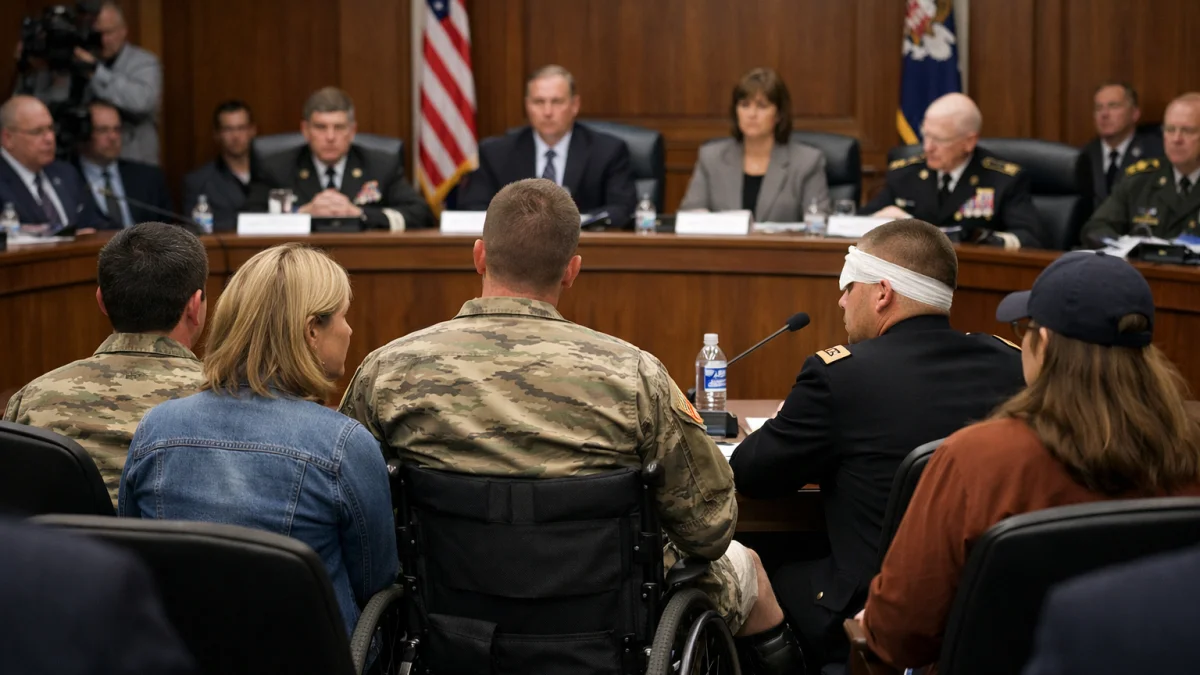
WASHINGTON — Wounded U.S. service members and their families are raising concerns about how combat injuries sustained during the conflict with Iran have been described by military officials, arguing that public accounts have understated the severity of some cases, according to interviews reported this week by CBS News and Reuters.
The concerns center on injuries suffered during attacks on U.S. forces in the Middle East earlier this year. Several wounded troops and relatives told media outlets that official descriptions emphasizing the number of personnel who returned to duty did not fully reflect the long-term effects of traumatic brain injuries and other wounds.
Defense Secretary Pete Hegseth said in March that “almost 90%” of roughly 400 injured American service members had sustained minor injuries and returned to duty, according to CBS News. Some injured troops disputed that characterization, saying it did not adequately capture the lasting consequences of their injuries.
Among those interviewed was U.S. Army Reserve Sergeant First Class Cory Hicks, who was wounded in a drone strike linked to Iranian forces. Reuters reported that Hicks suffered shrapnel wounds, a fractured jaw and a traumatic brain injury. Describing the attack, Hicks said: “It sounded like a small prop plane coming in quick. And then it just smashed into the building and blew up.”
Family members have also voiced concerns about communication surrounding the conflict and the treatment of injured personnel. Yadira Dessaint, whose son serves in the Army Reserve, told Reuters that uncertainty about conditions facing deployed troops has added to the strain on military families. “It’s just really scary not to know details of what exactly is going on,” she said.
The Pentagon has defended its support for service members. Chief Pentagon spokesperson Sean Parnell said earlier this month that the military stands ready to assist deployed personnel “in every way imaginable” and praised the professionalism of U.S. forces operating in the region.
According to Reuters, about 400 U.S. troops have been wounded during the conflict, many of them suffering traumatic brain injuries. The U.S. military has said that more than 90% of those injured have returned to duty, while 13 service members have been killed. Those figures are military estimates and have been cited by defense officials.
The debate over injury reporting comes as the military continues to manage care for wounded personnel at facilities including Walter Reed National Military Medical Center. As of Wednesday, U.S. officials had not announced changes to how combat injuries are publicly reported, and details of any potential review remained unclear.