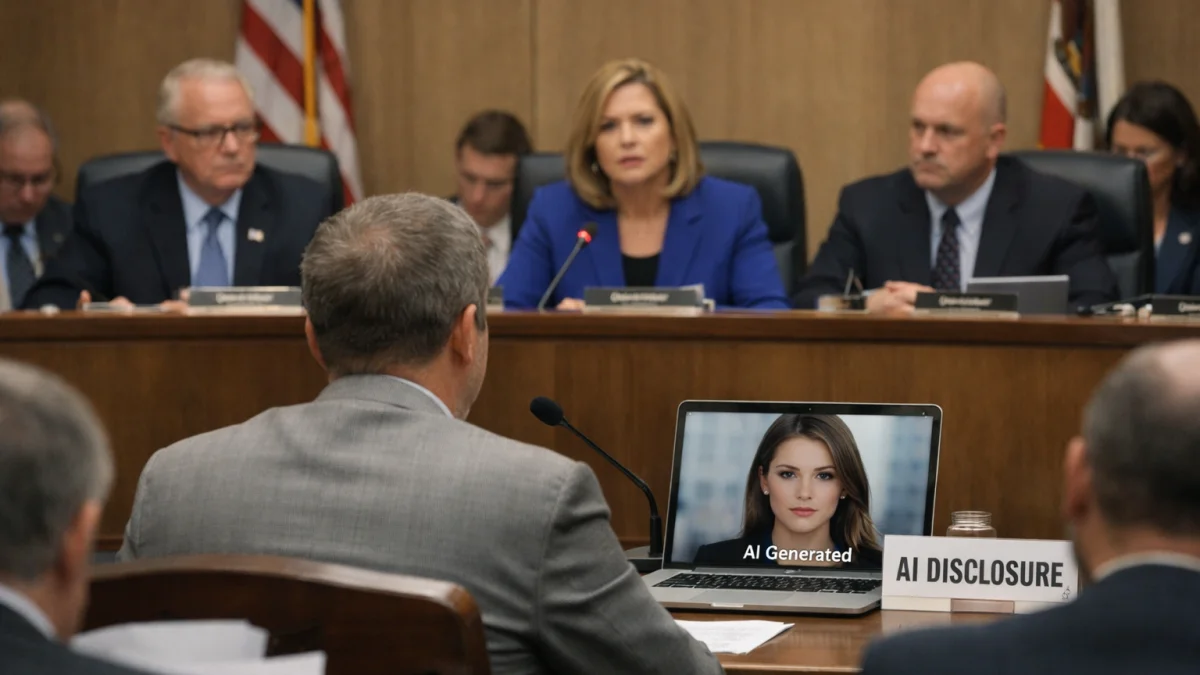
WASHINGTON — U.S. states are bringing into force a new wave of artificial intelligence disclosure laws that require companies to identify certain AI-generated content, notify users when they are interacting with chatbots in specified circumstances and increase transparency around the use of synthetic media, underscoring the growing role of state governments in regulating the rapidly evolving technology.
Several measures took effect on or around July 1, while others are scheduled to be implemented later this year, adding to an expanding patchwork of state requirements as Congress continues to debate whether national legislation should preempt some state rules governing AI development.
Among the new requirements are laws obliging businesses in some states to disclose when advertisements use AI-generated or synthetic performers, while others require chatbot operators to inform consumers that they are communicating with artificial intelligence under defined circumstances. California has also enacted training-data transparency requirements for developers of public-facing generative AI systems, requiring high-level disclosures about datasets used to train models.
Supporters of the measures say disclosure requirements improve consumer transparency, reduce deception and help people distinguish between human-created and AI-generated content without broadly restricting innovation. Industry groups and legal experts, however, have warned that differing state standards could increase compliance costs for companies operating nationwide and complicate product deployment across jurisdictions.
The expanding body of state legislation comes as federal lawmakers continue to search for a nationwide approach to AI governance. In June, a bipartisan group of U.S. House lawmakers released draft legislation that would prohibit states from regulating the development of AI models while preserving their authority to regulate how AI is used. Technology industry organizations welcomed the proposal as a step toward a uniform regulatory framework, while consumer advocates argued it could weaken state protections.
The debate reflects broader tensions over how to balance innovation, transparency and public safeguards as increasingly capable AI systems are adopted across business, government and consumer services. Martin Chavez, vice chairman of investment firm Sixth Street, said at a Reuters event in June that the current state-by-state approach creates uncertainty and lacks consistent standards for developers.
For now, companies deploying AI systems in the United States face a growing number of state-specific disclosure and transparency obligations even as lawmakers in Washington continue negotiations over whether to establish a unified federal framework.