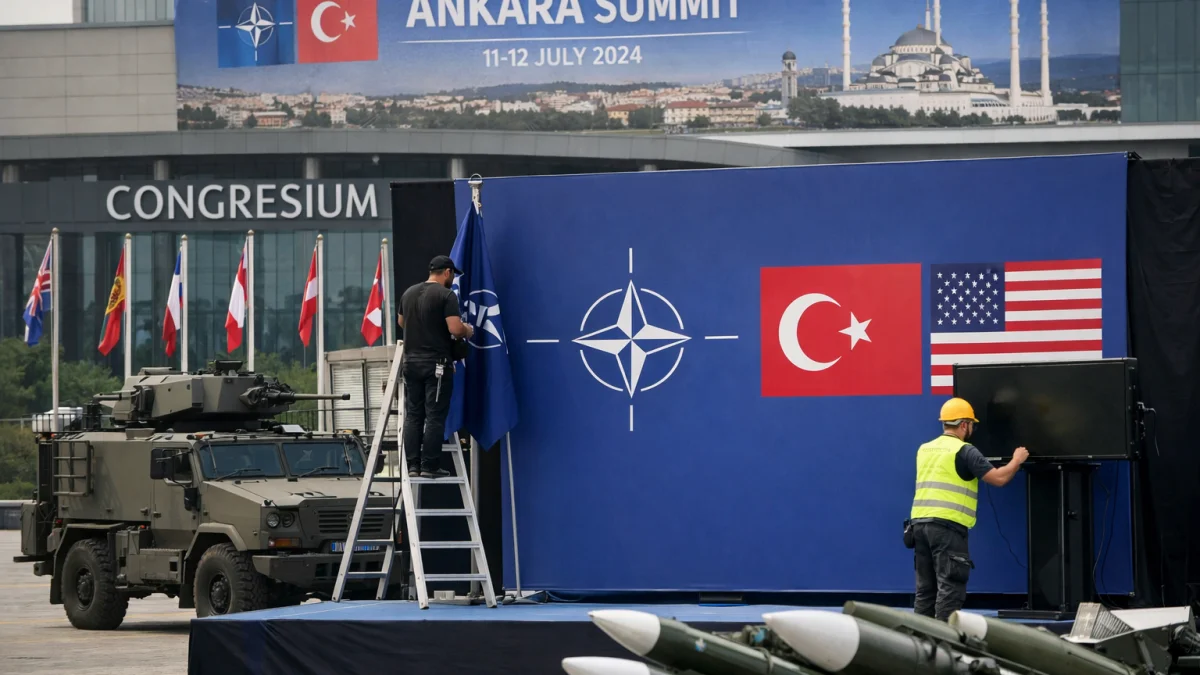
BRUSSELS — NATO is preparing to unveil tens of billions of dollars in new defense contracts and related agreements at its summit in Ankara next month, as the alliance seeks to translate higher spending pledges into expanded weapons production and stronger deterrence.
NATO Secretary-General Mark Rutte said the July 7-8 summit in Türkiye’s capital would feature announcements of contracts, memoranda of understanding and letters of intent involving defense companies across the alliance.
“Allies are expected to pledge billions of dollars in new arms contracts and more weapons production,” five NATO diplomats told POLITICO, speaking on condition of anonymity.
The announcements come as NATO members build on last year’s commitment to invest 5% of GDP in defense, including 3.5% on core defense spending. European allies and Canada increased core defense investment by $139 billion in nominal terms in 2025, according to the alliance.
A parallel NATO Summit Defence Industry Forum on the first day will focus on turning that investment into concrete capabilities through joint procurement and industrial cooperation.
The summit will also address continued support for Ukraine. Allies have discussed a new €70 billion military assistance package, with around €30 billion potentially drawn from EU mechanisms, according to a European Parliament briefing.
Rutte has emphasized the need to sustain aid to Ukraine while strengthening the alliance’s own defenses amid Russia’s ongoing war and broader global tensions.
Türkiye is hosting the summit at the Beştepe Presidential Compound, marking a significant role for the alliance’s second-largest military power.
NATO leaders will review progress since the 2025 summit in The Hague and set a roadmap for defense planning, burden-sharing and regional security issues, including the Black Sea and Middle East.
The gathering occurs against a backdrop of transatlantic discussions on roles and responsibilities, with European allies increasing their contributions. Some members are projected to meet or exceed the 5% target as early as this year.
Diplomats indicated the final summit statement would likely remain concise, focusing on core commitments rather than expansive new language.
Preparations in Ankara include enhanced security measures and logistical arrangements for the high-level meeting.
The summit is expected to produce measurable steps on defense industrial capacity and alliance cohesion, though exact details of individual contracts remain subject to final negotiations.