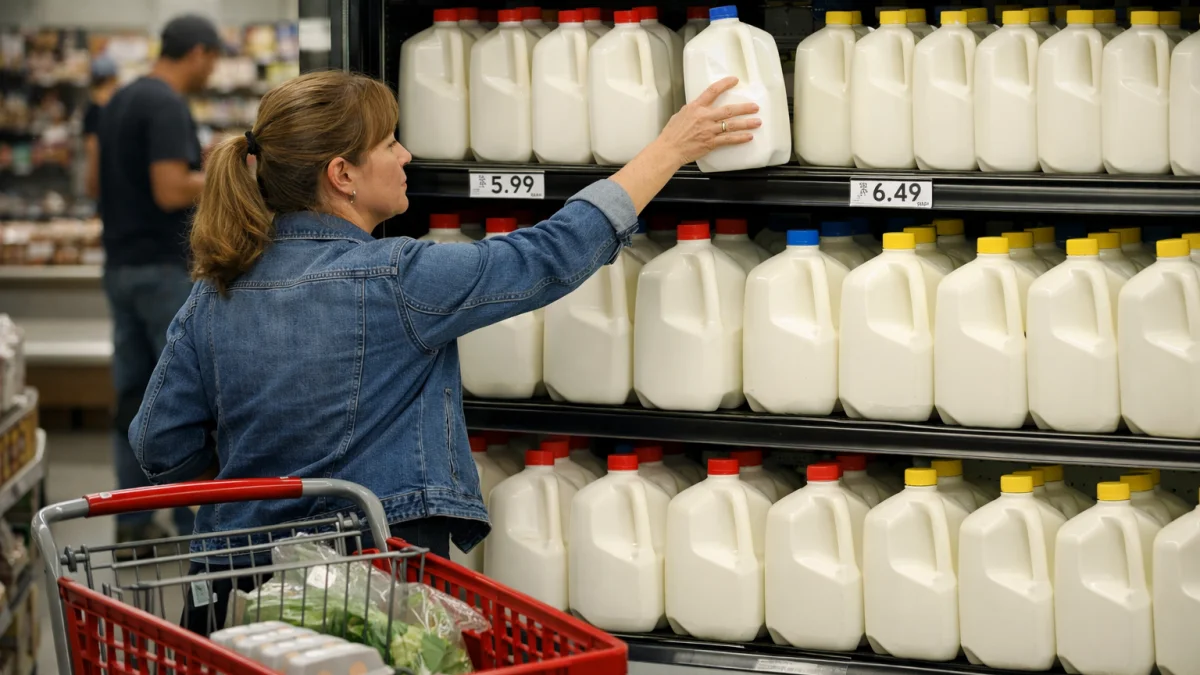
WASHINGTON — U.S. milk prices have climbed to a record level even as broader consumer inflation eased in June, highlighting persistent pressure on grocery budgets despite falling energy costs and slower price increases across many other household goods.
Data released this week by the U.S. Bureau of Labor Statistics (BLS) showed the overall Consumer Price Index fell 0.4% from May, its largest monthly decline since April 2020, as a sharp drop in gasoline prices offset increases in several other categories. Annual inflation slowed to 3.5% from 4.2% a month earlier.
The BLS said average retail milk prices reached their highest level on record in June, extending a steady rise that has contrasted with easing costs for fuel, clothing and some durable goods. Dairy products remained among the food categories contributing to grocery inflation even as overall price pressures moderated.
Economists said food prices often respond differently from broader inflation because they are influenced by agricultural production, feed costs, transportation expenses and weather-related supply conditions. While lower energy prices helped reduce the headline inflation rate in June, grocery prices have remained comparatively resilient in several categories.
The latest inflation report showed the energy index fell 5.7% during the month, providing the largest contribution to the decline in the overall CPI. Core inflation, which excludes food and energy, was unchanged from May and increased 2.6% from a year earlier, suggesting underlying price pressures continued to ease.
Global food markets have shown mixed trends. The U.N. Food and Agriculture Organization said its Food Price Index edged lower in June as declines in cereals, sugar and dairy commodities outweighed increases in vegetable oils and meat. International commodity movements, however, do not necessarily translate directly into retail prices because of domestic production costs, processing, transportation and distribution expenses.
Analysts said the divergence between easing headline inflation and elevated prices for staples such as milk illustrates the uneven pace of price normalization facing consumers. They cautioned that inflation prospects remain uncertain as renewed geopolitical tensions have pushed energy markets higher since the June survey period, while weather conditions and agricultural costs could continue to influence food prices in coming months.