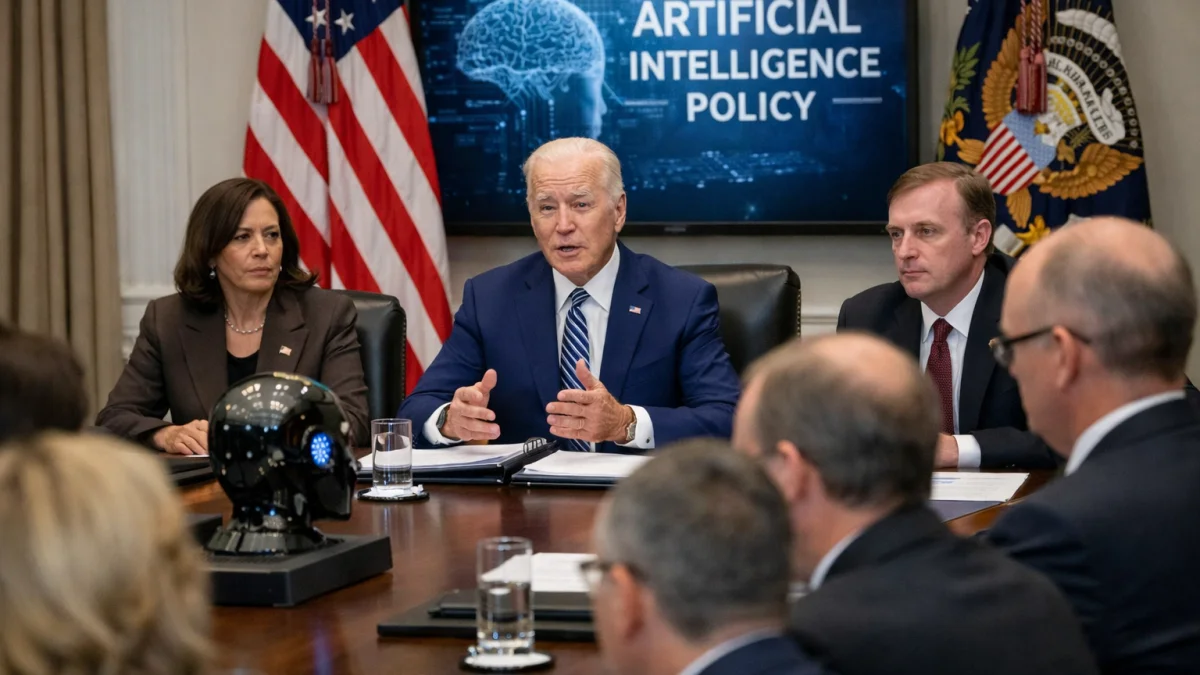
WASHINGTON — The White House has issued an executive order directing federal agencies to challenge state artificial intelligence regulations that the administration says impede innovation, marking its strongest move yet to establish a single national approach to AI oversight while escalating a dispute over the role of states in regulating the fast-growing technology.
The order instructs the U.S. attorney general to establish an AI litigation task force to contest state laws deemed inconsistent with federal policy or otherwise unlawful, while directing the Commerce Department to identify state AI regulations viewed as burdensome to innovation. It also calls for recommendations on a national legislative framework that would preempt certain state AI rules.
The administration said the measure is intended to prevent a patchwork of state requirements that could complicate AI development and weaken U.S. competitiveness. The White House has argued that a unified national framework would provide greater certainty for developers while supporting American leadership in artificial intelligence.
The executive order also authorizes federal agencies to review whether state AI regulations conflict with national priorities and links some federal broadband funding decisions to compliance with the administration's AI policy objectives, according to a White House fact sheet.
The move follows months of administration efforts to shift AI policy toward federal oversight. In March, the White House released legislative recommendations urging Congress to enact nationwide AI legislation that would supersede certain state laws, arguing that inconsistent state regulations could hinder innovation.
Congress has yet to approve comprehensive AI legislation. In June, a bipartisan pair of House lawmakers released draft legislation that would prohibit states from regulating the development of AI models while preserving their authority over many uses of the technology. The proposal drew support from major technology industry groups, which argued that national standards would reduce regulatory fragmentation, while consumer advocates criticized it as weakening state protections in the absence of broader federal safeguards.
The administration has also pursued AI policy through executive action. In June, President Donald Trump signed an executive order focused on AI innovation and cybersecurity that directed agencies to strengthen cyber defenses, establish a voluntary framework for evaluating advanced AI models before public release, and emphasized that the initiative would not create a mandatory licensing or pre-clearance system for new models.
The latest executive order is expected to face legal and political scrutiny as states continue advancing their own AI laws while Congress considers whether to establish a comprehensive federal framework governing artificial intelligence.