LONDON — Semiconductor companies and investors are closely tracking artificial intelligence spending trends as the industry's rapid expansion becomes increasingly tied to the pace of data center investment by the world's largest technology companies, with recent market moves reflecting both optimism over long-term demand and caution about near-term returns.
Major cloud providers, including Alphabet, Amazon, Microsoft and Meta Platforms, continue to commit substantial capital to AI infrastructure, supporting demand for advanced processors, memory chips and networking components. Analysts say those spending plans remain a key driver of semiconductor investment decisions, although investors are increasingly scrutinizing whether rising capital expenditure will translate into sustainable earnings growth.
Recent volatility in semiconductor shares has underscored those concerns. Morgan Stanley said this month that investor attention could broaden from chipmakers to hyperscale cloud operators as markets assess returns from AI infrastructure spending. The bank said expectations for more disciplined capital expenditure could influence investment flows even as demand for AI computing remains strong.
At the same time, manufacturers continue to expand production capacity in anticipation of sustained AI-related demand. Micron Technology said on July 9 it would increase its long-term U.S. investment commitment to more than $250 billion through 2035, citing strong demand for memory products used in AI applications and data centers. The company also announced additional investments aimed at strengthening the domestic semiconductor supply chain.
Industry organizations have likewise projected continued growth in semiconductor manufacturing investment. SEMI said in April that global spending on 300-millimeter fabrication equipment is expected to rise sharply in 2026 and 2027, driven by demand for AI chips and advanced manufacturing technologies. Gartner separately forecast worldwide semiconductor revenue would exceed $1.3 trillion in 2026, with AI-related semiconductors accounting for about 30% of total industry revenue and hyperscaler investment remaining a principal growth engine.
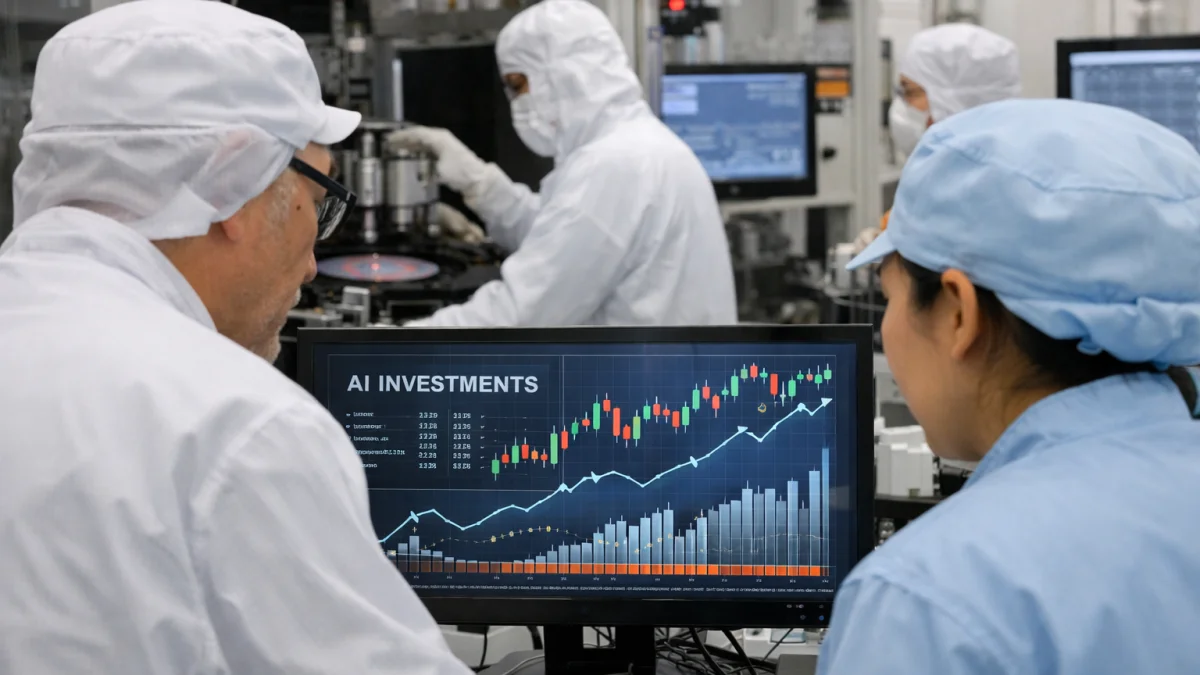
Even so, financial markets have shown signs of reassessing the pace of the AI investment cycle. Analysts say elevated valuations, uncertainty over the timing of commercial returns and questions about future infrastructure spending have contributed to increased volatility in semiconductor stocks despite continued expansion plans by chipmakers and cloud companies.
Investors are expected to focus in the coming weeks on quarterly earnings from major technology companies for updated guidance on AI-related capital expenditure, which analysts view as a critical indicator for semiconductor demand through the remainder of 2026.