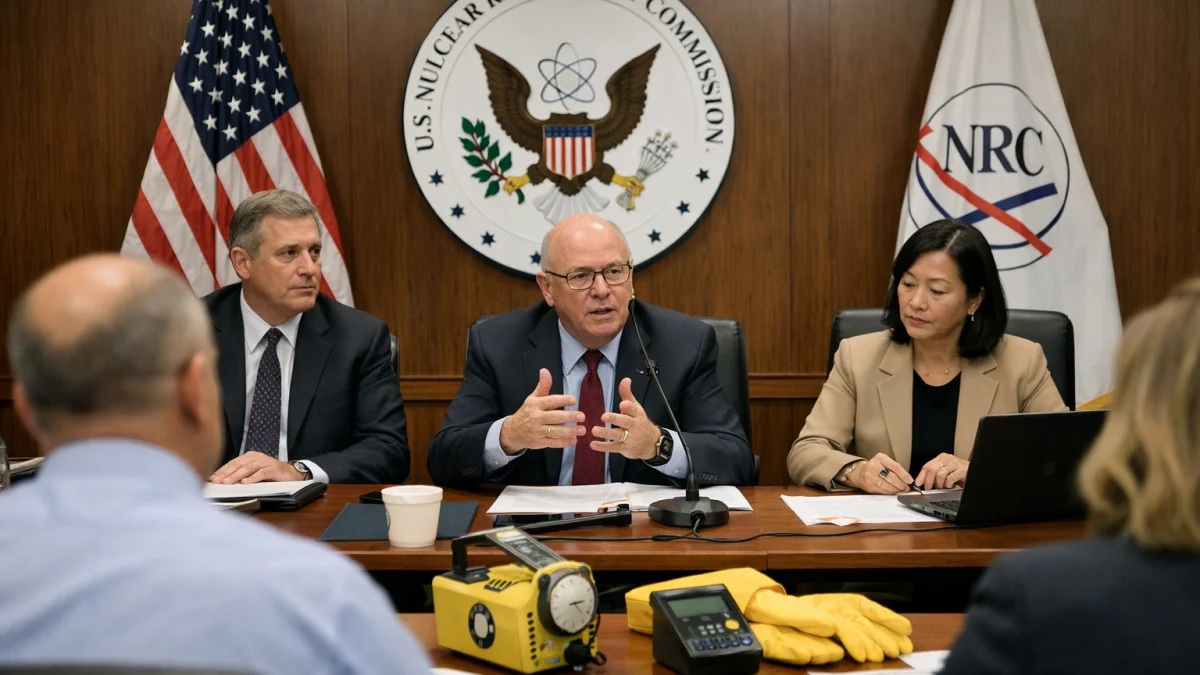
WASHINGTON — The U.S. Nuclear Regulatory Commission has proposed a sweeping overhaul of federal radiation protection regulations that would replace a decades-old safety principle with a framework centered on objective radiation dose limits, marking the latest step in the Trump administration's effort to streamline nuclear power regulation while maintaining existing exposure limits.
The proposal, announced on July 1, would eliminate the longstanding "As Low as Reasonably Achievable" (ALARA) principle from NRC regulations. Instead, the agency would require compliance with established radiation dose limits and adopt what it describes as a clearer, risk-informed approach to managing radiation exposure for workers and the public. The NRC said the proposal does not change existing legal dose limits, which remain well below levels associated with known health effects.
NRC Chairman Ho Nieh said the proposed rule is intended to improve regulatory clarity while preserving safety standards. According to the agency, retaining ALARA as a separate regulatory expectation has added costs and complexity without providing measurable additional safety benefits. The proposal also incorporates updated methods for radiation dose assessment and other changes reflecting current scientific knowledge and operating experience.
The proposal forms part of a broader regulatory modernization effort following executive actions aimed at accelerating deployment of nuclear reactors to help meet growing electricity demand from data centers, electric vehicles and other energy-intensive industries. The NRC has also proposed separate rule changes affecting reactor licensing, safety oversight and security requirements as part of that initiative.
The proposed changes have drawn criticism from some nuclear safety advocates. Edwin Lyman, a physicist with the Union of Concerned Scientists, said the agency correctly reaffirmed the scientific consensus that there is no completely safe level of radiation exposure but argued that removing the ALARA principle could allow higher cumulative radiation exposure for workers and the public. He said the proposal could increase health risks while reducing costs for the nuclear industry.
The NRC maintains that the proposal preserves existing public and occupational radiation exposure limits and does not alter the agency's underlying safety standards. According to the commission, the revised framework is intended to reduce unnecessary regulatory burden while continuing to protect public health and safety.
The proposed rule will be open for public comment for 45 days before the commission considers whether to adopt a final version.