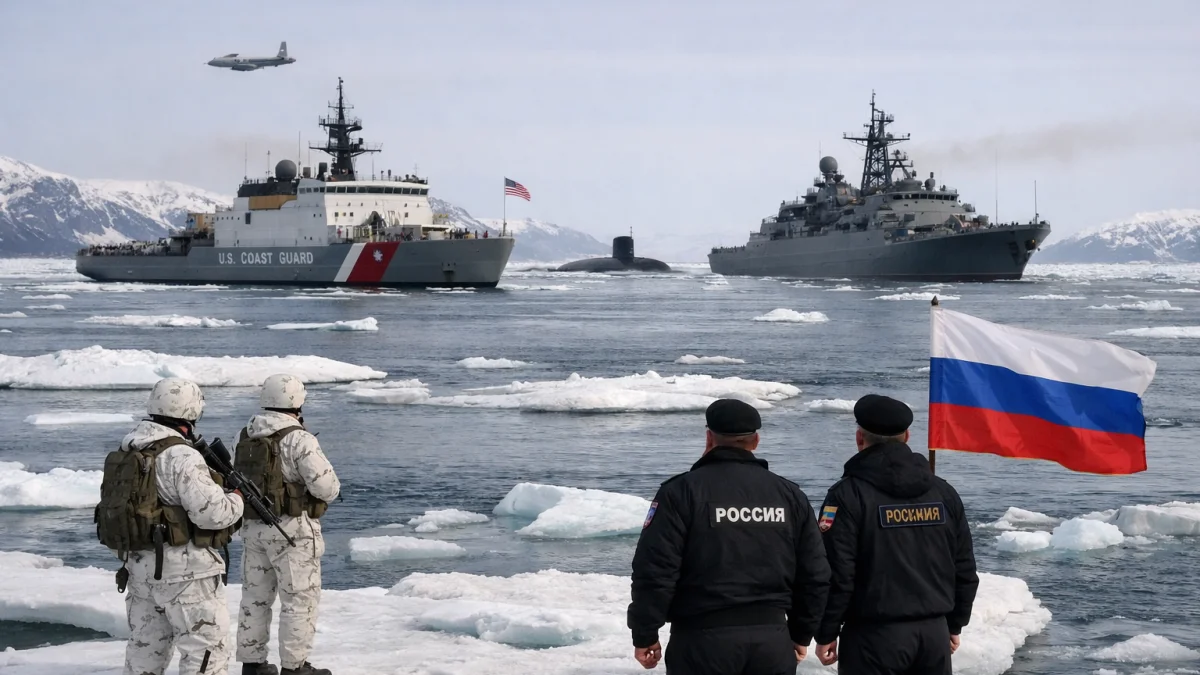
OSLO— Rapidly diminishing Arctic sea ice is intensifying geopolitical competition across the High North, as governments expand their military, scientific and commercial activities in a region becoming increasingly accessible because of climate change, according to officials, researchers and recent scientific assessments.
The Arctic is warming roughly four times faster than the global average, contributing to the retreat of sea ice and opening seasonal access to shipping lanes, fisheries and natural resources that were previously difficult to reach. Scientists caution that the environmental changes remain uneven and that harsh weather, drifting ice and limited infrastructure continue to pose significant operational risks.
The changing landscape has heightened strategic competition among Arctic and non-Arctic powers. NATO members have increased their focus on the alliance's northern flank following Finland's and Sweden's accession, while Russia has maintained a substantial military presence along its Arctic coastline and China has continued to describe itself as a "near-Arctic state" with growing scientific and commercial interests in the region.
Norway's Svalbard archipelago has become a focal point of those competing interests. Researchers working there say security concerns have complicated scientific cooperation and restricted some research activities, even as the region remains critical for monitoring climate change and Arctic ecosystems. According to reports published this month, some seabed mapping projects have been delayed after Norwegian authorities declined permit requests on security grounds.
Climate monitoring has continued to document significant environmental change. Copernicus Climate Change Service reported that Arctic sea ice extent in May ranked among the lowest on record, with particularly limited ice around Svalbard. Satellite imagery from mid-June showed unusually sparse sea ice surrounding the archipelago as seasonal melting accelerated.
Scientists emphasize that while climate change is increasing access to parts of the Arctic, it is not by itself the cause of geopolitical rivalry. Instead, they say the loss of sea ice is amplifying existing strategic competition by making shipping routes, resource development and military operations more feasible during longer parts of the year.
At the same time, experts warn that expectations of an easily navigable Arctic remain overstated. Sea ice conditions vary widely between seasons and regions, while limited ports, communications infrastructure and search-and-rescue capabilities continue to constrain commercial activity. Environmental organizations have also warned that increased shipping and resource exploration could place additional pressure on fragile Arctic ecosystems.
Governments across the Arctic have said they will continue investing in security, infrastructure and scientific research as climate-driven changes reshape one of the world's fastest-warming regions, even as researchers stress that international cooperation remains essential for monitoring environmental change and managing shared risks.