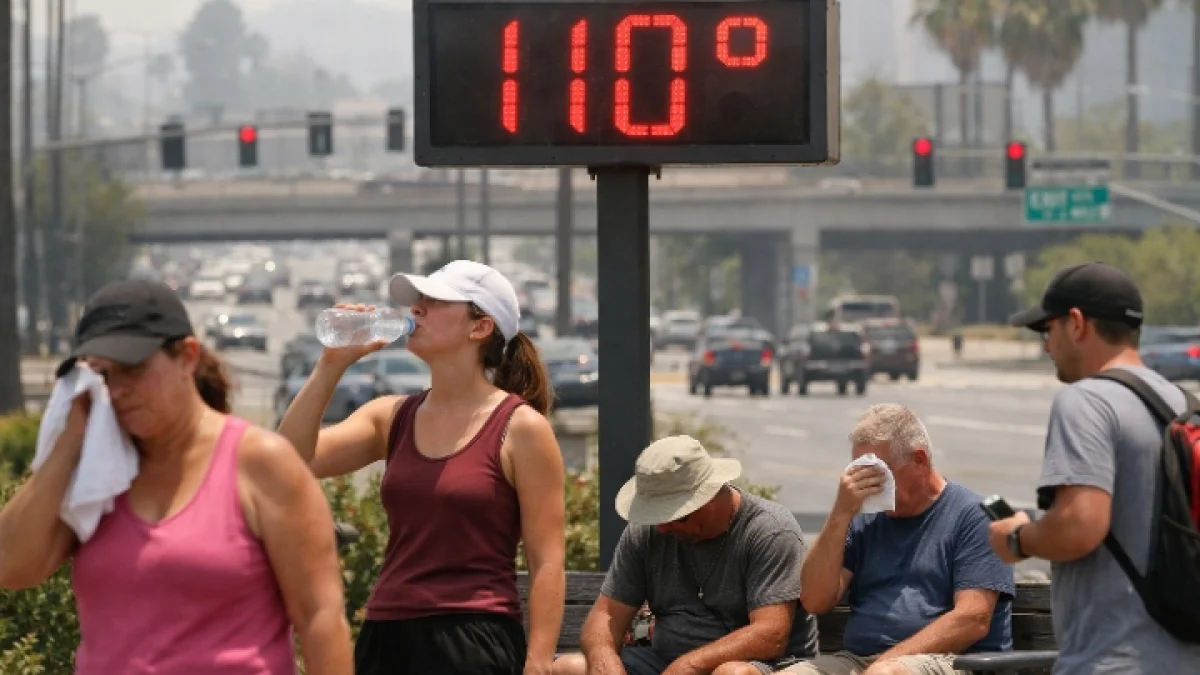
CALGARY—Heat warnings remained in effect across parts of western Canada on Thursday, while U.S. forecasters continued to monitor dangerous heat in several regions, as high temperatures and humidity raised health risks during the North American summer.
Environment and Climate Change Canada had issued yellow heat warnings covering parts of British Columbia, Alberta and other western areas, with daytime temperatures in some regions forecast to reach the low to high 30s Celsius. In British Columbia, warnings covered areas including the Okanagan Valley, Fraser Canyon, South Thompson, North Thompson, Shuswap, Nicola, Similkameen, Boundary and West Kootenay, according to the federal weather agency.
Environment Canada said a ridge of high pressure was responsible for the elevated temperatures and warned that heat can affect everyone, with greater risks for older people, those living alone and people with certain pre-existing conditions. The agency advised residents to stay hydrated, take breaks in cooler environments and check on vulnerable relatives, friends and neighbours.
In the Calgary area, Environment Canada said daytime highs were expected in the low to mid-30s Celsius over several days, with overnight temperatures remaining in the teens. The agency classified the warning as a moderate-impact event with high forecast confidence.
The warnings followed a period of elevated temperatures across parts of western Canada. Environment Canada said a gradual cooling trend was expected in some British Columbia regions from Thursday, although warm conditions were forecast to persist in parts of the province and Alberta.
In the United States, National Weather Service offices have issued heat-related warnings and advisories in different parts of the country as conditions fluctuate regionally. A recent extreme heat warning covering parts of Arkansas, Mississippi and Missouri, for example, cited heat-index values of up to 116 degrees Fahrenheit and warned that heat-related illnesses increase significantly during extreme heat and high humidity.
Officials across affected areas have urged people to limit strenuous outdoor activity during the hottest periods, remain in air-conditioned or otherwise cool locations when possible and monitor people at higher risk of heat illness.
The latest Canadian forecasts indicated that some western regions would begin to cool on Thursday, while Environment Canada continued to maintain heat warnings in areas where elevated temperatures posed a public-health risk.