The arrival of the southwest monsoon is bringing a new wave of flooding, landslides and transport disruption across parts of India and Pakistan, with authorities warning that heavy rainfall will remain a significant hazard through late July. The immediate impacts are concentrated in vulnerable northern and mountainous areas, but the wider significance lies in the pressure the seasonal rains are placing on infrastructure, emergency services and communities already exposed to recurrent weather extremes.
In India, the India Meteorological Department has forecast active monsoon conditions across northwest, eastern and northeastern regions, with enhanced rainfall and isolated heavy to very heavy falls expected in parts of eastern and northeastern India, eastern Uttar Pradesh and the western Himalayan region. The agency has also warned of intense rainfall associated with a low-pressure system over eastern India.
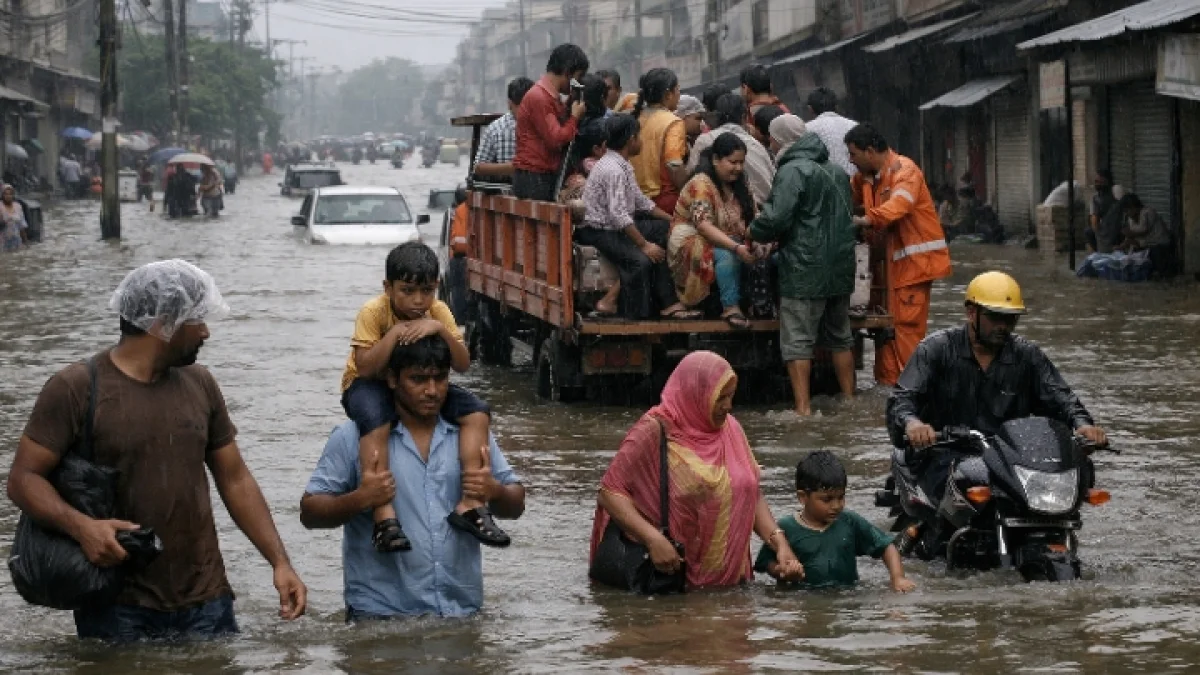
Those forecasts have translated into immediate disruption in northern India. Heavy rain has triggered flooding and landslides, with at least 25 people reported killed in incidents in the north by July 20, according to Al Jazeera. The combination of saturated slopes, swollen waterways and continued rainfall is complicating rescue and relief operations and raising the risk of further localised disasters.
The pattern illustrates a central feature of the South Asian monsoon: the seasonal rains are essential for agriculture and water supplies, but their benefits depend heavily on when and where rainfall occurs. A monsoon can deliver near-normal rainfall nationally while still producing severe flooding in particular river basins or districts. Short periods of intense rain can overwhelm drainage systems and cause flash floods even where cumulative seasonal rainfall is not exceptionally high.
Pakistan is facing a similar combination of exposure and disruption. The country's National Disaster Management Authority has issued repeated monsoon warnings and, as of July 20, maintained alerts for flash flooding in Gilgit-Baltistan, Khyber Pakhtunkhwa, Azad Jammu and Kashmir and Punjab, alongside a landslide alert for northern areas. The NDMA's 2026 situation reports show that authorities are tracking the monsoon through daily assessments as conditions evolve.
The geography of the two countries helps explain the range of risks. In Himalayan and other mountainous districts, intense rain can destabilise slopes and rapidly increase flows in streams and rivers. In densely populated plains and cities, the same weather can produce waterlogging and urban flooding when drainage capacity is exceeded. Pakistan's NDMA has specifically warned that localised intense rainfall during the July-to-September monsoon season could overwhelm metropolitan drainage systems and threaten residential, communications and industrial infrastructure.
The economic consequences extend beyond the immediate cost of damaged homes and roads. Flooding can interrupt transport corridors, affect electricity and communications, delay commercial activity and damage crops at a critical point in the agricultural calendar. Pakistan's experience during severe flooding in 2025 demonstrated how quickly extreme rainfall can spread from rural areas into industrial and economic centres, putting additional pressure on public finances and recovery efforts.
The current episode also underscores the importance of preparedness rather than relying solely on post-disaster response. Both countries have developed increasingly detailed warning systems, but the effectiveness of those systems ultimately depends on whether warnings reach exposed communities in time and whether roads, drainage networks, bridges and emergency services can withstand repeated shocks. Pakistan's infrastructure advisory for 2026 explicitly calls for improved drainage, stronger infrastructure and proactive emergency measures in metropolitan areas.
Climate change adds a longer-term layer to the risk assessment, although individual floods cannot automatically be attributed to global warming. Research on South Asian rainfall has identified changes in the region's rainfall patterns and heightened concern about hydrological extremes, while scientists continue to examine how warming temperatures may influence the intensity of heavy precipitation. The immediate causes of the current flooding remain the specific monsoon systems and local geography monitored by national meteorological agencies.
For now, the confirmed picture is of an active monsoon producing significant rainfall hazards across parts of India and Pakistan, with deaths, flooding, landslides and disruption already reported in affected areas. Forecast agencies are continuing to monitor rainfall intensity, low-pressure systems, river and flash-flood risks and conditions in mountainous terrain. The principal uncertainty is the location and severity of the next concentrated rainfall episodes, making the latest warnings and local disaster assessments central to determining whether current disruption remains localised or expands into a broader regional emergency.