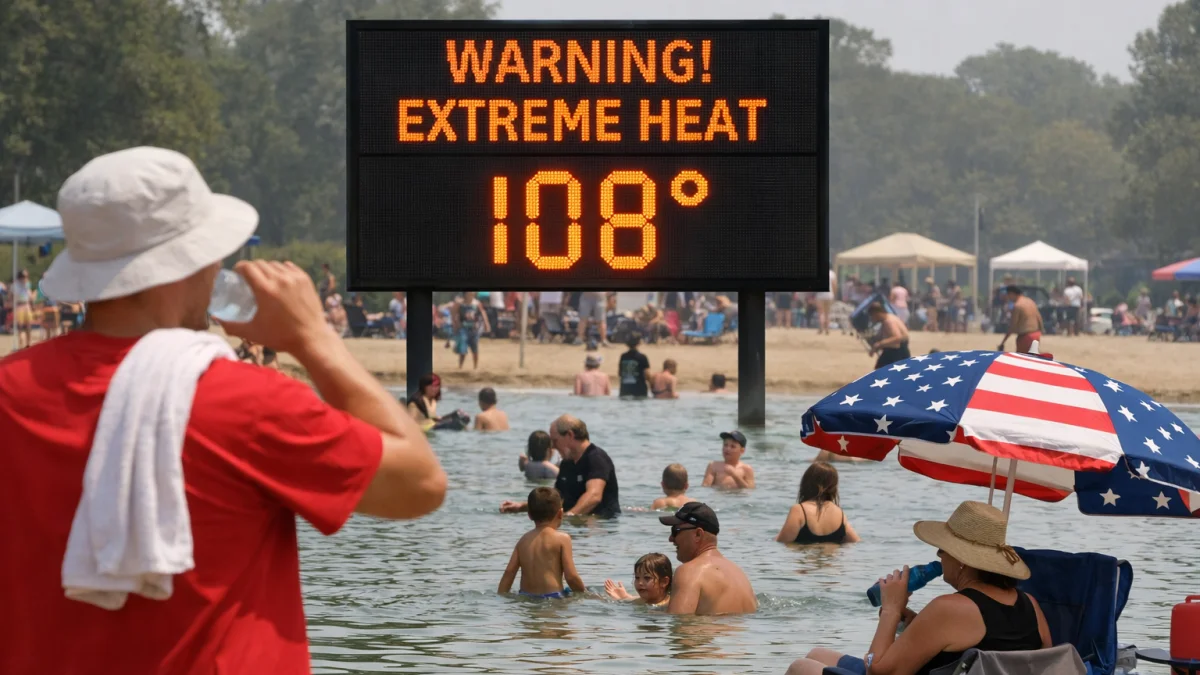
WASHINGTON — More than 185 million Americans were under heat alerts on Friday as a dangerous heat wave gripped broad stretches of the central and eastern United States during the Independence Day holiday weekend, prompting officials to warn of life-threatening conditions, cancel public events and urge residents to limit outdoor activity.
The U.S. National Weather Service said excessive heat warnings and heat advisories covered areas stretching from the Midwest to the Northeast and parts of the Mid-Atlantic, with heat index values expected to reach as high as 115 degrees Fahrenheit (46 degrees Celsius) in some locations. Forecasters warned that persistently high daytime temperatures combined with warm overnight conditions would increase the risk of heat-related illness.
Federal, state and local officials urged people attending holiday gatherings, parades and fireworks displays to stay hydrated, seek air-conditioned spaces, avoid prolonged exposure to the sun and monitor older adults, children and others at greater risk of heat illness. The National Weather Service said more than half of the U.S. population was affected by heat alerts heading into the holiday weekend.
The extreme temperatures disrupted Fourth of July celebrations in several communities. Philadelphia canceled its Salute to Independence Parade after temperatures reached 103 F (39.4 C), tying a record set in 1901. Other municipalities, including Haddon Township, New Jersey, canceled holiday parades, while Watertown, New York, called off its Independence Day concert and fireworks display. Boston delayed public access to its annual riverside fireworks event until later in the afternoon to reduce exposure during the hottest part of the day.
The prolonged heat also increased pressure on electricity systems as air-conditioning demand surged. PJM Interconnection, the operator of the nation's largest power grid, called for energy conservation after generator outages coincided with elevated demand. In New York City, utility Con Edison reported thousands of customer outages while urging consumers to reduce electricity use during peak hours.
Many cities expanded access to cooling centers, extended public pool hours and deployed outreach teams to assist vulnerable residents. New York City opened hundreds of cooling centers and dispatched mobile "cool vans" equipped with water, electrolytes and other supplies as temperatures climbed across the metropolitan area.
Forecasters said the heat wave, driven by a persistent high-pressure system commonly known as a heat dome, was expected to continue through the holiday weekend before temperatures gradually eased in some parts of the Northeast early the following week, although dangerous conditions were expected to persist in several regions through Sunday.