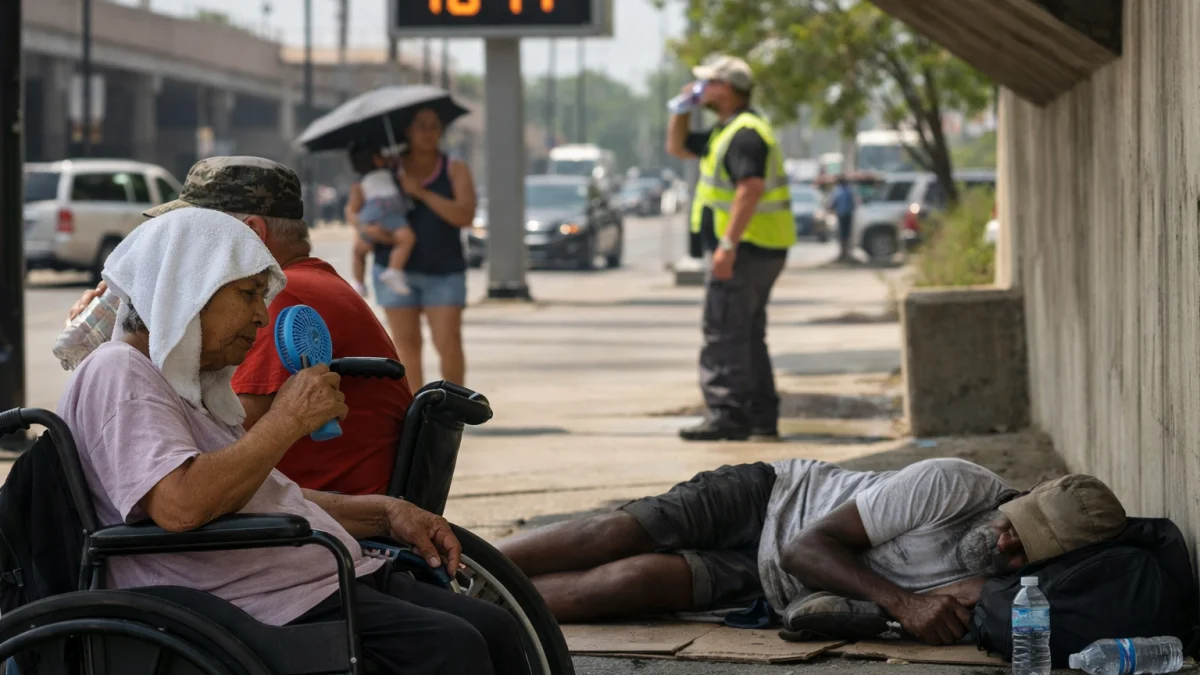
As another stretch of dangerous temperatures settled over the southern United States in mid-July, emergency officials renewed a familiar message: check on older neighbors, drink water, find air conditioning, and avoid prolonged time outdoors. For many residents, however, those recommendations are easier to issue than to follow.
Across Texas and other parts of the South, prolonged heat has become more than a seasonal inconvenience. It has tested households struggling with rising electricity bills, outdoor workers whose jobs leave little choice but to remain in the sun, and older adults whose health can deteriorate rapidly when temperatures remain high even after sunset. Meteorologists warned that the latest heat dome could expose millions of people to triple-digit temperatures and unusually warm nights, conditions that leave the human body with little opportunity to recover from daytime heat stress.
The challenge extends beyond the thermometer. Public health officials have long described extreme heat as one of the country's deadliest weather hazards because many illnesses develop quietly, particularly among older adults, young children, people with chronic medical conditions, and those without reliable access to cooling.
Communities across the South have responded by expanding cooling centers, distributing bottled water and opening public buildings during the hottest parts of the day. Local governments have also urged residents to check on relatives and neighbors who may live alone or lack transportation to air-conditioned facilities. Those efforts have become increasingly important as heat events last longer and nighttime temperatures remain unusually high.
The burden falls unevenly.
People experiencing homelessness face some of the greatest risks because they often spend extended periods outdoors and may have limited access to drinking water or shaded areas. Aid organizations in several cities have increased street outreach by distributing water, cooling towels and information about available shelters as temperatures climbed.
Outdoor workers confront a different dilemma. Construction crews, agricultural laborers, delivery drivers and utility workers frequently continue working despite dangerous conditions because their jobs depend on remaining outside. During an earlier nationwide heat wave this month, Reuters documented workers adapting by drinking more water, taking breaks when possible and adjusting schedules where employers permitted. One delivery driver described working from a truck without air conditioning, relying on open doors and small fans to endure the heat.
For families living on fixed incomes, staying cool can carry its own financial cost. Air conditioning remains one of the most effective protections against heat illness, yet higher electricity use during prolonged hot spells raises utility bills at the same time that regional power systems experience heavy demand. Utilities and public officials have periodically asked consumers to conserve electricity during peak hours while emphasizing that residents should prioritize health and safety when temperatures become dangerous.
Health experts say warm nights have become an increasingly important part of the story. When temperatures remain elevated after sunset, the body's ability to cool itself is reduced, increasing stress on the cardiovascular and respiratory systems. That makes consecutive days of extreme heat especially hazardous, particularly for older adults and people with underlying health conditions.
The Southeast already faces environmental conditions that can magnify heat-related health risks. According to the U.S. Centers for Disease Control and Prevention, the region experiences more stagnant summer air than much of the country, contributing to poorer air quality that can worsen respiratory illnesses. Climate-related health risks also fall disproportionately on lower-income communities and other socially vulnerable populations.
Scientists increasingly link the growing intensity and persistence of heat waves to human-caused climate change. While individual weather events arise from multiple atmospheric factors, researchers say climate change is making extreme heat more frequent and increasing the likelihood of prolonged periods of unusually high temperatures. Forecasters have also noted that atmospheric conditions this summer favor widespread heat across large portions of the United States.
Earlier this month, a broad swath of the country endured record-breaking temperatures that disrupted Independence Day celebrations, prompted cities to extend pool hours and open cooling centers, and placed millions under heat alerts. Real-feel temperatures in some locations climbed well above 100 degrees Fahrenheit, while emergency managers urged residents to remain indoors whenever possible during the hottest hours of the day.
Public health specialists emphasize that preventing heat illness often depends on recognizing warning signs before they become emergencies. Heat exhaustion can progress to heat stroke, a medical emergency requiring immediate treatment. Officials continue to encourage residents to stay hydrated, wear lightweight clothing, seek air-conditioned spaces, and check regularly on elderly relatives, neighbors and others who may be isolated.
Those recommendations have become a recurring feature of summers across the South. As another week of extreme temperatures unfolds, cooling centers, libraries, community organizations and neighborhood volunteers once again form part of the region's response, illustrating how communities increasingly rely on both public infrastructure and personal connections to protect those most vulnerable when the heat lingers long after the sun goes down.